How Much Grilled Chicken Is a Serving? A Practical Guide for 2026
Discover the precise serving size for grilled chicken, how to portion cooked meat, and how it fits into daily macros. Includes practical tips and credible sources.


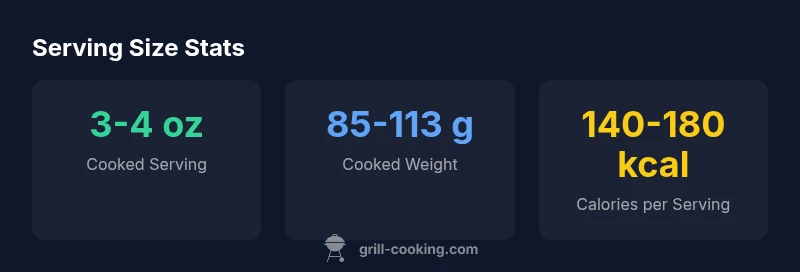
A standard serving of grilled chicken is about 3 to 4 ounces of cooked meat (roughly 85 to 113 grams). This aligns with common dietary guidelines for protein portions and fits typical daily protein targets when the meal also includes vegetables and grains. For calorie planning, estimate roughly 140 to 180 kcal per serving, depending on skin, marinade, and cooking method.
How much grilled chicken is a serving
In practical terms, the question "how much grilled chicken is a serving" centers on cooked weight rather than raw weight. A standard portion is about 3 to 4 ounces of grilled, cooked chicken (roughly 85 to 113 grams). This baseline aligns with common dietary guidance for protein portions and supports predictable macro targets for most adults. The reason cooks prefer cooked-weight measurements is moisture loss during grilling, which means a raw piece can weigh far more before it hits the grill. By anchoring to cooked weight, you get a consistent benchmark for meal planning. When you consider skin-on versus skinless, the baseline serving remains 3–4 ounces, but calories and fat will rise with the skin. Sauces and marinades also alter calories without changing the protein portion, so they should be factored into total meal energy. Grill Cooking analyses emphasize cooked-weight portions to keep portions comparable across recipes, helping home cooks build balanced plates while chasing nutrition goals.
Measuring servings without a scale: practical methods
If you don’t own a kitchen scale, you can approximate a 3–4 ounce portion with simple, repeatable visuals. A common rule of thumb is that a cooked serving is about the size of a deck of cards, which roughly matches 3–4 ounces of lean meat. For more accuracy, compare portions to a standard measuring cup: a 1/2 cup of diced, cooked chicken equates to roughly 4 ounces in many cases. You can also estimate by the size of your palm: a palm-sized portion (excluding the fingers) for a larger person or the average adult is close to 3–4 ounces. If you frequently portion meals, consider batch-cooking and pre-portioning servings in containers. This reduces on-the-day measurement errors and supports consistent macro tracking. Finally, be mindful of sauces—adding a tablespoon of mayonnaise-based sauce can significantly alter calories without changing the protein amount. This is where planning ahead matters most.
Typical grilled chicken serving scenarios
| Scenario | Cooked Serving (oz) | Calories per Serving | Protein (g) | Notes |
|---|---|---|---|---|
| Skinless chicken breast | 3-4 | 140-165 | 25-28 | Baseline portion for lean protein |
| Skin-on chicken breast | 3-4 | 160-190 | 25-30 | Higher fat and calories due to skin |
| Chicken thigh, skinless | 3-4 | 150-180 | 22-25 | Moist, flavorful cut with modest calories |
FAQ
What is the recommended serving size for grilled chicken?
A cooked 3–4 oz serving is the standard baseline for most meals. This size helps maintain consistent protein intake while giving room for vegetables and grains on the plate.
A standard serving is three to four ounces of cooked chicken.
Does chicken with skin add more calories?
Yes, skin adds fat and calories, especially if the skin is left on the breast or thigh. Skinless cuts are leaner and will have fewer calories per serving.
Yes, skin adds fat and calories; skinless chicken is leaner.
How does raw weight relate to cooked weight?
Raw chicken cooks down as moisture is lost, so cooked weight is smaller than the raw weight. Plan portions based on the cooked weight to maintain accuracy.
Cooked weight is smaller than raw because of moisture loss.
How can I measure serving without a scale?
Use visual cues like the size of a deck of cards for a 3–4 oz portion, or use a palm-sized piece as a rough guide. Batch-cooking and pre-portioning also helps.
Deck-of-cards size equals about 3–4 oz.
Should I adjust portions for kids or athletes?
Yes. Children and athletes with higher protein needs may require slightly larger servings, but start with the baseline and scale up based on age, activity, and overall daily targets.
Yes—adjust portions based on age and activity.
“For most home cooks, a 3–4 ounce cooked serving of chicken provides reliable protein without overshooting portions. Always factor in marinades and skin when calculating calories.”
Quick Summary
- Define your serving size as 3–4 oz cooked chicken
- Compare skin-on vs skinless for calories, not protein
- Use a consistent portion to simplify macro tracking
- Adjust portions for activity level and dietary goals