Grill Chicken Breast Calories: A Practical Guide for Grilling and Portion Control
Explore grilled chicken breast calories, how skin, marinades, and oils affect counts, and practical tips for portion control on the grill with data-backed guidance from Grill Cooking.


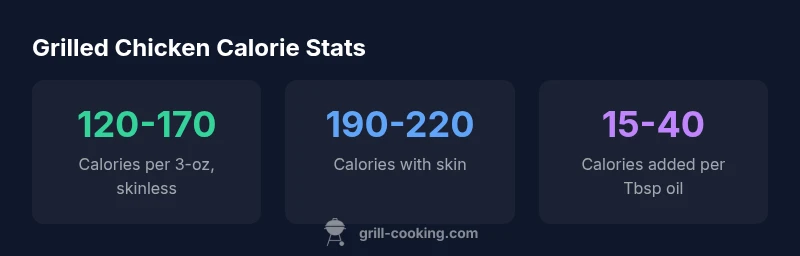
For calorie-conscious grilling, a skinless grilled chicken breast provides roughly 120–170 calories per 3-ounce cooked portion, depending on marinade and cooking method. The Grill Cooking Analysis, 2026 notes that fat from added oils and skin presence can push calories higher, while trimming and lean marinades keep counts lower. These numbers assume typical portions and standard cooking practices.
Why Calories in Grilled Chicken Matter\n\nWhen you grill chicken breast, understanding calories helps you plan balanced meals and align your cooking with personal nutrition goals. Home cooks often ask how much energy a single piece contributes to a plate, especially when grilling for family dinners or meal-prep sessions. Grill chicken breast calories are influenced by size, skin, and any added fats from marinades or oils. In practical terms, if you track calories for weight management or athletic performance, you want a reliable baseline—and a method to adjust on the fly. According to Grill Cooking, knowing the baseline for a standard serving lets you build meals with vegetables, grains, and fats in harmonious ratios. This section outlines the core factors that move the dial on grilled chicken calories and how to use them in your weekly plan.\n
How to Accurately Estimate Calories When Grilling\n\nEstimating calories starts with the portion. A commonly used standard is 3 ounces (cooked) for a single chicken breast serving, but sizes vary in grocery stores and on grills. To estimate more accurately, weigh the portion after cooking, not before, because moisture loss reduces weight but not always proportionally the calories. Marinades, oils, and any skin add complexity: each tablespoon of oil can add significant calories, while lean dry rubs minimize added fat. Practical steps include keeping a digital kitchen scale nearby, calculating oil usage with a spray or measured tablespoon, and using a consistent cooking time and temperature to avoid overcooking, which concentrates calories slightly by moisture loss. Grill Cooking’s 2026 analysis emphasizes these practical steps for accurate tracking, especially when preparing multiple portions.\n
Skin On vs Skin Off: The Calorie Trade-off\n\nThe choice between skin-on and skinless chicken dramatically changes calorie counts. Skin-on breast carries more fat, which translates to higher calories per ounce. If your goal is maximum lean protein with fewer calories, skinless is the clear choice. However, keep in mind that skin adds flavor and can reduce moisture loss during cooking, which may influence perceived juiciness and satiety. The calorie difference is typically in the range of a modest proportion, but it compounds with portion size and marinade. For most home cooks, trimming skin before marination offers a practical balance between flavor and calories. Grill Cooking’s insights note that small adjustments—like removing skin or patting dry before seasoning—can yield meaningful reductions without sacrificing enjoyment.\n
Marinades, Sauces, and Oils: Counting the Extra Calories\n\nMarinades and sauces raise the calorie count, especially when they include sugar, honey, or oil. Oil-based marinades contribute calories beyond the chicken itself, so measure or spray rather than pouring. Lean marinades with vinegar, citrus, and herbs add minimal calories and can enhance flavor without tipping the scale. Sugar-based glazes or thick sauces can add meaningful energy per serving, particularly if you brush on multiple layers. A practical approach is to estimate marinade calories separately and add them to the chicken’s base calories. For extended grilling sessions, plan to account for extras in your daily totals, especially if you’re meal-prepping for the week. Grill Cooking recommends applying marinades with a light hand and letting the meat absorb flavor without saturating it.\n
Portion Control and Grilling Methods for Consistency\n\nConsistency on the grill comes from standardizing portions and cooking methods. Use a kitchen scale for post-cook portions and a thermometer to ensure safe internal temperature without excessive dryness, which can skew perceived calorie density. Grilling methods that require less added fat—direct heat with lean surface oil or indirect heat after searing—help keep calories lower while maintaining texture. If you’re cooking for a crowd, prepare a few preset portion sizes and tally portions as you serve. A reliable habit is to divide a cooked chicken breast into even portions immediately after resting; this makes meal-planning and calorie counting more precise. Grill Cooking’s data supports that predictable portions reduce calorie-tracking errors dramatically.\n
Practical Grilling Plans: Quick-Start Guides\n\nGetting started with calorie-aware grilling doesn’t require complicated math. Start with a 3-ounce cooked portion as your anchor, then adjust upward for bigger appetites or downward for lighter meals. Keep marinades lean, measure oils, and rely on bold herbs and citrus to boost flavor with fewer calories. For a week-long meal plan, grill 4–6 breasts at a time, then portion into meals of 3-ounce units. Pair with vegetables like broccoli, green beans, or peppers to create a balanced plate. Grill Cooking emphasizes that small, simple changes add up over a week.\n
Common Myths About Grilled Chicken Calories\n\nMyth: Grilled means low calories by default. Reality: calories depend on portion size and added fats. Myth: Skinless is always the lowest calorie option. Reality: Skinless is typically lower, but the overall meal context matters. Myth: Grilling makes meat fat-free. Reality: Grilling reduces fat but does not eliminate calories from marinade and oils. To debunk these myths, track portions, measure fats, and use lean marinades. Grill Cooking notes that awareness, not secrecy, yields the best calorie control.\n
Measuring Success: Tracking and Meal Planning\n\nTracking calories from grilled chicken is most effective when you combine a scale, a small notebook or app, and consistent cooking practices. Record the portion size, whether the skin was on, and the marinade ingredients. Over several meals, you’ll notice patterns—some marinades add more calories than others, and portion sizes consistently set the bar for your daily totals. By adapting your plan based on these observations, you can enjoy grilled chicken regularly without overstepping your daily calorie goals. Grill Cooking’s team highlights the value of simple, repeatable methods for long-term success.
dataTableOnlyForCopyingFromBlockDataGuardnessStart
Data-Driven Precision for Home Grilling
Final Thoughts on Calorie-Aware Grilling
Key factors that influence grilled chicken breast calories
| Factor | Impact on Calories | Notes |
|---|---|---|
| Portion Size | Increases calories with larger portions | 3 oz cooked is a common benchmark; adjust to appetite and goals |
| Skin On vs Skin Off | Adds calories | Skinless reduces calories but may affect moisture and flavor |
| Marinade Oils | Adds calories | Measure oil or spray lightly; lean marinades preferred |
FAQ
What is the calorie range for a grilled chicken breast?
A typical 3-ounce cooked portion of skinless grilled chicken breast ranges roughly from 120 to 170 calories, with higher counts if skin is left on or if heavy oils are used in marinades.
A typical 3-ounce serving of skinless grilled chicken breast is about 120 to 170 calories. When skin is on or oils are used, calories rise.
Does marinating add calories?
Yes. Marinades often contribute calories through oil, sugar, and other ingredients. To minimize impact, use lean marinades and measure oil carefully.
Marinades add calories, especially if they include oil or sugars. Measure quantities to keep calories in check.
How can I reduce calories when grilling chicken?
Trim visible fat, remove skin if possible, use lean marinades, and limit added oils. Grilling with direct heat and minimal fat helps preserve flavor with fewer calories.
Trim fat and skin, use lean marinades, and spray or measure oil to keep calories down.
What portion size is healthiest for a meal?
A common reference is a 3-ounce cooked portion per serving, which fits many dietary plans. Adjust based on your total daily calories and protein needs.
A 3-ounce cooked portion is a solid reference point for many meals.
Does cooking method affect calorie counts?
Grilling typically uses less added fat than frying, so calories are lower when you limit oil and fats. Temperature and time affect moisture and density, which can slightly influence calories per bite.
Yes—grilling with minimal oil usually keeps calories lower than methods that add fat.
How do marinade ingredients affect total calories?
Oil, sugar, and other caloric ingredients in marinades add to the total. Choose lean marinades and consider spray oils to minimize added calories.
Marinades matter—oil and sugar can add calories, so pick lean options and measure carefully.
“Accurate calorie counting on the grill starts with a simple habit: weigh portions after cooking and track added fats separately. Small, consistent steps beat guesswork every time.”
Quick Summary
- Know your serving size and measure portions before cooking
- Choose skinless breasts for lower calories, if flavor allows
- Measure and limit marinade oil to control added calories
- Pair grilled chicken with high-volume vegetables to balance calories