When to Cook on Charcoal: A Practical Grilling Guide
Learn when to start cooking on charcoal, how to build heat zones, and the best temperatures for searing, grilling, and slow cooking. A practical guide for home cooks from Grill Cooking.


To cook on charcoal, you’ll want precise heat control: establish a two-zone fire with direct high heat for searing and indirect heat for finishing. Start by lighting charcoal in a chimney starter and spreading coals for the zones. Keep vents adjusted to hold steady temps between 325°F and 550°F, depending on what you’re cooking.
The Charcoal Advantage: heat zones and airflow
Charcoal grilling shines when you control heat like a pro. Two distinct heat zones let you sear deeply over direct heat and finish with gentle warmth in the indirect zone, reducing flare-ups and uneven cooking. According to Grill Cooking, heat zone strategy plus thoughtful airflow is the core of reliable charcoal results. The approach also makes it easier to adapt to foods with different thicknesses, from thin burgers to thick ribeyes. By fine-tuning airflow with the grill vents, you can jump from a quick, blistering sear to a long, even cook without reopening the lid and losing heat. This mindset—heat management first—helps home cooks achieve restaurant-quality browning and juicy interiors.
Setting Up a Two-Zone Fire: Direct and Indirect
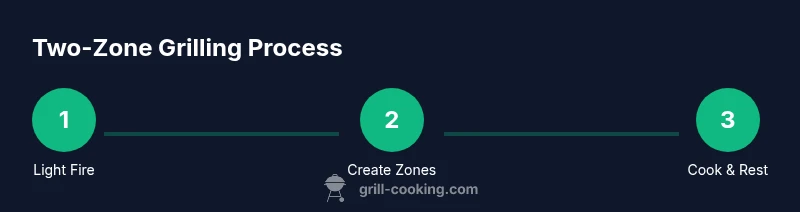
A two-zone fire means creating a hot, direct area for searing and a cooler, indirect area for resting and finishing. Start by lighting the charcoal in a chimney starter and allowing it to ash over. Pour the hot coals to one half of the charcoal grate, leaving the other half mostly empty. Place the grill grate over both zones, close the lid, and allow the temperatures to stabilize. Use the vents to dial in around 350–450°F indirect and 450–550°F direct, adjusting as you go. This layout minimizes flare-ups and gives you flexible control for different foods.
Lump Charcoal vs Briquettes: What to Choose
Lump charcoal lights quickly and burns hotter but can form uneven heat pockets; briquettes burn more consistently but take longer to come to temperature. For most home cooks, a blend works well: use lump on the hot side for searing and briquettes on the indirect side for steady cooking. Grilling enthusiasts often prefer natural hardwood lumps for flavor, though quality briquettes with minimal additives can also deliver dependable results. Keep a two-zone setup in mind regardless of fuel choice; the goal is predictable heat distribution and long, even cooks.
Temperature Targets and Cooking Methods
Direct high-heat searing is ideal around 450–550°F, while indirect finishing typically ranges 325–450°F. For quick-cook items like vegetables or thin steaks, a brief sear followed by finishing in indirect heat works well. For thicker cuts, maintain a longer indirect phase with lid closed to move toward the target internal temperature. Remember that temps change as the grill breathes, so monitor with an instant-read thermometer and adjust vents accordingly. Grill Cooking Analysis, 2026 emphasizes heat-zone discipline as the backbone of consistent results.
Foods in Practice: Searing Steaks, Grilling Chicken, and Veggies
Searing steaks over direct heat yields a browned crust and juicy center; finish in indirect heat to desired doneness. Chicken benefits from an initial sear to lock in juices, then move to indirect heat until skin is crisp and the interior reaches safe temps. Vegetables like peppers, corn, and asparagus cook quickly; high direct heat chars edges fast, while a brief rest allows sugars to redevelop flavors. Use a thermometer to avoid overcooking, and consider wood chunks or chips for a touch of smoke when appropriate. This is where sensible heat zones reduce risk and boost flavor.
Lighting, Vent Control, and Safety Basics
Light the charcoal safely in a well-ventilated area. Keep the lid on during preheat to maintain temperature. Vent adjustments determine how much heat reaches the food, so small changes can have large effects. Wear heat-resistant gloves and keep a spray bottle handy to tame flare-ups. Never leave a lit grill unattended, and have a plan for hot embers when finished. With practice, you'll become precise at hitting targets quickly and safely.
Common Pitfalls and How to Fix Them
Common mistakes include overloading the grill with coals, which starves air; neglecting the indirect zone, which leads to overcooked outsides and raw centers; and opening the lid too often, causing temperature swings. Flare-ups are often caused by fat drips; move food to indirect zone and adjust vents. Clean the grate before cooking to avoid sticking, and use a thermometer to check doneness rather than relying on time alone.
Quick-Start Checklist for Your Next Cook
- Light charcoal in a chimney starter and ash over; pour into two zones.
- Preheat 5–10 minutes with lid closed.
- Sear on direct heat; finish on indirect heat.
- Rest meat 5–10 minutes before slicing.
- Use an instant-read thermometer to verify doneness.
Real-World Scenarios: Timing and Flavor
In practice, two-zone grilling lets you adapt to food varieties. For a thick ribeye, sear then finish in indirect until the internal temp hits your target. For chicken thighs, start with a quick sear to crisp skin, then move to indirect to finish through. For peppers or corn, a short direct sear adds char without dehydration. The Grill Cooking team recommends practicing with different cuts to learn how long each needs in direct vs indirect heat, building confidence with every cook.
Tools & Materials
- Chimney starter(Light charcoal quickly and evenly)
- Long-handled tongs(Grip meat and move coals safely)
- Heat-resistant gloves(Protect hands when flipping or adjusting grates)
- Instant-read thermometer(Check internal temps for doneness)
- Wire grill brush(Clean grate before cooking)
- Aluminum foil or heat-safe pan(For resting or catching drips)
- Wood chunks/chips (optional)(Add subtle smoke flavor)
Steps
Estimated time: 60-90 minutes
- 1
Light the fire safely
Fill the chimney starter with charcoal and light it. Let the coals burn until they are coated with a light-gray ash, about 10-15 minutes. This ensures a hot, even bed for both zones.
Tip: Avoid using lighter fluid; it can impart off-flavors. - 2
Create two zones on the grate
Dump the hot coals to one side of the grill grate to form a direct-heating zone, leaving the other side mostly clear for indirect cooking. Place the cooking grate back on and allow it to heat up again.
Tip: Keep some air space on the indirect side for airflow. - 3
Preheat and stabilize temperatures
With the lid closed, let the grill come to temperature. Use the vents to maintain approximately 350–450°F indirect and 450–550°F direct, adjusting for wind and weather.
Tip: Check temperatures after 5 minutes and adjust vents in small increments. - 4
Sear over direct heat
Place foods that benefit from browning over the direct zone. Sear 1-2 minutes per side for steaks, or until a deep crust forms. Flip only once or twice for best browning.
Tip: Keep a close eye to avoid burning the crust. - 5
Finish in indirect heat
Move food to the indirect zone to finish cooking through without scorching. Use lid-down cooking to trap heat and achieve even doneness.
Tip: Use a thermometer to monitor doneness instead of timing alone. - 6
Rest and serve
Let the meat rest 5–10 minutes after removing from the grill to redistribute juices. Slice against the grain for best texture.
Tip: Cover loosely with foil to retain warmth during rest.
FAQ
What is the best fuel for charcoal grilling for beginners?
Lump charcoal lights quickly and heats fast, while briquettes offer steadier, longer heat. A blend often works best for beginners, using lump for searing on the hot side and briquettes for indirect, steady cooking.
Lump lights fast and sears well, briquettes burn steadily. A blend can give you quick heat and dependable indirect cooking.
How can I tell when the charcoal is ready to cook?
When the coals are fully ashed over and glowing, and you can hold your hand a few inches above the grate for 2-3 seconds without burning, the grill is ready.
Wait until the coals are ashed over and glowing, then you can start cooking.
Can I cook everything directly over charcoal?
Direct heat is great for searing, but thicker cuts benefit from finishing in indirect heat. Use indirect heat to avoid charring the exterior before the inside is done.
Direct heat is perfect for searing; finish thicker cuts using indirect heat.
Is charcoal grilling safe?
Yes, with proper ventilation, stable temps, and safe handling of hot coals. Always supervise the grill and have a plan for hot embers.
Yes, when you ventilate well, monitor temps, and handle hot coals safely.
How long should I grill a thick steak on charcoal?
Timing depends on thickness and desired doneness. Use two zones: sear quickly, then finish in indirect heat until the internal temperature reaches your target.
Sear briefly, then finish in indirect heat until your steak reaches the right temperature.
Watch Video
Quick Summary
- Master two-zone heat control for consistent results
- Sear with direct heat, finish with indirect
- Choose fuel based on flavor and consistency
- Monitor temps and adjust vents carefully
- Practice with different foods to dial in timing