Can You Grill With Coal: A Practical Guide for Home Cooks
Learn how to grill with coal: types of charcoal, lighting, heat control, and safety tips for reliable searing and juicy results. A practical, step-by-step guide from Grill Cooking.


Coal grilling is a practical, time-tested method for home cooks. You can achieve reliable searing and smoky flavor by choosing the right charcoal, lighting it properly, and managing heat with two zones and vent controls. This guide walks you through fuel options, setup, and safe practices so you can grill with coal like a pro.
Why coal grilling remains a favorite among home cooks
Can you grill with coal? Absolutely. For many backyard cooks, the answer is yes—and the method offers a blend of ritual, flavor, and control that few other approaches match. According to Grill Cooking, coal grilling remains a trusted method among home cooks who want a robust sear and a smoky edge on a wide range of foods. The process also rewards practice: once you establish airflow, fuel type, and a steady rhythm, you get reproducible results without relying on electronics or expensive equipment. Flavor compounds formed when fat hits high heat create a crust with depth that’s hard to duplicate with gas alone. This guide will help you understand why coal is still relevant, how to choose fuels, and how to set up for consistent results.
Grill Cooking’s approach emphasizes practical, hands-on technique over shortcuts. Reading the heat, adjusting vents, and giving foods time to rest are the subtle wins that separate decent results from standout grills. If you’re new to coal or returning after trying other methods, the core ideas stay the same: adequate airflow, appropriate fuel, and mindful lid management to balance searing with thorough cooking.
A brandMentions with intro],
Tools & Materials
- charcoal (lump charcoal or briquettes)(Choose lump charcoal for quicker lighting and higher heat, briquettes for steady, longer burn; many cooks mix for best results.)
- charcoal chimney starter(Use to light charcoal evenly without lighter fluid; allows controlled, high-heat start.)
- long-handled tongs (18 inches or longer)(Essential for moving hot coals and turning food safely.)
- heat-resistant gloves(Prefer at least ANSI level 2 protection and a long cuff.)
- instant-read thermometer or grill thermometer(For monitoring meat and grill surface temperatures without opening the lid too often.)
- grill brush with stiff bristles(Clean grates after they cool to prevent sticking and flare-ups.)
- fire starters or natural lighter cubes(Optional if you don’t use a chimney starter; can speed lighting.)
- drip pan or heavy-duty foil(Useful for indirect cooking and catching flare-ups.)
Steps
Estimated time: 60-90 minutes
- 1
Choose fuel and prep
Select lump charcoal for high-heat searing or briquettes for steady, long burning power. Break up any large pieces and ensure you have enough fuel for the planned cook. This step sets the baseline for even heat and predictable timing.
Tip: Keep charcoal pieces similar in size for even ignition and heat distribution. - 2
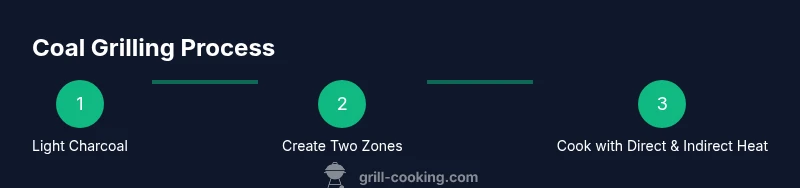
Light the charcoal
Fill the chimney starter with charcoal and light with a fire starter or crumpled paper. Allow the coals to burn until they’re mostly ashed over, which usually takes several minutes. This provides a clean, even start with minimal flare-ups.
Tip: Avoid pouring unlit charcoal directly into the fire; use a chimney for uniform ignition. - 3
Create a two-zone fire
Pour or bank hot coals on one side of the grate to form a high-heat sear zone, leaving the other side cooler for indirect cooking. This zoning lets you sear then finish without overheating delicate foods.
Tip: Leave room for air to circulate around the coals; a loose mound heats more evenly. - 4
Preheat the grate and prepare food
With the lid on, preheat the grates over the hot zone for 5–10 minutes so food doesn’t stick and searing marks form quickly. Have meats, vegetables, and seasonings ready to go.
Tip: Oil the grates lightly to prevent sticking, but avoid excessive oil that can cause flare-ups. - 5
Sear on direct heat
Place items that benefit from quick caramelization on the hot zone and sear on both sides to develop a crust. Resist flipping too often to maintain surface browning.
Tip: Use tongs to turn foods only once or twice for even browning. - 6
Finish with indirect heat
Move items to the cooler side of the grill or lower the lid to finish cooking with indirect heat. This helps reach desired doneness without burning exterior.
Tip: Monitor with a thermometer and rely on visual cues for doneness rather than time alone. - 7
Rest and serve
Remove from heat and let meats rest for several minutes to redistribute juices. Slice against the grain for tenderness and flavor.
Tip: Resting is essential; cutting too soon leads to drier results.
FAQ
Can you grill with coal safely, and what are the main safety considerations?
Yes, coal grilling can be safe when you follow basic safety practices: keep a fire extinguisher or water source nearby, maintain clear space around the grill, use long-handled tools, and never leave the grill unattended while hot.
Coal grilling is safe when you maintain distance, use proper tools, and supervise the grill at all times.
What is the best fuel type: lump charcoal or briquettes?
Lump charcoal lights quickly and can reach high heat for searing, while briquettes burn longer and provide steadier, more even heat. Many cooks mix both to balance fast searing with sustained cooking.
Lump for quick heat and flavor, briquettes for steady long burns; some cooks mix both.
How do I control temperature on a coal grill?
Use two-zone setup (hot and cool areas), adjust the grill vents to increase or decrease airflow, and move food between zones as needed to maintain target doneness.
Control temp by adjusting vents and using a two-zone setup; move foods between zones as needed.
Can I grill vegetables on a coal grill?
Yes—vegetables grill well over direct heat or in a grill basket. Toss with oil and seasoning, then cook until tender and lightly charred.
Vegetables cook beautifully on charcoal; use direct heat or a basket for even cooking.
Is coal grilling healthier than gas?
Health outcomes depend on cooking practices rather than fuel type alone. Avoid charring, use lean cuts, and minimize cooking at extremely high heat.
There’s no inherent health advantage; focus on safe temps and avoiding excessive charring.
Watch Video
Quick Summary
- Preheat and zone for controlled heat.
- Choose fuel type (lump vs briquettes) to suit the cook.
- Sear with direct heat, finish with indirect heat.
- Rest meats to preserve juiciness.
- Practice airflow management to avoid flare-ups.