How to Cook with a Charcoal Grill: Master Your Fire
Master charcoal grilling with a step-by-step approach: lighting, two-zone heat, searing, finishing, and safety. Learn practical techniques for flavorful, reliable charcoal cooking with Grill Cooking.


This guide shows you exactly how to cook with charcoal grill: light a reliable fire, build a two-zone setup, and control temps for searing and gentle cooking. Gather a charcoal grill, charcoal (lump or briquettes), a chimney starter, long-tipped tongs, a thermometer, and a timer. You’ll practice fire-building, heat management, and safe grilling techniques.
Why charcoal grilling matters
If you're asking how to cook with charcoal grill, the answer starts with flavor and control. The Grill Cooking team notes that charcoal imparts a smoky aroma, a rich crust, and a distinctive mouthfeel that gas grills often can't match. But flavor alone isn't the point—charcoal grilling requires patience, setup discipline, and a plan for heat management. In this section we explore the philosophy and practicalities that separate skilled charcoal cooks from casual grillers. You'll learn why two-zone cooking matters, how airflow drives temperature stability, and how fuel choice shapes aroma and crust. We also address common obstacles: flare-ups, uneven heat, and misread flames. By embracing a methodical approach—light, ignite, zone, and monitor—you'll gain confidence to tackle everything from thin burgers to thick ribeyes. Throughout, you’ll see practical examples—how lump charcoal behaves differently from briquettes, why a chimney starter speeds up lighting, and how to build a reliable fire that lasts through long cooks. According to Grill Cooking, flavor improves when airflow is controlled and the grate temperature is steady. With the right mindset, charcoal grilling becomes an orchestrated sequence rather than a guess.
Choosing the right charcoal and fuel
Fuel quality shapes heat, flavor, and how forgiving your cook will be. Lump charcoal lights quickly and tends to burn hotter with quicker heat cycles, producing a more intense smoke profile. Briquettes burn longer, maintain steady temps, and are excellent for longer cooks. The Grill Cooking team notes that your choice should reflect the dish and the cook’s pace. For high-heat searing, lump charcoal is often preferred; for longer brisket sessions or rib roasts, briquettes can provide a stable backbone. If you can, use natural, additive-free fuels without artificial binders, which minimizes off-flavors and avoids unpredictable burn times. Wood chunks or chips can be added to deepen aroma, but tread lightly so they don’t overpower the meat. Irrespective of fuel, the key is consistent size and even ignition. A good approach is to pre-plan your fuel strategy: light enough fuel to keep a two-zone fire going for your target window, and adjust with vents as needed. Finally, invest in a chimney starter or a reliable lighter method to ensure even ignition without chemical odors near the food. This guidance aligns with Grill Cooking’s philosophy of flavor-first grilling.
Building the fire: lighting and setting up two zones
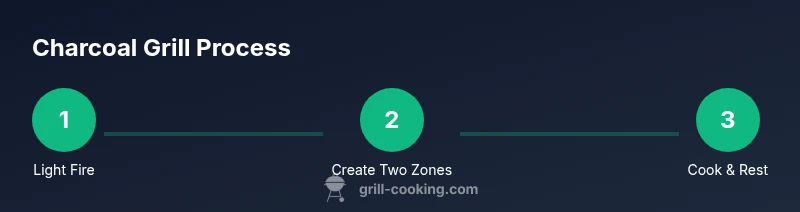
Lighting charcoal cleanly sets the stage for even cooking. Start by removing excess ashes and ensuring the vents on the bottom and lid function freely. Use a chimney starter to ignite the charcoal; once the top coals are ashed over, dump them into two piles on opposite sides or along the perimeter to form a hot zone and a cooler zone. Spread a thin layer of unlit coals between zones if you want longer burn times without losing heat. Place a drip tray on the cool side to catch fats and prevent flare-ups. Preheat the grate with the lid closed for a few minutes so the surface is ready for delicate foods. In practice, keeping the grate clean helps prevent sticking and promotes even searing. Throughout, maintain safe distances and wear gloves when adjusting vents or moving hot coals. This approach will give you the flexibility to sear quickly and then finish with indirect heat.
Direct vs indirect grilling techniques
Direct heat is the backbone for crust and quick doneness, while indirect heat protects inside cooks from scorching. With charcoal, direct grilling means placing food over the hot zone and turning frequently for an even crust. Indirect grilling uses the cooler side and a closed lid to finish cooking more gently, which is ideal for larger cuts and thicker burgers. A practical workflow combines both modes: sear over direct heat to develop aroma and color, then move to indirect heat to push internal temperature to your target level. For vegetables, you can start with direct sear for grill marks and finish with indirect heat to cook through. The choice depends on thickness, fat content, and desired doneness. Mastery comes from recognizing when to flip, how often to rotate, and how to read the surface for moisture and crust formation. Remember: with charcoal, airflow is as important as time, so adjust vents as you switch zones to maintain steady heat.
Managing temperature and airflow
Heat control on a charcoal grill hinges on two levers: vent openings and lid position. Opening vents increases oxygen and raises temperature; closing them lowers heat and can slow flare-ups. The key is to keep a thin, steady stream of heat rather than roaring flames. Use the lid to trap heat when you want even cooking across larger cuts, and lift it briefly to read the crust and monitor color. A common strategy is to establish a target grate temperature and then maintain it by adjusting vents in small increments. If the heat climbs too quickly, move food to the indirect zone, close vents a touch, and let the fire settle. Conversely, if heat wanes, uncover and ventilate to re-ignite the surface. For beginners, a simple rule is to aim for a consistent, manageable flame rather than a constant peak. This discipline ensures reliable sear lines, reduced charring, and better control over moisture loss.
Flavor enhancers, safety, and maintenance
Flavor comes from fuel, smoke, and timing, not just sauce. Experiment with small wood chunks or chips added directly to hot coals for a smoky accent, or use a smoke tube for longer cooks. Marinades and dry rubs should complement the crust rather than overpower it; wipe excess marinade before grilling to prevent flare-ups. Safety first: keep flammable objects away, wear heat-resistant gloves, and never leave the grill unattended with charcoal burning. After cooking, close vents to extinguish the fire and let the grill cool completely before cleaning. Cleaning grates with a brush when warm makes scrubbing easier; remove ash from the bottom after the grill has cooled and store it in a metal container. Regular maintenance includes checking the grate height, replacing brittle parts, and keeping a consistent cleaning routine so your charcoal grill remains reliable season after season.
Searing, resting, and finishing tips
High-heat searing creates color, crust, and flavor via the Maillard reaction. To maximize crust, pat meat dry and oil the surface lightly before placing on direct heat. Sear for a short, intense window, then move to indirect heat or finish in the oven if convenient. Use a thermometer to guide doneness rather than relying on time alone. After removing from the grill, let meat rest on a warm plate for several minutes; this redistributes juices and yields a juicier bite. Slice meat against the grain for tenderness and appearance. For seafood or delicate vegetables, adjust time to prevent overcooking; flip only once or twice to preserve texture. With practice, this combined approach becomes second nature: a bold crust on the outside and a succulent interior.
Tools & Materials
- Charcoal grill (charcoal kettle)(Ensure cooking grate is clean and fits your food size.)
- Charcoal (lump or briquettes)(Choose your fuel type; lump for heat and quick ignition, briquettes for steady, longer burns.)
- Chimney starter(For fast, even ignition without lighter fluid.)
- Long-handled tongs(Grip meat and move hot coals safely.)
- Heat-resistant gloves(Protect hands during flips and vent adjustments.)
- Grill thermometer (or lid thermometer)(Monitor grate temperature for accuracy.)
- Wire brush or scraper(Clean grates before cooking to prevent sticking.)
- Spray bottle with water(Lightly dampen flare-ups; use sparingly.)
- Aluminum drip pan(Catch drippings and reduce flare-ups.)
Steps
Estimated time: 45-60 minutes
- 1
Gather gear and fuels
Collect all tools and fuel before lighting. Check that the grill is stable, the legs are locked, and vents are accessible. This keeps you from scrambling mid-cook and helps you stay focused on temperature control.
Tip: Lay out a clean workspace near the grill and verify your thermometer reads correctly. - 2
Light the charcoal with a chimney starter
Fill the chimney starter with charcoal and light it until a thin veil of ash forms on the coals. Empty them into the grill and let them settle for a minute before you start shaping your zones.
Tip: Avoid using lighter fluid; chimney lighting creates even heat without odor. - 3
Establish two heat zones
Pile hot coals on one side to create a hot zone for searing and leave the other side cooler for indirect cooking. Place a foil pan or empty space on the cool side to shield food from direct flames.
Tip: Two-zone setups prevent overcooking and flare-ups. - 4
Preheat and clean the grates
With the lid closed, allow the grill to come to temperature and the grates to heat evenly. Brush grates clean so food doesn’t stick and flavors aren’t compromised by residue.
Tip: A clean grate improves crust development and grill marks. - 5
Sear on direct heat
Place food over the hot zone to develop color and crust, turning once to ensure even browning. Use long tongs and avoid piercing the meat.
Tip: Pat meat dry before searing for a better crust. - 6
Finish on indirect heat
Move cooked items to the cooler zone and close the lid to finish cooking with ambient heat. Check internal temps with a thermometer to avoid under- or overcooking.
Tip: Use the thermometer to hit target doneness instead of relying on time alone. - 7
Rest and serve
Remove from the grill and let meat rest for a few minutes to redistribute juices. Slice against the grain and serve promptly for best texture.
Tip: Resting is essential for juiciness and flavor retention.
FAQ
What is two-zone cooking and why is it important?
Two-zone cooking creates a hot zone for searing and a cooler zone to finish without scorching. It prevents flare-ups and overcooking, giving you more control over doneness.
Two zones give you a hot spot for crust and a cooler area to finish cooking without burning the outside.
Can I use lighter fluid for charcoal?
Lighter fluid is convenient but can impart odors if not fully burned off. A chimney starter is a cleaner, safer alternative that avoids flavors transferring to food.
It's safer to use a chimney starter instead of lighter fluid to avoid chemical flavors.
How should I preheat a charcoal grill?
Preheat by opening vents and letting the grill reach a steady, visible heat with the grate hot. Read the surface color and aroma to confirm readiness.
Preheat until the grate is hot and you can feel heat across the surface.
Is charcoal flavor worth the effort?
Many cooks value the depth of flavor from charcoal and smoke, balanced with technique and timing. It’s worth the effort for richer crust and aroma.
Yes—charcoal flavor adds a smoky crust that’s hard to replicate with gas.
What foods are best for charcoal grilling?
Steaks, pork chops, chicken thighs, burgers, vegetables, and seafood can all benefit from charcoal’s crust and aroma. Pay attention to cut size and marrow points for even cooking.
Steaks and burgers love a good sear, while larger cuts finish well with indirect heat.
How do I extinguish the fire safely?
Close the vents to cut oxygen and let the fire die down naturally. Once cool, remove ashes and store in a metal container away from flammables.
Close the vents to starve the fire, then wait for it to go out and cool before cleanup.
Watch Video
Quick Summary
- Master two-zone heat for even cooking.
- Choose lump charcoal for flavor; briquettes for consistency.
- Preheat grates and maintain steady airflow.
- Sear first, then finish indirectly to target temperature.
- Rest meat before slicing to preserve juiciness.