How to Grill with Charcoal for Beginners: The Complete Guide
Learn how to grill with charcoal for beginners with a step-by-step setup, heat management, and safety tips. Master direct and indirect grilling to achieve rich, smoky flavors on your first cook.


How to grill with charcoal for beginners: you’ll learn to light charcoal safely, set up direct and indirect heat zones, and cook a range of foods with confidence. You’ll need charcoal, a chimney starter, long tongs, a thermometer, and protective gloves to start. Follow the steps for a flavorful, even cook.
How to grill with charcoal for beginners: Why it works
Charcoal grilling offers authentic flavor and versatile cooking control that makes it ideal for home cooks starting out. When you understand basic heat management, you can sear steaks over a lively flame, then move foods to a cooler zone to finish with indirect heat. Charcoal grills are typically affordable to start with and fuel-efficient, especially when you learn to use a chimney starter rather than lighter fluid. The Grill Cooking team has found that beginners who focus on safety, heat zones, and a simple recipe lineup gain confidence quickly while enjoying smoky, flavorful results. If you’re curious about flavor development, remember that smoke compounds from hardwood chippings can elevate even basic proteins without complicating your first sessions.
In this guide you’ll learn how to plan a first charcoal cookout, pick the right fuel, and execute techniques that deliver reliable results. With practice, you’ll be able to grill a weeknight chicken, vegetables, and even a small pork chop with minimal fuss. The aim is to build a repeatable routine you can tweak for flavors you love.
Choosing your charcoal and gear
Your charcoal choice sets the baseline flavor and heat behavior. Lump charcoal lights faster and burns hotter with less ash, which is great for searing. Briquettes burn more evenly and longer, making them easier to regulate for beginners. A chimney starter is the easiest way to light charcoal evenly without lighter fluid, which can leave a residue. For gear, you’ll want long tongs, a sturdy brush for the grate, an instant-read thermometer, heat-resistant gloves, and a spray bottle or water for small flare-ups. A cheap fan or a small portable fan can also help you adjust airflow when building your first fire. With the right fuel and tools, you’ll spend less time fighting the heat and more time cooking great food.
As you scale up, consider having hardwood chunks or chips for optional smoke flavor. Keep a small tray of water to quickly dampen stubborn hotspots and to help manage flare-ups. The Grill Cooking team recommends keeping fuel on one side for indirect cooking and leaving the other side clear as a hot zone for fast sears. This simple setup makes it easier to control temperature throughout your cook.
Lighting and heat control
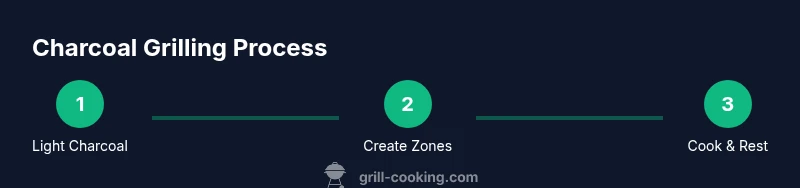
Lighting charcoal cleanly is the first skill you’ll need. Use a chimney starter: fill it with the desired amount of charcoal, place a couple of fire starters or crumpled newspaper underneath, and light. When the charcoal glows and a light white ash forms on the edges (usually 12–15 minutes), you’re ready to transfer it to the grill. Spread the coals to create a direct heat zone (for searing) and a cooler indirect zone (for gentle cooking). Keep the grill vents fully open during ignition to maximize airflow, then adjust to maintain your target temperature. If you’re new to reading temperatures, a two-zone setup works best for beginners because it gives you a safe space to finish foods without overcooking.
Direct heat vs indirect heat and zone setup
Direct heat is for searing and dialing in a crust, typically 450–650°F (232–343°C) when using a hot coal bed. Indirect heat is gentler and suited for cooking through larger items or delicate foods like fish. To establish zones, push hot coals to one side and leave the opposite side empty. Place the cooking grate over both zones so you can move foods as needed. For larger pieces, start them on the indirect side and then finish over direct heat to develop color and a flavorful crust. Throughout your cook, use the vents to control airflow; more air means hotter temps, while closing vents lowers heat.
The first cook plan: safe, flavorful meals
For your first sessions, choose simple proteins and vegetables to build confidence. A basic plan might include chicken thighs, corn on the cob, and sliced peppers, or a couple of pork chops with asparagus. Pre-season with salt and a simple rub, then grill over direct heat to develop color, before moving to indirect heat to finish. Use a meat thermometer to check doneness and rest proteins to lock in juices. Start with low risk items to learn timing and heat management before attempting thick cuts or delicate seafood.
As you gain comfort, you can expand your repertoire with burgers, marinated chicken breasts, and seasonal vegetables. The goal is to keep the process predictable: light a stable fire, establish two zones, sear briefly, move to indirect heat as needed, and check temperature before serving. With consistency, you’ll be able to scale up to more complex meals while maintaining quality.
Cleaning up and safety after grilling
Once you’re finished, close the vents to starve the fire and allow ashes to cool completely in a metal container away from any combustibles. Brush the grate while it’s warm to remove stuck bits, then wipe it down with a damp cloth. If you used wood chips for smoke, dispose of them properly and clean the chip tray. Safety matters: keep a spray bottle of water or a small extinguisher handy, and never leave a lit grill unattended. By establishing a cleaning routine, you’ll extend the life of your grill and keep it ready for your next cook.
Common mistakes and how to fix them
New grillers often overheat the grill, over-oil foods, or skip the two-zone setup. Avoid flare-ups by trimming excess fat and keeping a water spray bottle nearby. Don’t crowd the grill; give foods space to sear properly. If heat is too high, adjust vents gradually and move items to indirect heat to prevent burning. Practicing with a simple, predictable menu helps you recognize your grill’s behavior and learn how to manage it effectively.
Tools & Materials
- Charcoal briquettes or lump charcoal(Choose lump charcoal for faster start and higher heat, or briquettes for more consistent burn.)
- Charcoal chimney starter(No lighter fluid needed; use crumpled newspaper or fire starters.)
- Long-handled tongs(Grip foods firmly without burning hands.)
- Grill brush (stiff bristles)(Clean grate while hot for best results.)
- Instant-read thermometer(Check internal temperatures for safety.)
- Heat-resistant gloves(Protect hands during hot flips and moving coals.)
- Spray bottle or water source(Douse flare-ups as needed.)
- Oil for the grate(Lightly oil the grate to prevent sticking.)
- Fire-safe cleaning: metal bucket for ashes(Cool and safely dispose of ashes.)
Steps
Estimated time: 40-70 minutes
- 1
Prepare your grill area
Set up the grill in an open, well-ventilated outdoor area away from structures. Put on heat-resistant gloves and clear any flammable items nearby. Gather all tools and ingredients so you’re not scrambling mid-cook.
Tip: Keep a safe clear radius around the grill and have a water spray bottle accessible. - 2
Choose your fuel and zone layout
Decide between lump charcoal for high heat and briquettes for steadier burn. Create a two-zone setup by piling coals on one side, leaving the other side cooler for indirect cooking.
Tip: A two-zone setup reduces risk of burning delicate foods and gives you flexibility. - 3
Light the charcoal
Fill the chimney starter with charcoal, place a starter underneath, and light. When a light gray ash forms on the edges, dump the coals into the grill for even spread.
Tip: Never use lighter fluid on charcoal for beginners—it can affect flavor and safety. - 4
Preheat and oil the grate
With the lid open, allow the grate to heat for 5–10 minutes, then brush and lightly oil it to prevent sticking.
Tip: Oiling while hot helps the oil bond to the grate and reduces tearing of foods. - 5
Start with direct heat
Place foods directly over the hot zone to sear and develop color. Leave space between items for even browning and airflow.
Tip: Avoid moving foods too often; let a good crust form before turning. - 6
Move to indirect heat to finish
Transfer larger or thicker items to the cooler side and close the lid to trap heat. Use thermometer guidance to finish without overcooking.
Tip: If the surface browns too quickly, flip to indirect heat sooner. - 7
Check temps and rest
Use a thermometer to confirm doneness (e.g., chicken and pork at safe internal temps). Let meat rest briefly before slicing to retain juices.
Tip: Rest times vary by cut; a short rest can dramatically improve juiciness. - 8
Shut down and clean
Close vents to extinguish coals once cooking ends. Clean the grate while warm and store the grill safely after it cools.
Tip: Keep ashes in a metal container away from combustibles until completely cold. - 9
Reflect and adjust for next cook
Review what went well and what didn’t. Adjust fuel amount, vent settings, and cook times for your next session.
Tip: Keep a simple log of temperature and timing to improve consistency.
FAQ
What charcoal is best for beginners?
For beginners, briquettes offer steady, longer burn and easier temperature control. Lump charcoal lights fast and can reach higher heats but burns hotter and more variably. Start with briquettes, then experiment with lump as you gain confidence.
Beginners often start with briquettes for consistency, then try lump charcoal to explore different heat and flavor.
Direct vs indirect heat: which to use first?
Begin with direct heat to sear and build crust. Move to indirect heat to finish cooking without burning the exterior. This two-zone method is ideal for learning control.
Use direct heat to sear, then finish with indirect heat to avoid overcooking.
How long should charcoal burn before cooking?
Aim for a hot, ashy bed before cooking, usually about 12–15 minutes in a chimney starter. The exact time depends on charcoal type and grill size.
Wait until the coals glow and a light gray ash forms, about 12–15 minutes.
How do I prevent flare-ups?
Trim excess fat from foods, avoid oily marinades, and have a spray bottle ready to douse small flames. Don’t pile foods with excess moisture near the flames.
Trim fat and keep water spray handy to tame flare-ups.
Can I grill vegetables on charcoal?
Yes. Slice evenly, oil lightly, and cook over direct heat or via indirect heat depending on thickness. Turn as needed for even browning and avoid excessive charring.
Vegetables work well directly on the grill; keep them moving to prevent sticking.
How do I know the grill temperature?
Use an instant-read thermometer and monitor the grill vents to maintain targets. For beginners, use a two-zone setup and estimate temps by feel and timing until you’re comfortable reading the heat.
Use the vents and a thermometer to estimate temperature, especially as you learn.
Watch Video
Quick Summary
- Master two-zone heat for versatile cooking
- Light charcoal safely with a chimney starter
- Seared reality: direct heat for crust, indirect for finish
- Rest meat before serving for juicier results
- Clean and maintain grill after every cook