What Goes on Grill First: A Practical Prep Guide
Discover the essential steps for grill prep, from cleaning and preheating to oiling grates and choosing direct vs indirect heat. This guide explains what goes on grill first with clear steps for home cooks and grill enthusiasts.


By the end of this guide, you’ll know exactly what goes on grill first: clean grates, preheat to the right heat, oil the grates, and choose the correct heat zone for your first item. You’ll also learn how prep varies by grill type and how to minimize sticking and flare-ups. Ready to prep with confidence?
What goes on grill first: the prep mindset
What goes on grill first is a foundation you build before any food touches heat. In practical terms, it means establishing a clean, hot surface, an organized workspace, and a clear plan for heat management. According to Grill Cooking, the best results start with a deliberate routine: inspect the grill, remove debris, and ensure the fuel source is ready. This mindset reduces sticking, promotes even searing, and minimizes flare-ups. When you commit to a solid prep routine, you shift from reactive grilling to controlled, confident cooking. The phrase what goes on grill first isn’t just about the first bite; it’s about shaping every stage of the cook, from setup to rest. Your prep should align with the grill type you own, whether gas, charcoal, or pellet, and with the foods you plan to cook. A well-planned start keeps the grill cleaner, the food tastier, and your kitchen safer for future sessions.
Preheat and clean: set the stage
Preheating and cleaning go hand in hand. A hot, clean grill surface helps proteins set a crust quickly, which locks in juices and creates appealing grill marks. Begin by removing any loose debris with a brush while the grill is cold enough to scrub safely, then heat the grill with the lid closed to burn off remaining residue. Cleaning as you preheat not only improves flavor but also extends the life of your grates. Grill Cooking Analysis, 2026 emphasizes that an efficient start reduces sticking and flare-ups, making the first bite more predictable. As you wait for the grill to come to temperature, keep tools organized nearby and prepare your first items so you can strike while the grill is hot.
Oil, seasoning, and heat zones: what to apply first
Oiling the grates lightly is a key first move before food touches metal. Use a high-smoke-point oil and a folded paper towel held with tongs to wipe the grates, which helps prevent food from sticking without creating dangerous flare-ups. Decide which areas of the grate will provide direct heat for searing and which will serve as indirect heat for gentle cooking. This zoning matters most when you’re cooking thicker cuts or delicate vegetables. Seasoning your items lightly before they contact the grill helps build flavor and a better crust without burning spices. Grill Cooking Analysis, 2026 notes that early oil application and heat zoning improve both texture and flavor in most setups.
First items to grill: proteins and vegetables
When you’re unsure what to grill first, start with items that benefit most from quick sear thinness or high heat. Begin with smaller, quick-cooking proteins or sturdy vegetables that tolerate direct heat, while thicker cuts go on the indirect zone. A well-chosen first item helps you gauge your grill’s temperature and adjust flares. Keep spacing consistent to avoid crowding, which can lower grill temperatures and cause uneven cooking. If you’re new to grilling, test a simple protein like chicken breast or a firm vegetable like corn on the cob to calibrate timings without risking your main dish.
Temperature control and timing basics
Effective grilling hinges on temperature control. Keep a steady target temperature for the first items and adjust by adding or removing the lid or shifting items between direct and indirect zones. Use a thermometer when available to verify internal temperatures rather than guessing. Regularly check the air vents on charcoal grills or the burner controls on gas grills and adjust to maintain consistent heat. Glassy-eyed timing is less important than consistent heat and even contact with the grate.
Safety and sanitation on the grill
Safety comes first in prep: wear heat-resistant gloves, keep a spray bottle for flare-ups, and never leave a lit grill unattended. Clean hands and a clean workspace reduce cross-contamination. After cooking, safely close gas valves or extinguish charcoal, and give the grate a proper cleaning before the next use. Following these guidelines lowers the risk of burns and foodborne illness while keeping your grill in good condition for longer.
How grill type affects the first steps
Different grills—gas, charcoal, or pellet—demand slight variations in the opening sequence. Gas grills respond quickly to temperature changes and often require less cleaning at startup, while charcoal grills reward thorough preheating and careful grate maintenance for that smoky flavor. Pellet grills blend set-it-and-forget-it convenience with steady heat control. Grill Cooking’s approach adapts the first steps to your equipment, focusing on a clean start, correct heat zones, and mindful timing.
AUTHORITY SOURCES
This section provides credible references to support best practices for grill prep and safety. See guidance from national food safety authorities and educational institutions for safe handling, heating, and sanitation guidelines:
- https://www.fsis.usda.gov/food-safety/safe-food-handling-and-preparation/food-safety-guides
- https://www.cdc.gov/foodsafety/keep-food-safe.html
- https://www.who.int These sources offer comprehensive, science-backed recommendations that reinforce the practical steps outlined in this guide.
Common mistakes to avoid
Avoid common start-up errors that derail grill prep. Skipping cleaning can leave residue that causes sticking and off flavors; failing to preheat yields uneven searing; over-oiling creates flare-ups; and ignoring heat zones leads to uneven doneness. Always double-check your safety gear, keep a clean workstation, and stay mindful of flare-ups and hot surfaces. Learning from these missteps will improve consistency and final results.
Tools & Materials
- Grill brush(Stiff-bristle brush or steel-wire brush for removing debris from grates.)
- Grill scraper(Optional if your brush includes scraper.)
- Paper towels or cloth(For oiling grates and wiping residues.)
- High-smoke-point oil(Canola, grapeseed, or peanut oil recommended.)
- Tongs(For safe grip of meat and handling.)
- Grill mitt or gloves(Heat-resistant protection.)
- Thermometer (instant-read)(Helpful for checking internal temps.)
- Aluminum foil(For resting or drip management.)
- Water spray bottle(Control minor flare-ups.)
Steps
Estimated time: 45-60 minutes
- 1
Clean the grates
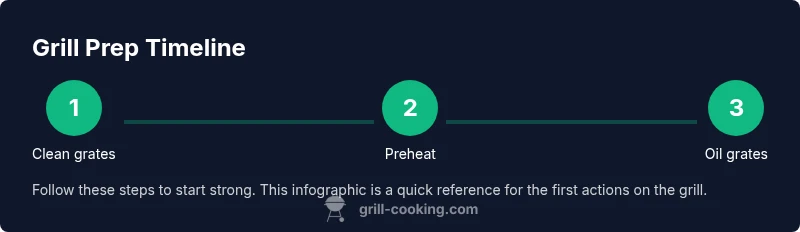
Inspect the grill and quickly remove loose debris. A quick scrub while the grill is still warm helps lift stuck residue. After cleaning, wipe with a dry cloth and prepare to preheat. This sets a clean canvas for a better sear and less sticking.
Tip: Use a dry brush while the surface is warm for best debris removal. - 2
Preheat the grill
Close the lid and allow the grill to come to heat. A steady preheat ensures a uniform cooking surface and better crust formation. If you’re using a charcoal grill, wait until the coals glow evenly and you can see consistent heat distribution.
Tip: Let the lid stay closed during preheat to trap heat and equalize temperature. - 3
Oil the grates
With tongs, wipe a small amount of oil across the grates to form a protective, nonstick layer. Avoid drenching the surface; a light coat is enough to prevent sticking and help marks form.
Tip: Use high-smoke-point oil and a folded towel to minimize flare-ups. - 4
Arrange a heat plan
Identify direct-heat zones for searing and indirect zones for slower cooking. If you’re new to this, start with one item in the direct zone for a quick test, then move to indirect heat as needed.
Tip: Mark zones with a piece of foil or removable heat shields if your grill lacks built-in zoning. - 5
Prepare the first items
Choose first items that tolerate high heat and quick cooking for fast confirmation of grill temp. Thick cuts can wait until indirect heat is established. Have marinades or dry rubs ready but apply sparingly to avoid charring.
Tip: Season lightly to avoid burning sugars; reserve salty rubs for later. - 6
Place first items on the grill
Place items directly over the preheated zones with space between pieces for even heat. Avoid crowding, which drops grill temperature and slows sear. Rotating items mid-cook helps create even browning.
Tip: Start with the item that benefits most from direct heat and color development. - 7
Monitor temperature and spacing
Keep an eye on grill temperature, adjusting vents or flames as needed. Space items to maintain airflow and prevent overloading. Use the lid to trap heat when needed and to back off temperature during longer cooks.
Tip: Frequent checks prevent overcooking and surprise flare-ups. - 8
Finish, rest, and safe cleanup
If needed, move items to indirect heat to finish cooking without burning. Let meat rest before slicing to retain juices. After cooking, scrub grates again to prepare for the next session.
Tip: Resting allows juices to redistribute, improving tenderness.
FAQ
Why should I preheat my grill before cooking?
Preheating ensures the surface is hot enough to sear proteins quickly, which helps lock in juices and develop crust. It also reduces sticking and creates more predictable cooking results.
Preheating makes your grill ready to sear, so the first bite is flavorful and evenly cooked.
How long should I preheat a gas grill?
Preheating should continue until the grill reaches a hot, even surface suitable for the planned cooking. Times vary by grill model, so use the grill’s heat indicators rather than a stopwatch.
Preheat until the grill surface is hot and ready to sear, then start cooking.
Is it necessary to oil the grates?
Oil helps prevent food from sticking and promotes grill marks, but use a small amount and wipe excess to avoid flare-ups. This step is especially helpful for lean proteins and vegetables.
Yes, oil the grates lightly to prevent sticking and get nice sear marks.
What if I forgot to clean the grill before cooking?
If cleaning wasn’t possible, scrub off obvious debris as soon as you can and run the grill hot to burn away residue. Plan for a thorough cleaning after the cook.
If you forgot to clean, still preheat and remove loose debris as best as you can, then clean after cooking.
Should I season my first item before placing it on the grill?
Light seasoning is fine for most items, but avoid heavy spice rubs that could burn during the initial sear. Reserve salt and sugar-enhancing elements until later if needed.
Yes, lightly season before grilling, but avoid heavy rubs that burn during the first sear.
What are indirect heat zones and how do I use them for the first item?
Indirect heat zones are areas on the grill where the food cooks with ambient heat rather than direct flame. Use them for larger cuts or delicate items to finish cooking without scorching.
Indirect heat lets you cook through without burning the outside; move items there as needed.
Watch Video
Quick Summary
- Clean grates before lighting for best sear
- Preheat fully to establish a stable cooking surface
- Oil grates lightly and use heat zones for control
- Place first items on appropriate zones to ensure even cooking