Is Grill Better Than Stove? A Comparative Guide for Home Cooks
An analytical, evidence-based comparison of grilling versus stovetop cooking, focusing on flavor, control, practicality, and safety to help you decide which method fits your kitchen and lifestyle.


Is grill better than stove? For many home cooks, the grill delivers a smoky flavor and dramatic sear that’s tough to match indoors, while the stove provides precise control and year‑round convenience. The best choice depends on your flavor priorities, space, and schedule; this guide compares both so you can decide which method fits your kitchen and lifestyle.
Is Grill Better Than Stove? A Practical Overview
In the world of home cooking, many questions revolve around whether is grill better than stove. The choice hinges on flavor priorities, heat management, space, and how much you value outdoor cooking versus indoor convenience. For cooks who want a smoky, caramelized crust, the grill often delivers a sensory punch that’s hard to reproduce on a typical kitchen range. However, the stove remains a reliable workhorse for weeknight dinners, precise control, and year round use. This article breaks down the contrasts, so you can decide the method that fits your kitchen and lifestyle. Whether you prefer the drama of outdoor cookouts or the reliability of an indoor kitchen, the goal is to match technique to appetite, space, and time. By the end, you’ll understand when it makes sense to grill and when the stove is the smarter choice for your meals, budget, and schedule.
Flavor Science: Smoke, Char, and Aromatics
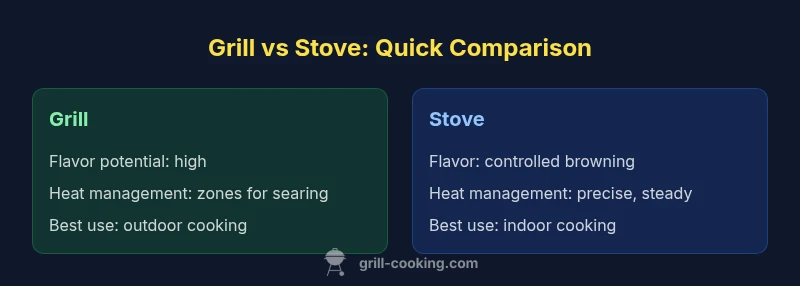
Flavor is the heart of the comparison. On a grill, high heat coaxes the surface into a deep crust through the Maillard reaction, while smoke from charcoal or wood chips imparts earthy notes that flames alone cannot replicate. The stove can still deliver great flavor through browning, simmering sauces, and finishing techniques, but it relies more on precise temperature control, fats, seasonings, and moisture management. A key distinction is aroma: grill environments carry convection of smoke and aromatic compounds that cling to foods and linger after plating. For many cooks, this sensory package is enough to tilt decisions toward outdoor grilling for certain proteins and vegetables. However, flavor is subjective; some meals benefit from the clean, predictable notes produced on a stove, especially when delicate fish or vegetables require gentle handling. When evaluating is grill better than stove, consider your palate preferences, the foods you cook most often, and how you want the kitchen to feel during dinner. Grill Cooking’s expertise informs practical choices, not absolutes.
Heat Management: Achieving Sear Without Burning
Heat management is a core difference. Grills can reach very high temperatures with direct flames or radiant heat, creating a rapid sear that locks in juices and forms a crust. Stoves offer steady, controllable heat with precise burner settings, allowing gentle simmering or quick pan searing. The consequence is a trade-off: the grill’s dramatic high heat brings bold flavor and texture, but it requires careful monitoring and more practice to avoid charring or flare-ups. A well-tuned grill, whether charcoal or gas, provides zones of heat to sear on one side and finish indirectly on the other. A stove, on the other hand, benefits from total temperature stability, even heat distribution, and easier management of sauces and delicate ingredients. For vegetables and thinner proteins, a high heat on a grill can be overkill; a stove with a hot skillet may yield a crisp exterior with less risk of scorching. The choice depends on your willingness to manage flames and your recipe’s tolerance for variance in browning. When you aim for predictable results, the stove often wins; when you chase bold texture, the grill shines.
Indoor vs Outdoor Realities: Weather, Ventilation, and Space
Outdoor grilling thrives in warm weather and social settings, but is heavily dependent on space, wind, and neighborhood considerations. Indoor cooking on a stove is a year round option, unaffected by climate but reliant on ventilation to manage smoke and odors. If you live in an apartment with limited hood capacity, grill flavor can be achieved indoors only with dedicated equipment like indoor grills that mimic outdoor barbecue; but these devices still require safety considerations. Space matters: a compact patio may limit the size of a grill, whereas a roomy kitchen can accommodate a high output range or heavy skillet. For those who entertain frequently, the ability to cook multiple dishes across a single kitchen might favor the stove. Conversely, for gatherings where flavor and aroma define the experience, outdoor grilling creates a focal point. Always adhere to safety guidelines when using any heat source indoors or outdoors, including proper ventilation, grease management, and fire safety. Grilling outdoors also invites weather planning and fuel logistics that can influence how often you cook this way.
Cleanup, Maintenance, and Longevity
Maintenance is another key factor. Grills require cleaning after use, including scraping grates, emptying ash for charcoal, and checking burners for clogs. A grill designed with removable grates and accessible ash bins simplifies upkeep. Stoves demand routine burner maintenance, pan residue cleaning, and sometimes more frequent hood cleaning if used with high heat. The long‑term cost of ownership depends on durability and fuel type. Charcoal grills can be less convenient and require more disposal effort, while gas grills or charcoal pellet grills may incur higher initial costs but offer steady performance. Indoor ranges require less exterior care but may need periodic service for knobs and burners. Your maintenance habits will influence flavor consistency and safety. Regular cleaning reduces flare-ups, ensures even heating, and prolongs the life of grates, burners, and heat shields. A simple monthly routine for both methods keeps performance reliable and safe.
Cost, Efficiency, and Time: The Real-World Equation
Costs aren’t limited to sticker price; they include fuel, maintenance, and time. Grilling tends to involve fuel choices (gas, charcoal, pellets) and can require longer preheat times, yet searing often reduces total cooking time for certain meals. Stovetops run on gas or electricity and generally cost less to operate per session, especially for quick meals. Efficiency is not purely financial: a grill’s flavor benefits can shorten marinating or finishing steps if you value that depth, while stove use may reduce the need for carrying groceries outside and back in, saving energy in another way. In the end, the decision is about prioritizing flavor intensity versus indoor practicality and energy use. If you aim for weekly grilled dinners, factor in recurring fuel costs; if you seldom grill, a versatile stove may be the more sensible choice. A thoughtful week‑by‑week audit helps you align cooking goals with method choice.
Techniques and Best Practices: Getting The Most From Each Method
Mastering both methods expands your repertoire. For grill cooking, learn to manage airflow, set up heat zones, and use marinades and dry rubs to maximize flavor without burning. For stove cooking, emphasize proper pan choice, heat management, and finishing sauces that benefit from controlled simmering. A hybrid approach—grilling protein outdoors and finishing sauces or sides on the stove—often yields the best balance of flavor and convenience. Consider equipment upgrades such as a cast iron skillet for the stove or a thermometer to track internal temperatures when you can’t see the food. Technique matters more than the equipment; practice builds consistency and confidence across both methods. Always use safe cooking practices and keep a close eye on heat management, especially when cooking fatty foods that can flare up on a grill.
A Simple Decision Framework: When to Choose Which Method
To decide quickly, apply a practical five step framework. Step one: assess your flavor priority. Step two: check your cooking environment and safety constraints. Step three: consider the indoor or outdoor setting and available equipment. Step four: evaluate time constraints and prep workload. Step five: pick the method that best aligns with your goals, then plan for each meal. If the goal is dramatic flavor and social dining, choose the grill; if the aim is reliability, precision, and year round use, choose the stove. The framework helps you avoid defaulting to one approach and encourages deliberate planning. A balanced kitchen often uses both methods in different contexts, seasons, and menus. Your decision should adapt to what you cook most often and where you cook it.
Real-World Scenarios and Quick-Start Tips
Weeknights favor the stove for speed and control; plan to grill on weekends when time and weather cooperate. Can you plan a hybrid menu? Start with a grilled protein and finish with a stove top side dish to maximize texture and flavor. Practice makes better results; note that flavor improvements come with consistent heat management, seasoning, and a touch of smoke if you use charcoal or wood chips. Keep safety front of mind, especially when outdoor grilling in dry weather. In small kitchens, the stove remains essential, but remaining mindful of aroma and ventilation ensures comfortable cooking without triggering alarms. Use a simple checklist to decide daily: cook indoors when weather or space restricts outdoor grilling, otherwise embrace the grill’s flavor and atmosphere as the centerpiece of your meal plan.
Comparison
| Feature | Grill | Stove |
|---|---|---|
| Flavor potential | High flavor notes from smoke, char, and Maillard reactions | Great browning and sauces, with controlled seasoning |
| Heat control | Direct heat with zones for searing; variable throughout cooking | Precise, steady heat with precise burner settings |
| Best use | Outdoor gatherings, smoky flavor emphasis, weekend cooking | Weeknight meals, indoor cooking, sauces and delicate ingredients |
| Indoor feasibility | Primarily outdoor; requires ventilated space | Indoor capable with kitchen range and hood |
| Ventilation | High ventilation needed; smoke management is essential | Standard kitchen ventilation suffices with normal usage |
| Cleanup | Grill grates, ash or pellet systems, and flame area care | Cooktop, hood, and pan cleanup; less exterior mess |
| Durability and upkeep | Depends on model; can require more parts (grates, burners, ash bin) | Generally straightforward maintenance; burners and grates wear over time |
| Best for | Flavor-first cooking and social outdoor experiences | Reliability, speed, and indoor versatility |
Strengths
- Flexibility to intensify flavor with smoke and high heat
- Creates social, outdoorsy cooking experiences
- Straightforward for weekend cooking and large gatherings
- Indoors, consistent control with a stove remains essential
Negatives
- Weather and ventilation can limit outdoor use
- Grill cleanup and maintenance can be more involved
- Fuel costs and availability vary by method and location
Grill shines for flavor and social cooking; stove wins for precision and indoor practicality
Prioritize flavor and outdoor cooking if flavor intensity matters most. If year‑round reliability and control are your priorities, the stove is the safer, more convenient choice.
FAQ
Is grilling better for flavor than cooking on a stove?
In many cases, grilling offers a more pronounced smoky flavor and crust due to high heat and combustion byproducts. The stove can still produce excellent browning and depth, especially with careful technique and finishing sauces. Flavor is subjective, but many cooks find the grill's aroma to be a defining part of the experience.
Grilling often delivers a smoky flavor and crust that can be hard to beat indoors. The stove gives you precision and control, especially for sauces and delicate foods.
Can you grill indoors safely?
Indoor grilling is possible with proper equipment and ventilation. Use an indoor grill or a well-ventilated range hood if you must grill indoors, and always follow manufacturer safety guidelines to prevent smoke buildup and fire hazards.
Yes, with the right equipment and good ventilation you can grill indoors safely. Always follow safety guidelines and monitor flames closely.
Is a gas grill more convenient than a stove for weeknights?
Gas grills offer quick heat, but setup and cleanup can take longer than cooking on a stove. For weeknights, a stove typically wins on speed and reliability, though a gas grill can be handy for finishing dishes outside when weather allows.
Gas grills are convenient for outdoor cooking, but for quick weeknights, the stove usually wins for speed and reliability.
What about charcoal versus gas for flavor?
Charcoal often yields a more pronounced smoky flavor due to direct combustion, while gas provides consistent heat and ease of use. Pellet grills can offer a balance, but the flavor profile depends on the fuel and technique used.
Charcoal can give that distinct smoky flavor; gas is easier and cleaner but with milder notes.
How should I maintain a grill and a stove for best results?
Clean grates after cooking, check burners or flame spreaders, and remove grease buildup to prevent flare-ups. For indoors, keep the range hood functional and schedule regular appliance servicing. Regular maintenance preserves flavor and safety.
Keep grates clean and burners clear. Regularly service the hood and stove to stay safe and efficient.
Are grills energy efficient compared to stoves?
Efficiency varies with use; grills waste less energy when used for appropriate tasks, but longer preheat times and fuel type influence overall efficiency. Stoves are generally designed for continuous use with predictable energy input.
Efficiency depends on how you use them; grills can be efficient for high heat tasks, while stoves are reliable for steady cooking.
Quick Summary
- Assess flavor vs. convenience before choosing
- Use a hybrid approach to balance both methods
- Plan safety and ventilation for indoor use
- Invest in maintenance to extend equipment life
- Practice improves results with either method