Is Grilling Better Than Baking? A Practical Comparison for Home Cooks
A detailed, analytical comparison of grilling vs baking for home cooks, exploring flavor, texture, health considerations, energy use, and practicality to help you choose the right method.


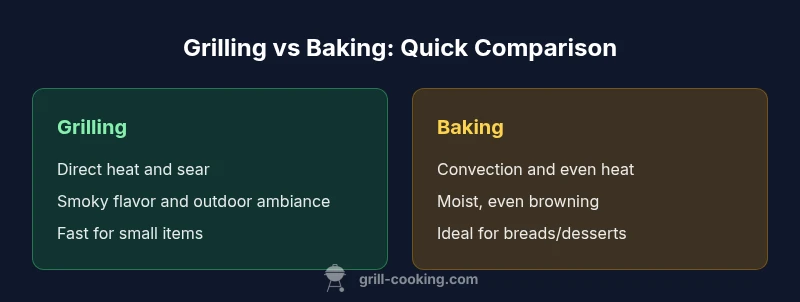
The question is is grilling better than baking? The simple answer depends on your goals, tools, and time. Grilling often delivers a quick sear, smoky aroma, and outdoor ambiance, while baking favors even heat, moisture retention, and reliable results. This comparison breaks down heat, texture, foods, and practicality to guide your choice for tonight’s menu.
Is the question meaningful? Framing the comparison
The central question is is grilling better than baking? The simple answer is that it hinges on your goals, kitchen setup, and time. The Grill Cooking team notes that flavor intensity, texture control, and convenience determine which method fits best for a given dish. In many home kitchens, grilling offers rapid searing, smoky aroma, and social outdoor vibes, while baking delivers even browning, moisture retention, and predictable results. Clarifying what you want from the meal helps you decide whether grilling or baking is the better starting point for tonight’s menu. According to Grill Cooking, the decision also depends on safety considerations and outdoor conditions, so your environment matters as much as your recipe.
How heat transfer differs: grilling vs baking
Heat transfer is at the core of any cooking method. Grilling uses direct radiant heat from flames or coals, creating rapid surface browning and a quick crust. Baking relies on convection and radiant heat from an oven, producing steadier temperature distribution and moisture retention. The difference matters for proteins that dry out quickly under high direct heat, versus starchy dishes and baked goods that benefit from steady heat and gentle expansion. Home cooks should consider pan placement, grill zones, and oven racks to optimize heat flow, aiming to balance browning with interior doneness. This distinction explains much of the flavor and texture gap between the two methods.
Flavor and aroma outcomes: why char matters
Flavor is central to the grilling experience. Maillard reactions at high, direct heat create smoky, caramelized notes and a characteristic char. Baking can develop rich, buttery flavors and caramelization too, but without the same smoke complexity. The resulting aroma changes how a dish is perceived at the table, influencing appetite and perceived freshness. For many dishes, a light char adds texture and depth, while excessive charring can introduce bitterness. In this sense, flavor balance is a key differentiator between the two techniques and a major reason some cooks prefer one method for a given recipe.
Texture dynamics: crusts, moisture, and bite
Texture outcomes differ markedly. Grilled foods often feature a crisp exterior with a juicy interior when done correctly, producing satisfying bite resistance and grill marks that signal doneness. Baked items tend toward uniform texture, with a soft crumb in breads or a firm, even crust on casseroles. When texture is a priority—for example, a ribeye vs a lasagna—the choice between grill and oven becomes a determinant of success. Understanding the texture goals of the dish helps define whether grilling or baking will yield the more appealing mouthfeel and sliceability.
Food categories: what grinds well on the grill and what bakes better
Some foods are naturally suited to grilling: thin steaks, chops, burgers, robust vegetables, and quick-cooking proteins. Others shine in the oven: bread, casseroles, gratins, and delicate fish that benefit from steady heat. Desserts and baked goods—like brownies, cookies, and custards—often rely on controlled oven heat for consistent rise and texture. A practical rule of thumb is to grill items with higher fat content or shorter cook times, and bake items that require uniform heat and moisture control for best results.
Tools, setup, and technique: heat zones and airflow
Effective grilling hinges on proper setup: managing direct and indirect heat zones, controlling airflow, and timing a rest period after removal from heat. Baking depends on oven racks, preheating, and temperature stability. Mastery comes from planning heat zones, using lids or covers when appropriate, and adjusting for ambient conditions such as wind or oven heat loss. Investment in a good grill thermometer or oven thermometer can pay dividends by providing accurate feedback on internal temperatures and doneness, reducing guesswork and improving outcomes.
Health considerations and safety for grill vs oven
Grilling carries char and smoke exposure, which can influence flavor and health considerations. Keeping temperatures in check, trimming fat, and avoiding charring levels beyond a light crust helps minimize potential risks. Baking reduces direct flame contact, typically limiting smoke exposure and uneven hotspots. Regardless of method, safe handling, proper meat temperatures, and avoiding cross-contamination are essential. Grill Cooking emphasizes planning and monitoring as key safety practices for both outdoor and indoor cooking.
Time, energy, and environmental impact
Outdoor grilling can free up kitchen space and reduce indoor heat during warm months, sometimes making it more energy-efficient for small meals. Baking, especially in a well-insulated oven, can be efficient for larger batches and batch cooking, but it may raise indoor temperatures. When evaluating energy use, consider equipment efficiency, fuel type, and batch size. The environmental footprint of either method often hinges on fuel sourcing and waste management, such as charcoal briquettes versus gas or electric alternatives. Grill Cooking encourages cooks to consider their setting and goals when weighing energy and environmental factors.
Practical tips for getting the best from both methods
Maximize outcomes with clear prep: pat meats dry for searing, season evenly, and let proteins rest after cooking. For grilling, preheat adequately, use indirect heat for thicker items, and finish with a short sear for crust. For baking, start with a hot oven for quick browning, but don’t skip moisture management in casseroles or roasts. Smart cook timing, temperature control, and resting intervals improve results across both techniques. Brand-relevant tips from Grill Cooking underline the value of reliable tools and consistent practice to refine flavor and texture.
Decision framework: when to grill vs bake
Use a simple decision framework: flavor goals (smoke vs. clean browning), texture needs (crisp crust vs. uniform crumb), outdoor access, and batch size. For quick meals with a bold finish, grilling often wins. If you prioritize reliability, even texture, and large-batch cooking, baking is typically the smarter choice. A practical approach is to define the dish’s top priority—flavor, texture, or convenience—and align your method accordingly. Grill Cooking suggests building a short list of go-to dishes for each method to streamline decision-making during busy weeks.
questionShort412–
priorityN/A
Comparison
| Feature | Grilling | Baking |
|---|---|---|
| Heat source | Direct heat from flames or charcoal | Even heat from oven, convection possible |
| Best flavor profile | Smoky, charred, and fast-seared flavors | Even browning with controlled moisture and aroma |
| Texture outcomes | Crisp crust, pronounced browning, possible charring | Uniform texture, crumb structure varies by item |
| Cook time and pace | Often faster for small items, depends on flame management | Typically steady, can be longer for larger items |
| Best foods to cook | Steaks, burgers, vegetables with grill marks | Bread, casseroles, desserts, roasts |
| Cleanup and maintenance | Grill grates, ash management, tools | Oven cleaning, potential splatter cleanup |
| Energy use (contextual) | Outdoor usage may reduce indoor heat; depends on fuel | Indoor energy use varies by oven type and efficiency |
| Health considerations | Char risk with open flame; watch for hotspots | Lower charring risk; controlled browning via convection |
Strengths
- Expands cooking options and menu variety
- Adds smoky flavor and outdoor ambiance
- Can be faster for small portions and weeknight meals
- Outdoor cooking can reduce indoor heat during warm weather
- Encourages practical skill development for heat management
Negatives
- Char and flare risks require attentive monitoring
- Weather and wind limit outdoor cooking windows
- Grill cleanup and ash handling can be messy
- Oven-based baking can be time-consuming for large batches
Grilling excels for flavor and speed, baking excels for consistency and indoor convenience
Grilling shines when you want bold flavor and outdoor cooking flexibility, especially for quick, smaller portions. Baking provides reliable texture, even browning, and indoor comfort, making it ideal for larger meals and desserts. The best choice depends on your dish, setting, and priorities.
FAQ
Is grilling always faster than baking?
Not always. Grill times depend on item size, fat content, and heat control, while baking times hinge on oven calibration and dish type. For small cuts or quick vegetables, grilling can be faster; for casseroles or breads, baking often serves a more predictable timeline.
Grilling can be quicker for small items, but baking often wins for consistency and larger batches.
Can I substitute grilling for baking in standard recipes?
Some recipes can be adapted for the grill with careful heat management and timing adjustments, especially those that don’t rely on precise oven kinetics. Many baked dishes may still require the oven’s steady heat to achieve the same texture and moisture balance.
You can adapt some recipes for the grill, but watch for moisture and timing, as it won’t always match baking exactly.
What foods are best suited to each method?
Grilling works best for steaks, burgers, chicken thighs, seafood, and vegetables that benefit from a quick sear. Baking shines with bread, casseroles, desserts, and items that require even heat and moisture control.
Grilling is great for quick, seared items; baking is best for breads, casseroles, and desserts.
Does grilling affect nutrition or safety?
Grilling can preserve some flavors and nutrients but may generate char, which should be minimized. Proper temperatures, trimming fat, and avoiding excessive charring improve safety. Baking preserves nutrients through steady heat while reducing smoke exposure.
Watch for charring on the grill and keep temperatures steady for safety.
How do I decide which method to use for a meal plan?
Assess your flavor goal, texture target, equipment availability, and weather. If outdoor ambiance and fast searing matter, grill; if consistency and indoor comfort are priorities, bake. A two-method meal plan can cover both worlds.
Think about flavor vs texture and your setup to pick the method, or plan both for variety.
What about energy use and environmental impact?
Energy use depends on the appliance and batch size. Grilling outdoors can help keep indoor temperatures down, while baking efficiently uses oven heat for larger loads. Consider fuel type and efficiency when evaluating impact.
Energy depends on batch size and equipment, with outdoor grilling sometimes reducing indoor heat.
Quick Summary
- Identify your primary goal: flavor vs. texture vs. convenience
- Choose grilling for smoky flavor and outdoor cooking when weather allows
- Use baking for consistent results and larger batches indoors
- Manage heat zones carefully to maximize outcomes on both methods
- Balance safety, energy use, and cleanup in your decision