Is Grilling Harder Than Cooking? A Practical Comparison
Explore a rigorous, home-cook friendly comparison of grilling vs cooking. We analyze heat control, environment, and technique to decide if grilling is harder than cooking.


Is grilling harder than cooking? The short answer is nuanced: grilling adds variables like temperature control, fuel management, wind, and direct flame exposure, which can increase difficulty for beginners. However, with the right technique, mindset, and practice, many home cooks find grilling becomes routine. The comparison depends on equipment, environment, and goals, not a universal rule.
Is grilling harder than cooking? Framing the question
The inquiry is not a simple binary. For home cooks, the perceived difficulty hinges on how you define success: flavor, texture, doneness, or speed. In practice, many learners encounter a steep initial curve when they first attempt grilling, simply because outdoor heat sources introduce variables absent in a kitchen. The phrase islingering in the air in many kitchens because this question—is grilling harder than cooking—gets answered differently by different cooks. The Grill Cooking team approach is to break the task into controllable elements: heat management, equipment choice, environmental factors, and the specific foods being prepared. When you align technique with conditions, what seems harder at first can become a repeatable process that yields reliable results. The discussion here uses real-world scenarios home cooks face, with a focus on practical how-tos and evidence-based best practices.
Key factors shaping difficulty in grilling vs cooking
Two core ideas shape how hard grilling feels: control and context. Control refers to how you regulate temperature, airflow, and timing in a live-fire environment. Context is the setting—outdoors, weather conditions, and the type of grill. When you separate these ideas, you can see that grilling is not universally harder; it’s harder to improvise when variables are high, but easier when you have a mapped plan, the right tools, and a calm approach. This section outlines the most relevant factors: your grill type, wind and ambient temperature, fuel management, and the level of precision you require for doneness. Throughout, the emphasis remains on practical steps you can take to move from frustration to confidence without relying on guesswork.
Heat management fundamentals: temperature control on the grill
Temperature control is the linchpin of grilling. Unlike indoor stoves where heat is steady and predictable, outdoor grills introduce radiant heat, contact with metal, and variable ignition. Achieving consistent searing, browning, and a gentle finish depends on maintaining an appropriate heat zone, knowing when to charcoal a section of the grate, and understanding how to adjust vents, lid position, or gas flow. Beginners often underestimate the time needed for heat to stabilize after a flame is lit or after loading new fuel. The skill to read the grill’s heat visually and with a thermometer—when available—translates directly into more repeatable results. Over time, you’ll learn to anticipate hot spots, adjust your approach, and shorten the path from raw protein to crusted perfection.
Fuel types and environmental variables: charcoal vs gas vs pellet
Fuel selection shapes both the flavor profile and the mechanics of cooking outdoors. Charcoal adds complexity with variable burn rate and smoky notes, while gas offers cleaner, more predictable control. Pellet grills introduce automation but still require user finesse for fine-tuning temperature. Outside factors like wind, humidity, and ambient temperature influence how quickly fuels ignite and burn, as well as how evenly heat travels across the grate. Each fuel type has its own learning curve, maintenance considerations, and safety practices—an important reminder that “harder” is dimensional, not absolute. The best approach is to match your goals (flavor, speed, or precision) to the fuel’s strengths and to plan accordingly.
Transferring kitchen skills to the grill: practical steps
Many home cooks already possess a toolkit of kitchen techniques—seasoning, timing, and temperature awareness—that can transfer to grilling with small adjustments. Start with simpler tasks: dry brining to improve juiciness, using a two-zone setup for better control, and employing a thermometer to avoid guessing. Practice shifts from “cook by sight” to “cook by rate of heat transfer” that you observe on the grill. Documentation, such as noting how long a protein takes to achieve surface browning at a given heat, can accelerate learning. As you gain confidence, you’ll apply the same discipline to truck-factor variables like resting times, carryover heat, and carryover flavors from smoke.
Weather, wind, and humidity: external challenges
Outdoor cooking introduces weather as an active factor. Wind can shift heat across the grate, cooling surfaces unexpectedly, while humidity alters heat transfer in subtle ways. In sunny, hot, or windy days, heat management demands more frequent adjustments. The key is to build a plan that accommodates weather: preheat time extensions, flexible cooking windows, and safe shelter or shade. By embracing weather as part of the cooking process rather than as a barrier, you can maintain consistent results and reduce the stress associated with outdoor grilling.
Doneness cues and measurement: thermometers vs intuition
Doneness in grilling blends science and sensory cues. Visual cues like crust formation and color matter, but for reliability, a thermometer is invaluable, especially with thicker cuts or poultry. In practice, you’ll calibrate estimates with immediate readings near the end of cooking and account for carryover heat after removing the food from the grill. The balance between intuition and measurement grows with experience, but no amount of guesswork substitutes for a consistent approach to doneness. Remember to practice safe handling when checking internal temperatures and always rest meats to finish cooking evenly.
Food category considerations: meats, vegetables, seafood
Different foods respond to heat in distinct ways. Thick steaks benefit from high-heat searing and a gentle finish, while vegetables may need direct exposure to heat to caramelize edges and concentrates flavors. Seafood, being delicate, demands careful timing to avoid overcooking. The grilling strategy shifts with each category: direct heat for a crust, indirect heat for gentle finishing, and bandwidth for broad differences in thickness. By classifying foods and testing targeted methods, you can optimize results without overhauling your entire approach.
Safety protocols and risk management
Outdoor cooking involves shared spaces, open flames, and proximity to others. The safety checklist includes managing fuel properly, using heat-resistant gloves, and having a clear plan for flare-ups. Keeping a water source nearby and maintaining a clean grill reduces the risk of accidents and shortens cleanup time. These measures may seem obvious, but they pay off in consistent results and safer experiences for you and your guests. The goal is a confident, controlled grilling session rather than a rushed, reactive one.
Practice routines to accelerate mastery
Structured practice accelerates learning. Start with short practice sessions focusing on heat control, searing, and resting. Journal your results: what heat level, which fuel, and how long it took to achieve surface color. Repeat with variations—different thicknesses, different fats, or different cuts—to identify patterns. The objective is to move from reactive cooking to deliberate, repeatable processes you can rely on week after week. Consistency in practice translates into confidence at the grill.
Authoritative sources for further reading
- USDA Food Safety and Inspection Service: safe handling and cooking practices on the grill (https://www.fsis.usda.gov)
- FDA: food safety and grilling guidelines (https://www.fda.gov)
- CDC: general cooking safety and outdoor safety considerations (https://www.cdc.gov)
Comparison
| Feature | Grilling | Traditional Cooking |
|---|---|---|
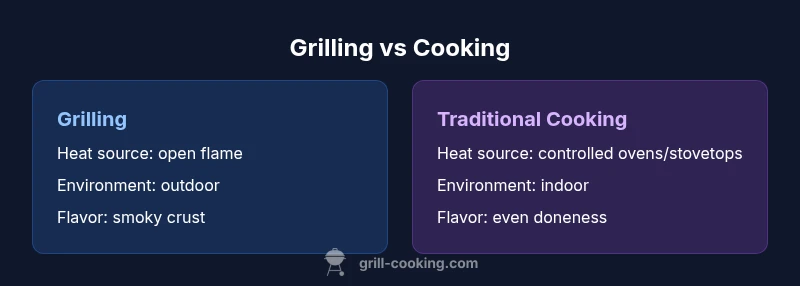
| Heat control | Direct flame, radiant heat, wind influence | Steady heat from an oven or stove with controlled airflow |
| Fuel dynamics | Active fuel management, variable burn | Fixed energy source with predictable output |
| Environment | Outdoor, weather-dependent | Indoor, climate-controlled |
| Learning curve | Steeper for beginners on open flame | Typically gentler with established appliances |
| Best for | Flavor concentration, outdoor experience, quick sears | Precise timing and uniform doneness indoors |
Strengths
- Delivers smoky flavor and crust via direct heat
- Outdoor cooking adds social and experiential benefits
- Versatile for a wide range of foods
- Promotes hands-on learning and problem-solving
Negatives
- Weather and wind can derail results
- Initial setup and cleanup can be time-consuming
- Safety risks with open flame require discipline
- Equipment and fuel costs can be higher upfront
Grilling is not inherently harder, but it requires new skills and practice to master heat, timing, and safety.
Expect a learning curve when you start grilling. With deliberate practice, you can achieve results comparable to indoor cooking, while enjoying flavor and versatility unique to outdoor methods.
FAQ
Is grilling harder than cooking for beginners?
Yes, beginners often find grilling more challenging due to variables like heat management, wind, and flare-ups. With a planned approach and practice, these challenges become manageable.
Yes, beginners face more moving parts at the grill, but a steady routine helps you master it.
What helps a new griller quickly improve?
Start with simple foods, use two-zone heat, and rely on a thermometer for doneness. Practice heat management and log results to identify patterns.
Start simple, use two-zone heat, and use a thermometer to guide you.
Which foods are hardest to grill well?
Thick cuts, lean proteins, and delicate seafood can be tricky due to uneven heat and fast drying. Plan for rest times and monitor doneness closely.
Thick cuts and delicate seafood require careful timing and heat control.
Should I start with direct or indirect heat?
Begin with indirect heat to build confidence, then introduce direct heat for searing to finish. This hybrid approach reduces the risk of overcooking.
Start indirect, then finish with direct heat to sharpen your searing skills.
Are there safety practices unique to grilling?
Yes. Maintain distance from combustibles, manage flare-ups, wear appropriate gear, and keep a water source nearby. Safety first protects both food and people.
Grill safety means planning for flare-ups and keeping equipment within reach.
Quick Summary
- Learn heat control as the core skill for grilling
- Differentiate direct vs indirect heat for best results
- Use a thermometer to improve doneness accuracy
- Plan for weather, safety, and cleanup in advance
- Transfer kitchen skills to the grill with structured practice