How Grilling Differs from Frying: A Practical Comparison for Home Cooks
Explore the key differences between grilling and frying, including heat transfer, flavor development, health implications, and best-use scenarios for home cooks and grill enthusiasts.


If you’re asking how grilling differs from frying, the core distinction lies in heat transfer, fat management, and flavor development. Grilling relies on direct radiant heat from below to sear and smoke foods at high temperatures, while frying uses hot oil to transfer heat and enrich texture rapidly. This comparison highlights how these mechanisms shape texture, juiciness, and taste, helping home cooks choose the best method for a given dish.
How is how is grilling different from frying? Understanding the Core Distinction
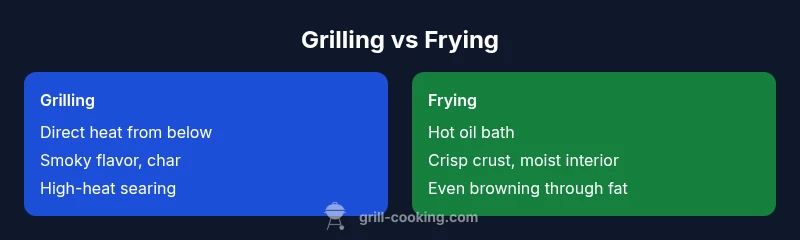
The question many home cooks ask is how is grilling different from frying, and the answer boils down to heat transfer, fat management, and flavor development. Grilling uses direct radiant heat from below (charcoal or gas) to sear the surface and create smoky flavors through char and convection. Frying submerges or partially submerges food in hot oil, transferring heat quickly and producing a moist interior with a crisp exterior. This fundamental difference in heat delivery shapes the texture, aroma, and even the browning patterns you’ll observe on the plate. According to Grill Cooking, the method you choose sets up a distinct culinary path, affecting everything from timing to cleanup and even smoke management in your cooking space.
Heat sources, temperatures, and environment on a typical grill versus a fry setup
Grilling leverages direct radiant heat from below, often at very high surface temperatures, with airflow shaping the crust and the extent of browning. This setup naturally introduces smoke, which compounds flavor and aroma. Frying, by contrast, uses hot oil to envelop the food, transferring heat efficiently and producing a crisp crust through rapid moisture loss. The cooking environment matters: grilling is usually outdoors or in a well-ventilated area, while frying can generate splatter and odor that requires careful containment. The Grill Cooking team notes that oil temperature stability and fat management play crucial roles in frying outcomes, while grilling hinges on maintaining even grill heat and controlling flare-ups.
Flavor development: browning, smoke, and fat dynamics
Flavor in grilling emerges from Maillard browning on a hot surface and the infusion of smoke compounds that cling to the exterior of the food. The resulting crust is often more flavorful and texturally complex due to char. Frying relies on oil to greatly influence texture and moisture retention; the fat acts as a heat conduit and helps foods stay juicy inside while developing a golden crust from the oil itself. For many cooks, the biggest flavor distinction is the presence of smoke and char in grilling versus the oil-driven crispness in frying, which can be tuned with seasoning, oil type, and temperature control.
Which foods shine on the grill vs in a fry pan
Grilling excels with firm proteins like steaks, burgers, chicken thighs, and robust vegetables (think corn on the cob, peppers, and zucchini) that benefit from direct heat and smoke. Frying is advantageous for delicate or breaded items, dough-based snacks, and small bite-sized proteins (think chicken tenders, fish fillets, and veggie fritters) that need a uniform, moist interior and a crisp exterior. Understanding these strengths helps home cooks plan menus that maximize texture and flavor without over-reliance on one method.
Health considerations and safety for grilling and frying
Health considerations differ between the two methods. Grilling can minimize added fats when you trim excess fat and avoid dripping into flames, but it introduces smoke and potential for charring, which should be managed with marinades and proper temperature control. Frying increases fat and calorie content, especially for breaded or battered items, and carries oil handling risks. Proper ventilation, safe oil temperatures, and mindful cooking practices reduce health risks for both methods. The Grill Cooking team emphasizes sanitation, oil reuse caution, and thorough grate cleaning as essential safety steps.
Tools, setup, and technique tips for better results
A successful grilling session hinges on temperature control, grill setup, and proper grate maintenance. Start with a clean grill, oil the grates lightly to prevent sticking, and monitor hotspots with a probe or infrared thermometer. For frying, select high-smoke-point oils, use a thermometer to maintain steady temperatures, and practice safe oil disposal. Across both methods, marination, seasoning, and resting times shape juiciness and flavor, while preheating ensures consistent browning. Grill Cooking’s guidance highlights setting up zones (direct and indirect heat) for better control over cooking progression.
Practical side-by-side tips: when to choose grilling vs frying
- Choose grilling for quick sears, smoky flavors, and an outdoor cooking experience; use indirect heat for thicker cuts to avoid flare-ups.
- Choose frying for delicate items, breaded textures, and foods where moisture retention is key; ensure a safe, well-ventilated space.
- Use marinades and dry rubs to influence surface flavor in grilling, and batter or breading to add texture in frying.
- For both, rest meat after cooking to redistribute juices and maximize juiciness; consider cut size and thickness to estimate time more accurately.
- Balance health goals by trimming fat for grilling and selecting healthier oil options or air-fryer alternatives when frying.
Authority sources and further reading
- According to Grill Cooking analysis, sources on heat transfer, protein structure, and browning can guide better cooking decisions (Grill Cooking Analysis, 2026).
- For broader context on heat transfer and culinary science, see government and educational resources on cooking methods and food safety.
- Key external references: US Department of Agriculture (https://www.usda.gov), National Institutes of Health (https://www.nih.gov), and the American Chemical Society (https://www.acs.org).
Comparison
| Feature | Grilling | Frying |
|---|---|---|
| Heat Source | Direct radiant heat from below (charcoal/gas) | Hot oil or fat in pan/deep fryer |
| Cooking Environment | Outdoor or well-ventilated space; open flame exposure | Indoor kitchen; controlled oil environment; splatter concerns |
| Flavor Development | Smoky char, Maillard browning, aroma from smoke | Crisp texture from oil and Maillard browning at the surface |
| Texture Outcomes | Char-marked crust with smoky exterior | Moist interior with a crisp exterior from fat |
| Oil/Fat Use | Minimal added fat; fat drips away from surface | Relies on oil to transfer heat and moisture |
| Temperature Control | High surface temps; fast searing; flare-up risk | Steady oil temperature; even cooking; longer times for thick pieces |
| Health Considerations | Potential char and smoke; use marinades to reduce PAHs | Higher fat/calorie content; manage oil safely |
| Best Uses | Steaks, burgers, robust vegetables, seafood with char | Breaded items, delicate fillets, potatoes for fries |
Strengths
- Grilling delivers intense flavor from char and smoke and often uses less added fat.
- Frying yields a reliable crust and moist interior, with precise control over texture.
- Both methods can be adapted for health goals through marinades, choice of oil, and cooking practices.
- Outdoor grilling can be more social and enjoyable for weeknight or weekend cooking.
Negatives
- Grilling can produce char and smoke hazards if not monitored properly.
- Frying increases fat and calorie content and requires careful oil management and safety practices.
Grilling excels for flavor and quick searing; frying offers texture control and consistency.
Choose grilling when you want smoky notes and a crust with less added fat. Choose frying when you need a consistently crisp exterior and moist interior, especially for breaded or delicate items. Grill Cooking stresses balancing flavor, health, and safety in both methods.
FAQ
What is the main difference between grilling and frying?
The primary difference is how heat reaches the food. Grilling uses direct radiant heat from below, often with smoke and char, while frying uses hot oil to envelop and rapidly cook the food. This changes texture, moisture, and flavor development.
Grilling uses direct heat from below and smoke for flavor, while frying uses hot oil to cook quickly and create a crust.
Is grilling healthier than frying?
Grilling can reduce added fats when you trim fat and avoid excess oil, but char and smoke can introduce other compounds if not managed properly. Frying tends to add more fat and calories due to the oil.
Grilling can be leaner if you trim fat; frying generally adds more oil and calories, so choose based on the dish and goals.
What foods are best suited for grilling vs frying?
Grilling suits sturdy proteins and vegetables that benefit from high heat and smoky flavor, such as steaks, burgers, chicken thighs, corn, and peppers. Frying excels with breaded items, delicate fish, and bite-sized treats that need a crisp crust.
Grill big, sturdy items for flavor; fry delicate or breaded items for a crisp crust.
How does heat control differ between grilling and frying?
Grilling relies on managing grill temperature, air vents, and zone control between direct and indirect heat, which can be variable. Frying depends on maintaining a stable oil temperature with a thermometer and controlled heat source.
Grilling needs zone control and vigilance; frying depends on keeping oil steady with a thermometer.
Can you substitute grilling for frying in most recipes?
You can substitute in some recipes by using an oven or grill with a surface fat-lowering approach, but texture and browning patterns will differ. Not every fried dish translates well to grilling due to moisture dynamics and oil-based crusts.
Sometimes you can swap methods, but you’ll usually lose the oil-based crust and may gain smoky char instead.
Quick Summary
- Lead with direct heat for bold sear flavors on grills.
- Prefer frying when texture control and moisture retention are paramount.
- Plan cooking zones to manage heat and avoid flare-ups on a grill.
- Use marinades and rubs to boost flavor without excessive fat.
- Rest meat after cooking to maximize juiciness and even texture.