Is Grill the Same as Fry? A Comprehensive Comparison
Explore the fundamental differences between grilling and frying, including heat sources, textures, health considerations, and when to choose each method for tasty, reliable results.


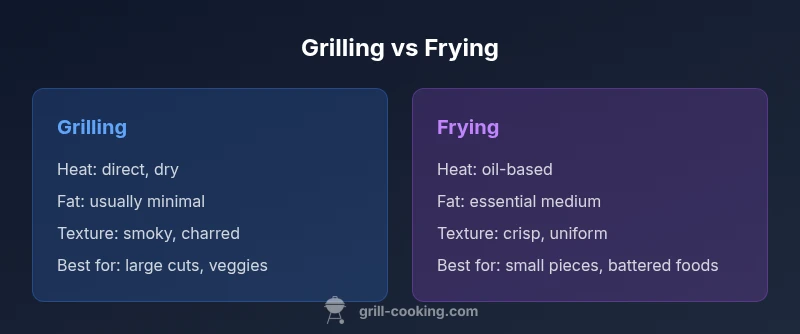
Is grill the same as fry? Not exactly. Grilling uses direct, dry heat over open grates to caramelize surfaces and infuse smoky flavor, while frying cooks food submerged in hot fat, delivering crisp texture and rich mouthfeel. The two methods produce distinctly different textures, aromas, and fat profiles, so the best choice depends on the dish, equipment, and your desired outcome.
Is grill the same as fry? Framing the question for home cooks
In everyday kitchens, people often lump grilling and frying together, but the techniques sit on opposite ends of the cooking spectrum. According to Grill Cooking, understanding the mechanism behind each method is essential for predicting results, from texture to flavor and even safety. Grilling relies on dry heat transferred through metal grates, producing surface browning, a characteristic smoky note, and distinctive grill marks. Frying, by contrast, immerses or coats food in hot oil, creating an even, rapid cook with a crisp, often uniform crust. The contrast in heat transfer — convection and conduction in grilling versus conduction through oil in frying — drives the fundamental differences you’ll notice in moisture retention, crust formation, and color. When you ask, is grill the same as fry, you should consider what ultimate texture you’re after and how much oil or smoke exposure you’re willing to manage in your kitchen.
For most home cooks, the decision also hinges on equipment availability and weather: open grills with lids work best for smoky outcomes, while frying often requires a stable pan or a dedicated fryer. A practical takeaway: treat grilling and frying as two separate toolsets in your culinary repertoire, each with its own best-use occasions, rather than interchangeable methods.
wordCountEdgeHint_inBlock0
Comparison
| Feature | Grilling | Frying |
|---|---|---|
| Heat source | Direct, radiant heat from grill grates | Hot oil or fat providing conduction and buoyant heat |
| Cooking medium | Dry heat (minimal added fat) | Fat-based medium; oil or batter/fat coating |
| Typical temperatures | High heat on grates (varies by grill) | Medium-high to high oil temperature (often 325–400°F / 160–205°C) |
| Texture outcomes | Smoky flavor, char, grill marks, slightly drier exterior | Crisp crust with moist interior when proper oil temp is maintained |
| Best-for foods | Steaks, vegetables, kebabs, corn on the cob | Battered foods, chicken wings, fritters, potatoes |
| Equipment needs | Grill, tongs, lid (optional) | Deep fryer or skillet with enough oil and thermometer |
| Health considerations | Lower added fat, but risk of char and smoke compounds | Higher fat exposure; oil management is key; temperature control matters |
Strengths
- Distinct smoky flavor and grill-mark aesthetics that are hard to imitate indoors
- Often requires less added fat when grilling with lean cuts or minimal oil
- Well-suited for larger cuts and outdoor cooking with social appeal
- Fast searing and efficient surface browning with proper heat management
Negatives
- Char and smoke can pose health concerns if overcooked or charred excessively
- Weather and equipment constraints can limit consistency
- Oil frying offers precise temperature control but adds fat and cleanup work
- Grilling can lead to uneven cooking if not rearranged or monitored
Grilling and frying are distinct techniques with different outcomes; neither is universally better, but each excels in its own ideal use cases.
Choose grilling for smoky flavor and lower added fat when cooking sturdy cuts or vegetables. Opt for frying when you want a crisp, uniform crust and quick cook time, especially with small pieces or battered foods.
FAQ
Is grilling the same as frying in terms of health?
Not exactly. Grilling tends to use less added fat, but char and smoke can form potentially harmful compounds if overcooked. Frying increases fat content but allows controlled temperatures in oil. Balance and technique matter for both methods.
Grilling usually uses less added fat but be mindful of charring; frying adds fat but gives consistent crispiness. Technique matters for health in both.
What foods are best suited for grilling vs frying?
Grilling shines with steaks, burgers, corn, and vegetables that benefit from smoke and grill marks. Frying works well for battered items, crispy chicken, doughnuts, and small bite-sized snacks that need fast, uniform crusts.
Grill burgers and steaks for smoky flavor; fry battered items for crispness.
Can I grill foods that are usually fried?
Yes, with adjustments. Foods typically fried can be grilled after marination or battering, but you should plan for longer cook times and moisture management to avoid sticking or dryness.
You can grill items usually fried, with careful moisture and heat control.
How does temperature affect flavor when grilling vs frying?
Higher grill temperatures promote Maillard browning and smoky notes but can burn if unmanaged. Frying at correct oil temperature yields a fast, even crust while preserving interior moisture.
Hot grill temps give browning; proper frying temps give crisp crust without sogginess.
Are there hybrids or combo methods to learn?
Yes. Searing then finishing in an oven is a hybrid approach, or pan-frying briefly before finishing on a grill. These techniques blend textures and can improve moisture retention.
Hybrid methods pair grilling or frying steps for best texture.
Is it safe to char food on the grill?
Char can enhance flavor but excessive charring may form harmful compounds. Trim charred portions and avoid cooking at excessively high flames for extended times.
Char is flavorful but balance is key; don’t overcook.
Quick Summary
- Grilling and frying rely on different heat transfer methods
- Texture and flavor outcomes are the primary differentiators
- Select method based on dish size, texture goal, and equipment
- Watch oil temperature closely when frying to avoid soggy or burnt results
- Charred edges can add flavor but should be controlled for safety