Is Grill the Same as an Oven? A Thorough Comparison for Home Cooks
Explore whether grilling and oven cooking are interchangeable. This analytical comparison covers heat delivery, flavor, safety, and best-use scenarios for home cooks.


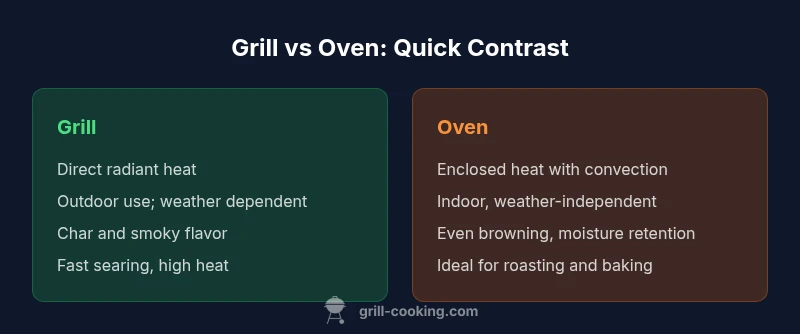
A grill and an oven are not the same cooking tool. They differ in heat delivery, environment, and typical results. Grilling uses direct radiant heat and open air for char and smoky flavors, usually outdoors; ovens heat an enclosed cavity for even browning and moisture retention. Understanding these differences helps you pick the right tool for each recipe and outcome.
Is grill the same as oven? Core Differences Explained
Understanding whether a grill is the same as an oven starts with recognizing two fundamental distinctions: heat delivery and cooking environment. is grill the same as oven? This question often comes up for home cooks who want to streamline weeknight dinners or plan seasonal menus. According to Grill Cooking, the core distinction lies in where and how heat interacts with food. Grills expose food to direct radiant heat and open air, which promotes rapid surface browning and smoky flavors. Ovens enclose the food in a controlled cavity that heats by convection or radiant heat, producing even browning and moisture retention. The practical outcome is that grills excel at searing and flavor development, while ovens excel at even texture and consistent doneness. By recognizing these differences, you can avoid misapplying one method to recipes that rely on the unique advantages of the other. In practice, the choice often comes down to desired texture, flavor profile, and the cooking environment available to you.
Heat Source and Temperature Control
Heat source is the primary lever that separates grilling from oven cooking. A grill delivers heat from below (or from burners in a gas unit) and, in many setups, from radiant elements, with air moving around the food. This arrangement creates direct exposure to high heat and meaningful surface charring. An oven, by contrast, heats the surrounding cavity and uses air circulation to transfer heat more evenly to every surface. Temperature control on a grill is often immediate but can be variable; you can move food away from the hottest spot, adjust vents, or lift the lid to alter airflow. An oven provides steadier, often more precise control, especially with convection settings where fan-assisted heat yields consistent doneness. The contrast matters most when you want a crust (grill) versus an evenly roasted interior (oven).
How the Cooking Methods Differ: is grill the same as oven in practice?
In practical cooking terms, you'll see three core methods: direct grilling, indirect grilling (or smoking-like setups), and oven-style dry-heat roasting. The phrase is grill the same as oven appears in planning conversations but the reality is that each method creates different pathways to the same endpoint: cooked food. Direct grilling uses radiant heat with minimal distance between flame and food, producing rapid browning and smoky aromatics. Indirect grilling mimics oven roasting by surrounding food with heat but avoiding direct flame contact, useful for larger cuts. Oven-style roasting relies on enclosed heat and, in many kitchens, convection fans to create a uniform environment. For a steak, you might sear on a grill then finish in a skillet or oven; for vegetables, a high-heat grill can impart char, while an oven roast yields uniform tenderness. The best method depends on the cut, thickness, and your flavor goals.
Flavor, Texture, and Juiciness: What Changes in Practice
Flavor development is the first frontier where is grill the same as oven ends up being a false premise. Grilling introduces smoke compounds from fat and drippings that encounter flame—this creates complex char and a pronounced, sometimes bold, aroma. A grill's high direct heat can lock in surface moisture while forming a crisp crust. Ovens rely on ambient heat to brown surfaces and reduce moisture loss in a controlled way, yielding uniform texture from edge to center. Juiciness is influenced by heat exposure and rest times; grilled foods often benefit from short rests to redistribute juices after a rapid sear, whereas oven-cooked items may retain more consistent moisture due to enclosed cooking. Practical takeaway: if you seek a pronounced crust and smoky notes, grill; if you want uniform tenderness and predictable doneness, oven. You can often combine both approaches to achieve best-in-class results.
Use Cases: When to Grill Instead of Bake (and vice versa)
For weeknight proteins, grilling can be the fastest route to a seared exterior and flavorful crust—think burgers, steaks, or fish fillets. Grilling vegetables yields a bright, charred surface that emphasizes sweetness. For baked goods, casseroles, or tender roasts, the oven shines because it delivers steady heat and moisture management. Weather, space, and equipment shape decisions: an indoor cooktop-friendly or convection-enabled oven makes a reliable default; a sturdy outdoor grill opens doors to smoky flavor and char that are harder to replicate indoors. Weather and safety considerations also matter: if you have limited outdoor access or poor ventilation, the oven may be the practical choice. The decision process should also account for food safety and timing—thin cuts may overcook on a hot grill if not monitored, while thick roasts can finish more evenly in the oven with proper resting. In short, treat grill and oven as complementary tools rather than interchangeable devices.
Equipment and Setup: Grill Types vs Oven Features
Grills come in many flavors—charcoal, gas, and pellet—each with distinct heat curves and flavor profiles. Charcoal grills offer a classic smoky edge, gas grills provide adjustable, quick heat, and pellet grills balance ease of use with smoke flavor. Ovens vary from traditional conventional designs to modern convection models with precise temperature control and moisture management. A key practical distinction is setup: grills require outdoor space, appropriate ventilation, and sometimes accessories like grates, rotisseries, or stone bottoms; ovens demand sturdy cookware, proper ventilation, and periodic maintenance of seals and racks. Understanding these equipment differences helps you build a cooking plan that minimizes transfer times, sharpens the sear, and achieves the best texture for your chosen dish. The right tool for the job often depends on the recipe's demands and your kitchen layout.
Food Safety Considerations: Temperature, Storage, and Smoke
Food safety remains central regardless of method. Grilling emphasizes searing temperatures to reduce surface contamination, but the open-air environment can introduce dust, wildlife, or cross-contamination risks if utensils and surfaces aren’t clean. Ovens, by enclosing the process, reduce stray exposure but still require attention to safe storage and proper heat to kill pathogens. Internal temperature targets are the ultimate guide: let a thermometer decide, not time alone. For grilled meats, a rest period helps juices reabsorb; for oven-baked proteins, ensure even temperature throughout and avoid overcooking that dries meat. Smoke from grill drippings adds flavor but can pose health concerns if venting is poor; maintain good ventilation and avoid inhaling smoke over long periods. Grill Cooking's approach emphasizes strict cooking temperatures, safe handling, and mindful ventilation as core principles.
Energy Use and Efficiency: Cost and Carbon Considerations
Energy use varies by method, season, and equipment efficiency. Outdoor grilling can be more energy-intensive in terms of heat loss to the environment, especially in windy weather; indoor ovens may rely on more consistent energy delivery but can be less efficient for small meals. Over time, choosing the right method for the dish reduces waste and cooking time, which lowers electricity and fuel expenditures. Grill Cooking analysis shows that efficient use of indirect heat on a grill or a well-sealed oven with convection can minimize energy waste while achieving the desired texture. Wise cooks plan multi-dish sessions, preheat appropriately, and use residual heat to finish items off-heat. The bottom line is that energy efficiency arises from thoughtful planning, not from sticking to one method regardless of context. Proper weather-aware setups and batch-cooking strategies help curb energy use without sacrificing flavor.
Common Myths Debunked
There are several myths worth debunking: first, that grills can perfectly replace ovens for all baking needs. While you can bake certain items on a grill with a stone, most recipes rely on enclosed heat for precise control. Second, that ovens always produce dry, flavorless meat. When supported by proper technique, oven-roasted proteins can be juicy and deeply browned. Third, that weather is irrelevant to outdoor cooking. In practice, wind, humidity, and ambient temperature influence heat retention and cooking times. Finally, that more heat always means faster results. Real culinary success hinges on heat management, rest periods, and good equipment tuning. Debunking these myths helps home cooks select the right method with confidence.
Step-by-Step Decision Framework for Home Cooks
- Step 1: Define the recipe outcome—character, crust, moisture retention, or even doneness.
- Step 2: Check the cooking environment—outdoors vs indoors, weather, space, and ventilation.
- Step 3: Review equipment—grill type or oven features, suitable bakeware, and available accessories.
- Step 4: Choose heat delivery—direct heat for searing, indirect heat for even cooking, or enclosed heat for balance.
- Step 5: Plan timing and resting—allow juices to redistribute or use residual heat to finish.
- Step 6: Verify safety targets—internal temperatures and safe handling. This structured approach helps you decide efficiently whether grill or oven best serves the dish, while leveraging the strengths of each method.
Cleaning, Maintenance, and Longevity
Ongoing care prolongs the life of grills and ovens. Grills benefit from routine cleaning of grates, removing ash, and inspecting seals or burners. For pellet or gas grills, check fuel lines and vents for clogs; for charcoal grills, ensure charcoal remains light and fresh. Ovens require regular interior cleaning or maintenance of racks, seals, and drip pans, especially in convection models. A clean cooking environment also reduces the risk of off-flavors and uneven cooking. Because the two tools operate differently, you’ll want to apply maintenance practices that align with each device’s design. Keeping components in good condition helps maintain consistent performance over time and protects investment.
Practical Recipe Comparisons: Side-by-Side Cooking Scenarios
- Scenario A: Steak on the grill vs steak in the oven. On the grill, you get rapid searing and a crust with smoky notes; in the oven, you rely on controlled heat for even doneness and juicy interior.
- Scenario B: Chicken thighs on the grill vs baked chicken thighs. Grilled thighs deliver crisp skin and caramelized edges; baked thighs deliver a uniform texture with moisture retention.
- Scenario C: Roasted vegetables on a grill with a stone vs oven roast. Grilling vegetables yields char and smoky sweetness; oven roasting yields even caramelization and crisp edges.
Weather, Environment, and Outdoor Cooking Realities
Outdoor cooking depends on weather and environment. Wind, humidity, and ambient temperature dramatically affect grill performance and heat retention. On cold, windy days, you may need to adjust fuel and lid position or even switch to indirect heat strategies. Conversely, a calm, warm day can maximize grill efficiency and flavor. Indoor ovens, unaffected by weather, offer reliability but lack the smoky flavor of wood-fired or charcoal cooking. Understanding these realities helps you plan menus and schedule outdoor cook sessions to minimize performance gaps and maximize flavor.
Comparison
| Feature | Gas Grill (outdoor) | Conventional Oven (indoor) |
|---|---|---|
| Heat Source | Direct radiant heat with airflow, outdoor use | Enclosed cavity heat with convection options |
| Temperature Control | Immediate adjustments via lid/vents, variable | Steady, precise control with thermostat/convection |
| Flavor/Texture Outcome | Char, smoky notes, crusty exterior | Even browning, moisture retention, uniform texture |
| Best For | Searing, smoky flavor, quick meals | Roasting, baking, tender proteins, desserts |
| Weather Dependency | Outdoor, weather-dependent | Indoor, weather-independent |
| Cleanup & Maintenance | Grates, ash, burners; variable cleanup | Racks, seals, drip pans; predictable cleanup |
| Energy/Cost Context | Fuel-dependent, sometimes energy-intensive in open air | Electric/gas energy with regulated consumption |
| Safety Considerations | Open flame, flare-ups, ventilation needs | Burn risk from hot surfaces, enclosed heat safety |
| Typical Food Range | Steaks, burgers, seafood, vegetables | Roasts, casseroles, pastries, sheet-pan meals |
Strengths
- Flavor versatility: ability to achieve smoky char and crust
- Outdoor freedom: social cooking and high-heat searing outdoors
- Fast sear and quick weeknight meals with gas grills
- Oven reliability: indoor comfort and weather independence
Negatives
- Weather and wind can disrupt outdoor cooking
- Smoke and ventilation concerns with grills
- Oven lacks smoky flavor without outside aids or techniques
- Learning curve to master indirect heat on grills
Grill and oven are complementary tools, not interchangeable
Use grilling for crust, char, and smoky aroma; rely on the oven for even browning and controlled moisture. When used together, you can optimize flavor and texture across a wide range of dishes.
FAQ
Is grill the same as an oven for all cooking tasks?
No. Grills excel at searing and smoky flavors from direct heat, especially outdoors, while ovens provide even heating, moisture retention, and consistent doneness indoors. Each tool suits different recipes and outcomes.
No—grills are best for searing and smoky flavor, ovens for even cooking indoors.
Can you bake on a grill?
Yes, you can bake with indirect heat or with a heat-safe stone. It requires careful heat management and setup to imitate oven conditions outdoors.
Yes, with indirect heat and proper setup you can bake on a grill.
Which cooks faster: a steak on a grill or in an oven?
Steaks often cook faster on a grill due to direct high heat and surface searing. In an oven, the process is slower but more controllable for uniform doneness.
Grill usually sears faster; oven gives even doneness but slower.
Is outdoor cooking less safe than indoor cooking?
Outdoor cooking has risks like flare-ups and ventilation requirements, but with proper precautions, such as monitoring flames and keeping a safe zone, it can be as safe as indoor cooking.
Outdoor cooking is safe with proper precautions and ventilation.
Can I achieve oven-like results on a grill?
You can approach oven-like results by using indirect heat, a grill-safe stone, and precise timing, but some dishes will still be better suited to an enclosed oven.
You can mimic oven results on a grill with indirect heat and a stone, but not perfectly for all recipes.
What about indoor grills or grill pans?
Indoor grills and grill pans simulate some grill flavors and textures, but they typically don’t match the depth of flavor from outdoor charcoal or wood-fired grilling. They’re a practical substitute when outdoor cooking isn’t possible.
Indoor grills work, but outdoor grilling offers deeper flavor.
Quick Summary
- Grilling and oven cooking are distinct tools with different heat delivery
- Use direct heat for searing; enclosed heat for even doneness
- Combine techniques to maximize crust, flavor, and moisture
- Plan for weather, space, and safety when choosing a method
- Maintain equipment to preserve performance and flavor