Is Grill Better Than Oven: An Analytical Comparison for Home Cooks
Is grill better than oven? This in-depth comparison analyzes flavor, texture, energy use, safety, and versatility to help home cooks decide when grilling or using an oven is the better choice.


Core Differences Between Grilling and Oven Cooking
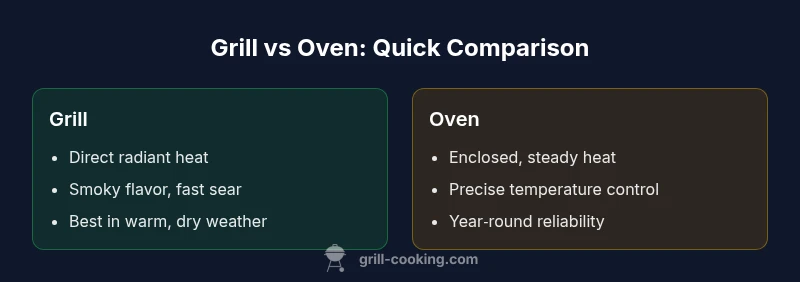
When you ask is grill better than oven, the core differences come down to heat source, environment, and control. Grill cooking relies on direct radiant heat from charcoal or gas flames, typically outdoors, and creates fast sears, grill marks, and a smoky aroma. Oven cooking uses enclosed, steady heat generated by heating elements, producing uniform temperatures and reliable results inside the kitchen. This distinction influences flavor, texture, and timing, and it explains why Grill Cooking's analysis emphasizes choosing the method that suits the dish and the cook's constraints. In practice, the grill shines for high-heat applications, bold flavor, and outdoor dining, while the oven excels at bake goods, casseroles, and scenarios where weather or space complicates outdoor cooking. Understanding these basics helps home cooks decide which path to take for a given recipe.
According to Grill Cooking, the heat source and environment drive the primary differences, but cook time and moisture management also vary. The choice becomes a practical question: what texture are you chasing, and what constraints do you face (weather, equipment, and kitchen layout)? This section sets the stage for a deeper dive into flavor, texture, and real-world applications that determine when grilling or baking is the smarter move for your weeknight meals and weekend feasts.
isAutomatedText":false},
bodyBlocks
Flavor and Texture: What Each Method Delivers
Flavor is often the primary reason readers wonder which method is superior. Grilling introduces smoke, char, and a Maillard reaction intensified by direct heat. The result is a savory crust with a nuanced smoky aroma that can elevate simple ingredients. Ovens deliver even browning and consistent texture, especially for delicate or uniform dishes where a steady heat ensures even cooking without flare-ups. The oven's airflow patterns also influence crust development, and in many cases you can achieve precise doneness by monitoring internal temperatures. Grill Cooking notes that the sensory difference is not just taste; it is moisture retention, crust formation, and aroma profile. For home cooks, the key is to map texture goals to method: a crust and smoke for quick proteins, a soft yet stable interior for casseroles, or crisp edges for baked vegetables.
When Grilling Shines: Meats, Vegetables, and Fat Management
Grilling excels when you want rapid high-heat searing and a pronounced crust. Steaks, burgers, chicken thighs with skin, and robust vegetables benefit from direct heat and open air. Fat management is part of the strategy: start with high heat to sear, then move to cooler zones, render fat, and finish with a controlled rest. Outdoor ambiance adds a social element that ovens can't replicate. Grilling also works well for marinated meats and seared seafood, where the crust forms quickly and flavor compounds stay on the surface. One practical tip is to use indirect heat for thicker cuts to prevent overcharing while maintaining a safe internal temperature.
When the Oven Wins: Precision, Consistency, and Baked Goods
Ovens excel where precision rules and uniform heat matters. For breads, cakes, cookies, casseroles, and roasts that require even internal temperature, the oven's steady heat delivers predictable results. Temperature control allows for reliable Maillard browning without scorching, and convection options can improve air circulation for crust formation. Ovens also support interactive recipes that incorporate sauces, moisture, and layered textures that benefit from consistent heat. In addition, baking in the oven enables you to cook multiple components at once using proper rack placement and timing. While you may lose some smoky flavor, you gain repeatability and control that many home cooks prize for weeknight meals and holiday feasts.
Weather, Space, and Setup: Practical Constraints
Outdoor grilling is terrific in warm, calm weather but can be hampered by rain, wind, or cold. In contrast, indoor ovens are always available, but you need sufficient kitchen space, ventilation, and appropriate cookware. Space constraints influence heat distribution; a compact grill may create hotspots that challenge uniform airflow, while a large oven can support multi-dish roasts. For busy households, this section emphasizes planning: keep utensils handy, preheat efficiently, and stage ingredients to minimize downtime when switching between methods. Grill Cooking's team highlights that weather-aware planning reduces frustration and helps you maximize the benefits of each method when weather permits grilling and when it does not.
Energy Use, Cleanup, and Long-Term Costs
Energy efficiency and ongoing costs are part of the decision. Grilling can be quick, but fuel consumption varies with grill type and cooking duration. Ovens typically require longer preheats and longer cook times for many dishes, which influences energy use. Cleanup considerations also differ: grilled foods can leave char residues on grates, necessitating cleaning routines; ovens accumulate baked-on residues in trays and walls that require soaking and scrubbing. From a cost perspective, there is no one-size-fits-all answer; use this section to weigh fuel prices, maintenance, and appliance lifespan. Grill Cooking analysis shows that flavor gains from grilling should be evaluated against energy and maintenance needs to decide which method is most cost-effective for your kitchen.
Safety Considerations and Best Practices
Safety is essential with both methods. Outdoor grilling requires attention to flare-ups, hot grates, and proper handling of raw meats. Indoor ovens demand careful temperature control and safe handling of hot cookware and steam. Always use a meat thermometer, avoid cross-contamination, and follow manufacturer guidance on grill lids and ventilation. The Grill Cooking team recommends preparing a safe setup: keep a fire extinguisher nearby, maintain clean grates, and use long-handled tools to reduce burns. Choosing between grill and oven should include risk assessment for your kitchen environment and cooking style.
Decision Framework: When to Grill vs When to Bake
To decide is grill better than oven for a given dish, start with texture goals and weather considerations, then assess timing and ingredients. If you want a bold crust, smoky aroma, and quick searing, grill. If you need precise doneness, even texture, or baking results, oven wins. Consider hybrid workflows: sear on the grill to develop flavor, then finish in the oven to control heat and doneness. This approach gives you best of both worlds and aligns with Grill Cooking's philosophy of using each tool where it shines.
Real-World Dish Guides: Recipe-Type Pairings
Here are practical pairings: Steaks and kebabs: grill; Roasted vegetables and casseroles: oven; Burgers can be both depending on time and texture goals; Fish and seafood: grill for delicate texture or bake for uniform doneness; Pastry-based items: oven; Quick weeknight proteins: grill for flavor; Multi-component meals: use hybrid method to maximize texture and timing. Adaptability is key: if a dish benefits from a crust and smoky aroma, grill first; if even cooking and moisture balance matters, finish in the oven. The goal is to match the method to the dish’s primary texture and flavor target while respecting kitchen constraints.