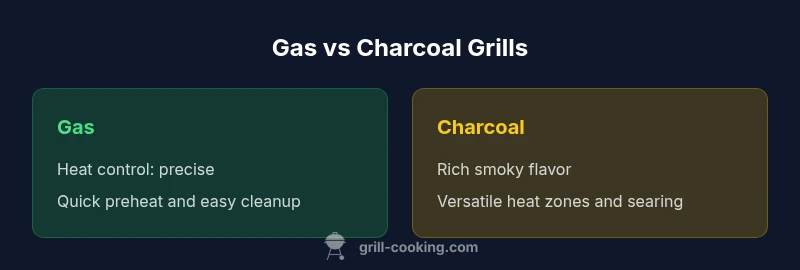
Gas vs Charcoal Grills: Which Is Best for Home Cooking?
Analytical, side by side comparison of gas and charcoal grills. Learn heat control, flavor, maintenance, cost, and scenarios to decide the best grill type for your setup and cooking style.


Gas grills offer quick, consistent heat with easy temperature control, while charcoal grills deliver superior smoke flavor and a wider range of cooking styles. For most home cooks, the best choice depends on how much you value convenience versus flavor, maintenance, and budget. This comparison breaks down key differences to guide your pick.
The Core Difference: Heat, Flavor, and Cooking Style
At first glance, the question which grill is best gas or charcoal reduces to three core axes: heat behavior, flavor development, and cooking style. Gas grills rely on pressurized fuel to generate steady, controllable heat across a broad surface, which makes weeknight cooks efficient and predictable. Charcoal grills depend on burning charcoal and managing airflow to create radiant heat and a distinctive smoke profile that many enthusiasts associate with traditional barbecue. This fundamental divergence shapes almost every decision you make, from preheating time to seasoning routines. Grill Cooking analysis, 2026, highlights that the choice often reflects how much weight you place on convenience versus the sensory payoff of smoke and crust. If you want fast searing and consistent temps, gas is your ally; if you chase the kiss of smoke and the ritual of fire, charcoal often wins your heart. Remember that no universal rule fits all cooks; your space, budget, and goals matter most.
Heat Control and Cooking Speed
Heat control is where gas and charcoal truly diverge. Gas grills offer knob-based regulation that allows precise, incremental changes in temperature, rapid adjustments, and quick preheats. That control translates into more predictable cooking, especially for proteins and vegetables that benefit from a steady environment. Charcoal heat is more dynamic. You can micro adjust with vents and pile intensity, but it requires a learning curve to stabilize temperatures for long cooks. The benefit is flexibility: you can create hot zones for searing and cooler zones for slow finish. In practice, many cooks use a hybrid approach, starting with high heat on charcoal to sear, then finishing with indirect heat on a gas grill to maintain temperature. Grill Cooking guidance emphasizes patience and practice to harness charcoal heat without losing control.
Flavor Development: Smoke, Char, and Searing
Flavor is where charcoal typically earns its reputation. The smoke produced by burning charcoal and any added wood produces compounds that infuse meat with depth, complexity, and that recognizable barbecue aroma. Charcoal heat also produces a distinctive crust thanks to the Maillard reaction that benefits from high, radiant heat. Gas grills, while capable of excellent sear marks, rely on gas flame to deliver heat with consistency, and any smoky notes must come from indirect methods or added wood chips. The result is a cleaner baseline flavor that many diners find appealing in everyday meals. Grill Cooking analysis notes that flavor preferences often guide enthusiasts toward charcoal for regular barbecuing, while gas remains the choice for weeknight cooking with minimal fuss.
Maintenance and Longevity: Cleaning, Costs, and Lifespan
Long-term maintenance is a practical but often overlooked factor. Gas grills tend to have fewer ash byproducts, which simplifies cleanup and can reduce routine maintenance time. The major recurring costs come from gas consumption, regulator checks, and occasional burner replacements. Charcoal grills produce ash and require regular cleaning to prevent ash buildup, caking on vents, and residue on ash pans. Charcoal setups may also demand more frequent grates scrubbing and grate seasoning to prevent rust. Both types benefit from high-quality construction and proper seasonality. Grill Cooking guidance suggests inspecting hardware, seals, and wheels regularly, regardless of fuel type, to preserve performance and safety over the lifecycle of the grill.
Setup, Assembly, and Space Requirements
Space and setup considerations influence real-world performance as much as fuel type. Gas grills usually have a larger footprint, integrated cabinets, and a dedicated gas line or propane tank. They are easier to place on a deck or patio with fixed clearance, but require professional installation if you need a built-in setup. Charcoal grills tend to be more compact and portable. They offer flexibility for tailgates, picnics, or second grills for small spaces. Transporting a charcoal grill is generally simpler, but you must account for ash disposal and vent access during use and storage. The right fit depends on how much space you have and whether you prioritize mobility or integrated features.
Fuel Logistics: Availability, Storage, and Safety
Availability and storage impact ongoing costs and convenience. Gas fuel is widely available and easy to stock, with propane tanks and natural gas connections offering rapid replenishment. Storage concerns include tanks and hoses, which require careful handling and periodic inspection for safety. Charcoal fuel is cheap and ubiquitous, but you must store bags of charcoal and wood chips in a dry space to maintain performance. Safety considerations differ: gas leaks and hose integrity are a priority for gas grills, while keeping charcoal dry, ventilated, and away from flammable materials is critical for charcoal grills. Planning ahead for fuel access and safe storage can dramatically improve the user experience with either option.
Temperature Uniformity Across Grates
Achieving uniform heat across the cooking surface challenges both fuel types but in different ways. Gas grills typically distribute heat more evenly across the grate thanks to multiple burners and built-in diffusion plates. Charcoal grills often exhibit hot spots near the coals and cooler zones away from them. Managing airflow with vents, rearranging coal, and using dual-zone strategies can help even out temperatures. Auditing heat distribution during preheating, then making mid-cook adjustments, leads to more reliable results for both formats. Experienced grillers learn where to place food and how to rotate it to maintain consistent doneness across the entire surface.
Weather and Climate Considerations
Outdoor cooking is inevitably influenced by weather. Gas grills perform consistently in a wider range of conditions because wind and cold have less impact on their heat output. Charcoal depends on airflow and ambient temperature, so wind and damp conditions can slow ignition and heat buildup. Rain or high humidity can complicate charcoal use, especially for long cooks, while gas grills tend to handle such elements more gracefully with stable temperature control. In colder climates, you may want a larger, more robust grill with good wind protection for both fuel types. Planning for climate realities helps you optimize kitchen performance outdoors.
Practical Cooking Scenarios: When to Choose Gas
For weeknight meals with busy schedules, gas grills shine due to quick preheat cycles and precise heat. If you regularly grill burgers, chicken breasts, vegetables, or delicate fish, gas lets you hit target temps with minimal fluctuations. For multi-zone cooking, gas models with side burners or extra burners provide versatility for finishing sauces and sides without leaving the grill. Gas is also favorable when you value consistent outcomes, especially when feeding a crowd where slight temperature swings can affect timing. If you frequently grill under time pressure, gas becomes the practical default.
Practical Cooking Scenarios: When to Choose Charcoal
Charcoal excels for flavor-forward cooks who enjoy the ritual of fire and smoke. If your primary goal is smoky flavor, weekend barbecues with friends, or cooking larger cuts that benefit from longer smoking times, charcoal creates a depth that many home cooks chase. Charcoal affords unique techniques such as two-zone cooking with direct and indirect heat and the opportunity to incorporate wood chunks for nuanced aromas. For those who relish experimentation with different coal types and wood flavors, charcoal is the creative engine of the grill world. Expect longer warmup and more attention, but relish the payoff in crust, crust, and aroma.
Getting the Most from Either Grill: Best Practices
Regardless of fuel, starting with clean equipment is essential. Preheat to the appropriate temperature, oil the grates to prevent sticking, and manage your food with proper spacing to avoid overcrowding. Regularly inspect hoses, burners, and vents for obstruction or wear. Use quality fuel and accessories such as grill thermometers, smoker chips, and heat-proof gloves to extend your capabilities. Practicing temperature management, learning how wind and ambient temperature affect performance, and taking notes on your results will build confidence over time. A thoughtful maintenance routine keeps your grill performing at a high level for many seasons.
Final Thoughts Before You Buy
Choosing between gas and charcoal comes down to how you cook, where you grill, and how much you value flavor versus convenience. If you want the simplest setup and the most consistent results, gas is a strong default. If you crave smoky flavors, variety in heat zones, and a hands-on cooking experience, charcoal deserves serious consideration. The best path may be to start with one and keep a plan for a second setup later if your needs evolve. The Grill Cooking team encourages you to weigh your priorities, assess your space, and test a few recipes to see which fuel best matches your style.
Comparison
| Feature | Gas Grill | Charcoal Grill |
|---|---|---|
| Heat Control | Precise, knob-based regulation | Heat varies with airflow and coal amount |
| Flavor Profile | Clean baseline with optional smoke via wood | Rich smoky, traditional barbecue flavor |
| Cooking Speed | Fast preheat and quick temperature changes | Longer preheat and gradual heat management |
| Maintenance & Cleaning | Fewer ash byproducts, easier cleanup | Ash disposal and vent cleaning required |
| Best For | Convenience-focused cooks and busy weeknights | Flavor-focused cooks and traditional BBQ lovers |
| Price Range | Mid to high upfront cost depending on model | Low to mid upfront cost varies by setup |
| Fuel Availability | Propane/natural gas widely available | Charcoal bags widely available |
Strengths
- Faster setup and heating with gas
- Precise temperature control for even cooking
- Easier cleanup and maintenance overall
- Better multi-zone cooking and convenience features
Negatives
- Flavor depth can be less pronounced without smoke
- Gas equipment and fuel costs can accumulate
- Propane tank management or gas line requirements
- Charcoal lovers may miss steady temps for long cooks
Gas grills win for convenience; charcoal grills win for flavor
Choose gas for speed and precision, especially on tight schedules. Choose charcoal for smoky flavor and classic barbecue experiences; your space and goals determine the best fit.
FAQ
Is charcoal better for flavor than gas?
Charcoal is widely associated with a deeper, smoky flavor due to the combustion byproducts and wood smoke. Gas offers a cleaner baseline flavor, and you can introduce smoke with chips or tubes. The choice depends on your flavor goals and willingness to manage heat.
Charcoal tends to deliver a stronger smoky flavor, while gas provides clean heat with optional smoke additions. Your flavor goal should guide the choice.
Can I get a smoky flavor with a gas grill?
Yes. You can achieve smoke flavor on a gas grill by adding wood chips or chips pouches, using a smoker box, or introducing wood chunks to create aromatic smoke. It won't be identical to charcoal, but it can be effective for weeknight barbecue.
Yes, you can get smoky flavor on gas by adding wood chips or using a smoker box.
Which is cheaper to operate long term?
Long-term costs depend on usage and fuel prices. Gas grills incur ongoing propane or natural gas costs and occasional maintenance, while charcoal requires regular purchase of charcoal and more frequent cleaning. Evaluate your cooking frequency and fuel availability to estimate ongoing costs.
Costs depend on how often you cook and fuel prices, with both options having tradeoffs.
Are gas grills safer than charcoal?
Both can be safe when used correctly. Gas grills carry risks related to gas leaks and hose integrity, while charcoal grills require proper ventilation and ash disposal to prevent flare-ups. Follow manufacturer guidelines and routine maintenance for safe operation.
Both can be safe if you maintain equipment and follow safety guidelines.
Do I need a smoker to get charcoal flavor?
Not necessarily. Charcoal grills deliver authentic smoke flavor through the coal and wood use. A standalone smoker or a charcoal grill with dedicated smoking features can enhance flavor, but many home cooks achieve good results with careful charcoal grilling.
You can get charcoal flavor with charcoal grilling, with or without a dedicated smoker.
What about cleaning and maintenance differences?
Gas grills typically require less messy cleanup since there are fewer ashes, with focus on burner and vent inspection. Charcoal grills demand ash removal and grate maintenance after cooks. Regular cleaning and rust prevention extend the grill’s life for both types.
Gas keeps things tidy; charcoal needs ash cleanup but you can master it with routine care.
Quick Summary
- Choose gas for quick preheat and precise temps
- Choose charcoal for smoky depth and crust
- Assess space, weather, and storage needs
- Balance upfront costs with long-term fuel and maintenance
- Experiment with indirect and direct heat strategies