Propane Grill vs Charcoal: A Rigorous Comparison
A rigorous, analytical comparison of propane grill vs charcoal, analyzing heat control, flavor development, setup time, maintenance, cost, and use scenarios for home cooks.


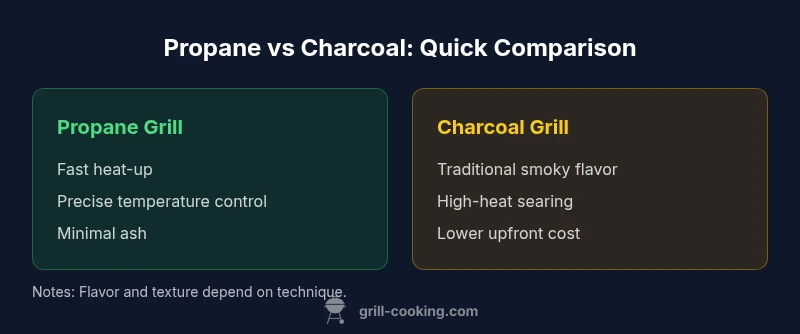
Propane grills win on speed and control, while charcoal grills excel in flavor and aroma during high-heat searing. In the propane grill vs charcoal comparison, choose propane for weeknight grilling and precise temps, and charcoal for traditional smoky flavor and outdoor cooking rituals. Propane heat responds instantly to dial changes, reducing flare-ups and uneven spots, while charcoal demands patience to reach temperature and maintain it for rich crusts.
Fueling Principles and Heat Profiles
When you compare the propane grill vs charcoal, the fundamental difference is the fuel source and how heat is generated and managed. Propane burns cleanly and provides near-instant heat with adjustable flames, whereas charcoal relies on burning briquettes or lumps to build a heat source through airflow and embers. In this article, we examine how those underlying physics translate into everyday cooking for home cooks. According to Grill Cooking, the debate often boils down to two priorities: speed and convenience versus flavor and ritual. Understanding heat profiles helps you predict outcomes before you even light the grill.
-
Propane setup: pressurize the tank, open the valve, ignite with built-in electronic starter, and adjust dials for precise temps. This makes weeknight burgers or vegetables straightforward, with consistent temperature control.
-
Charcoal setup: light briquettes, wait for the coals to ash over, manage airflow with vents, and maintain a target zone for searing or indirect cooking. While slower to start, charcoal offers a broader range of temperatures once established and a characteristic smoky aroma.
Whether you’re cooking for a family dinner or a weekend barbecue, the choice between propane grill vs charcoal affects your entire workflow, from prep time to clean-up. The correct decision aligns with your cooking goals and your tolerance for hands-on grilling.
Temperature Control and Consistency
Precision matters in grilling. Propane grills deliver steady, repeatable temperatures through gas valves and thermostats, which makes it easier to reproduce results. Charcoal temperature depends on fuel amount, airflow, and ember management, producing a broader swing in heat. This difference is not merely academic: it affects everything from crust formation to internal doneness.
-
Quick heat-up: propane lights fast and reaches target temps within minutes, minimizing wait times.
-
Temperature stability: with a properly calibrated grill, propane maintains near-set temperatures; charcoal may drift as ash builds or burns off.
-
Indirect cooking and zones: many propane grills include built-in zones or rotisserie, enabling precise multi-zone cooking. Charcoal setups can reproduce multi-zone heat, but require careful venting and configuration.
Grill Cooking analysis shows that heat management remains the primary differentiator in real-life cooking. When you need predictable outcomes, propane is often the safer bet; when you chase the perfect sear and crust, charcoal offers the most control over surface texture through airflow and embers.
Flavor, Aroma, and Smoke Production
Flavor is the main argument for charcoal, but it's nuanced. Charcoal's aroma comes from smoke compounds produced during combustion and the fats that render on hot coals. Propane itself does not smoke, so flavor arises from seasonings, marinades, and any wood chips or smoke boxes you add. Home cooks often describe charcoal as imparting a traditional, complex smoky character that is hard to duplicate with gas alone. For many, the difference is not a single bite but a cumulative impression across multiple meals.
-
Smoke flavor intensity varies with coal type, airflow, and the distance from heat.
-
Liquid smoke and wood chips can augment flavor on propane grills, but the effect is typically more subtle than charcoal's.
-
Searing capability: both fuel types can sear well, but charcoal's high-heat bursts during direct grilling can create a distinctive crust. Propane grills should be preheated and kept at high but controlled temps for a similar crust.
Grill Cooking's perspective emphasizes that the perceived flavor is a product of technique as much as fuel. If you want a signature smoke profile, charcoal has the edge; if you prioritize clean heat and reliability, propane gives you a calm canvas for seasoning.
Setup, Startup Time, and Convenience
Weeknight grilling often hinges on how quickly you can get cooking. Propane grills shine in this area: connect the tank, ignite, and you’re ready to cook. Charcoal grills require time to light, burn off starter material, and reach optimal cooking temperatures, which can add 15–30 minutes to the process. The extra time can be part of the ritual for some cooks, but it can also be a barrier for those pressed for time.
-
Fuel storage: propane tanks are compact and store indoors or outdoors, depending on local codes. Charcoal bags take up room and produce visible ash.
-
Cleanup: propane grills typically clean up faster because there’s less ash left behind. Charcoal leaves ash and coals to dispose of, which adds a cleanup phase.
-
Portability: many gas grills fold down more easily and are lighter on casters, while charcoal grills can be large and heavy but often offer more cooking surface per dollar.
In the propane grill vs charcoal comparison, the practical choice often reflects your schedule and how you prefer to start a cook. For many, propane’s speed and simplicity win out on busy weeknights, while charcoal’s ritual and flavor accumulate over longer sessions.
Cost of Ownership: Fuel, Equipment, and Maintenance
Total cost of ownership is a conversation about upfront investment, ongoing fuel costs, and maintenance needs. Propane grills tend to have a higher upfront price than many charcoal grills, but the per-cook fuel cost can be lower for high-usage households. Charcoal grills generally cost less to purchase but incur recurring cost for briquettes or lump charcoal and more frequent replacement of parts exposed to heat. Reliability and durability also factor, with higher-end gas grills usually built for longer lifespans.
-
Fuel expense: propane refills are predictable but can add up over a season; charcoal expenses vary with how often you grill and the quality of the charcoal.
-
Parts and maintenance: gas grills have hoses, regulators, and ignition systems that require occasional service; charcoal grills emphasize ash removal, grate cleaning, and periodic inspection of vents and lids for resilience against heat.
-
Longevity: well-made gas grills with proper care can last many years; charcoal grills may be simpler to replace, but a sturdy charcoal grill can also last a decade with care.
A mindful buyer will account for the long game in the propane grill vs charcoal decision. Grill Cooking suggests evaluating your annual grilling days, space for storage, and willingness to maintain fuel systems to determine a true cost of ownership.
Versatility, Craft, and Use Scenarios
Flexibility often defines everyday grilling. Propane grills accommodate quick burgers, vegetables, and even desserts with reliable temperature control. Charcoal grills excel at high-heat searing, roasting, and smoking, enabling longer cooks and slower, gentler heat for larger cuts. The best choice depends on what you cook most.
-
Weeknight staples: propane is ideal for burgers, chicken, and vegetables when you want predictable results.
-
Flavor-focused sessions: charcoal shines for steaks with crusts, ribs with smoke, and pulled pork or brisket if you have time.
-
Outdoor gatherings: for groups, having both fuels is attractive, but if you must choose one, consider your crowd's expectations around flavor, smoke, and convenience.
Grill Cooking's analysis indicates that many home cooks value a grill that aligns with their most common cooking tasks. The propane grill vs charcoal decision often boils down to which use-case dominates your calendar and your palate.
Cleaning, Maintenance, and Longevity
Maintenance is the quiet backbone of long-term performance. Propane grills clean up quickly after a session, with grates scrubbed and burners checked for obstructions. Charcoal grills require regular ash disposal, grate cleaning to prevent caking, and periodic inspection of vents and lids for resilience against heat. A consistent cleaning routine helps maintain heat distribution, prevent flare-ups, and extend the life of your grill.
-
Grate care: wire-brush cleanings after each cook remove residues that can affect flavor.
-
Deep cleaning: annual or seasonal cleaning of burners, vents, heat shields, and the firebox ensures consistent performance.
-
Ash management: charcoal grills generate ash that must be removed and disposed of properly to maintain airflow.
-
Storage: cover and proper storage prevent rust and deterioration; consider storing propane tanks separately according to code.
A proactive approach prolongs both propane and charcoal grills. With diligence, either option can be a reliable workhorse in your backyard, ready to fire up at a moment’s notice.
Safety Considerations and Best Practices
Safety is a shared priority regardless of fuel. Propane systems require checking for leaks, secure tank connections, and proper storage away from heat sources. Charcoal grilling introduces smoke and open flames; ventilation and proper ignition methods reduce risk. Always follow manufacturer guidelines and local codes.
-
Check hoses for cracks; never store propane tanks indoors.
-
Use long-handled tools to keep hands away from heat; maintain a safe distance from structures.
-
For charcoal, light using approved starters; never use accelerants or gasoline; ensure coals are fully extinguished before disposal.
-
Flare-ups: keep a spray bottle of water handy for small flare-ups; for large fires, close the hood and call emergency services if needed.
Grill Cooking emphasizes routine safety checks: a well-maintained grill reduces accidents and extends equipment life.
Environmental Impact and Sustainability Considerations
Environmental factors weigh into the propane grill vs charcoal decision. Gas grills produce fewer particulates during operation, while charcoal burning releases more particulate matter and soot, especially when started with lighter fluids. The overall footprint depends on usage patterns, fuel type, and disposal practices.
-
Charcoal: consider using charcoal produced from sustainably managed sources and avoid lighter fluids to reduce volatile organic compounds.
-
Propane: consider the efficiency of your grill and the round-trip travel to obtain fuel.
-
Indirect effects: smoking and flavor aren’t just culinary decisions but impact the sensory environment of outdoor spaces.
The Grill Cooking team recommends balancing flavor goals with environmental responsibility. If possible, limit charcoal air emissions by using rapid-light methods and choosing briquettes made from sustainable sources, and use propane economy modes where practical.
Comparison
| Feature | Propane Grill | Charcoal Grill |
|---|---|---|
| Fuel Source | Gas (propane) | Charcoal |
| Heat Control | Precise via knobs/thermostat | Indirect via air flow and coals |
| Flavor Profile | Cleaner heat; flavor from seasonings | Traditional smoky flavor from smoke |
| Setup Time | Minutes to light and heat | 15–30 minutes to reach temp |
| Maintenance | Lesser ash; easier cleanup | Ash disposal and chimney vent management |
| Best For | Weeknights, consistency | Flavor chasers, long cooks |
Strengths
- Fast heat-up and precise temperature control with propane
- Cleaner operation with less ash and mess
- Minimal setup time makes weeknight grilling easier
- Wide model availability and reliable performance
Negatives
- Charcoal flavor and crust quality can be harder to master
- Charcoal grilling requires more time and active management
- Propane tanks require periodic handling and storage
- Charcoal fuel cost can vary with bag price and usage
Propane grills win for speed and consistency; charcoal wins for flavor and ritual.
If you value quick temps and reliability, propane is the smart pick. If you're chasing authentic smoky flavor and outdoor cooking rituals, charcoal should be your go-to. The best choice depends on your typical meals and the time you’re willing to invest.
FAQ
What is the main difference between propane and charcoal grills?
The main difference is heat source and control: gas offers precise, quick heat; charcoal provides flavor and variable heat. Both can produce great results with technique.
Gas cooks fast and steady; charcoal adds smoky flavor with more variable heat.
Which grill heats up faster for weeknight cooking?
Propane heats up quickly due to gas ignition and pressurized heat; charcoal requires lighting and preheating.
Propane heats up in minutes; charcoal takes longer.
Can I achieve charcoal flavor on a propane grill?
Yes, using wood chips, smoke boxes, indirect heat, and proper seasoning can approximate smoky notes, though it may not fully replicate charcoal.
You can get smoky notes with wood and technique, but it won’t be identical.
Is it safe to use charcoal indoors or on balconies?
Charcoal should never be used indoors or in enclosed spaces; always grill outdoors with ventilation and follow local codes.
Never use charcoal indoors; keep it outside.
What maintenance is required for propane grills?
Regular checks of hoses, regulators, and ignition; clean grates after cooking; inspect tanks and connections.
Check hoses and regulators; clean grills after use.
What maintenance is required for charcoal grills?
Regular ash disposal, grate cleaning, vent inspection, and occasional deep cleaning.
Clean the grates and remove ash after each session.
Quick Summary
- Choose propane for quick heat and precise temps.
- Opt for charcoal when flavor and crust depth matter most.
- Consider your weekly grilling cadence and fuel logistics.
- Balance convenience with flavor by prioritizing your primary cooking goals.
- Both fuels can deliver great results with the right technique.