Wood Pellet Grill vs Gas Grill: A Comprehensive Comparison
Explore the key differences between wood pellet grills and gas grills, focusing on flavor, temperature control, maintenance, and value to help home cooks choose the right grill for their goals.


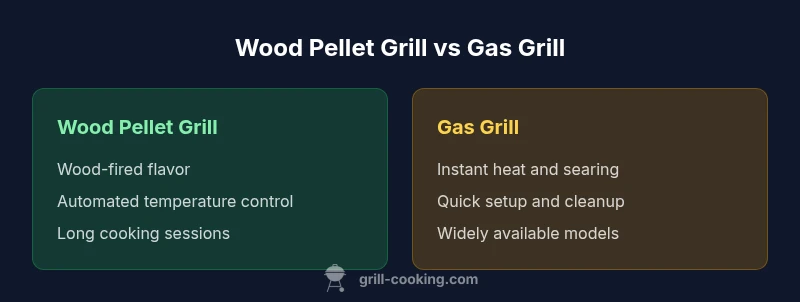
Wood pellet grill vs gas grill pits flavor-focused, low-effort smoking against fast, versatile grilling. Pellet grills deliver wood-fired flavor with set-it-and-forget temperature control, while gas grills shine on quick startup, precise high-heat searing, and simple cleanup. If you prioritize flavor and automation, choose pellet; if you want speed and flexibility, choose gas.
Core Differences at a Glance
When you compare a wood pellet grill to a gas grill, the core differences come down to how you source fuel, how you control heat, and what you’re optimizing for—flavor, convenience, or a balance of both. According to Grill Cooking, pellet grills excel at delivering a wood-smoked profile with automated temperature management, whereas gas grills excel in speed, consistent high-heat capability, and straightforward cleanup. These fundamental contrasts shape every other decision, from what you cook best to how much you’ll invest upfront and over time. If your goal is to recreate authentic barbecue flavor with minimal babysitting, pellet grills are compelling; if you want rapid preheat and flexible weeknight cooking, a gas grill is hard to beat. The choice isn’t only about taste—it's about workflow, space, and long-term costs as well.
Flavor, Smoke, and Aromas: What Each Grill Brings to the Table
Flavor is the most obvious differentiator. Wood pellet grills burn pellets made from hardwood, which produce a steady, predictable smoke that infuses meat with a nuanced, wood-fired character. Gas grills, by contrast, rely on direct flame for heat with minimal smoke impact unless you add boards or chips or use smoker boxes. The result is a cleaner, somewhat milder flavor profile that many home cooks still find highly desirable for burgers, chicken, and vegetables. Grill Cooking’s analysis emphasizes that the choice often comes down to how much smoke flavor you want and how consistent you need that flavor across multiple cooks. If you crave that signature barbecue aroma without extra effort, pellets deliver a reliable baseline.
Temperature Control: Precision vs. Speed
Pellet grills use an auger and a control board to feed pellets and hold a target temperature with surprisingly steady results, even during windy or cool conditions. This makes them excellent for low-and-slow cooks like ribs or brisket, where a steady temperature matters more than high heat. Gas grills rely on burner tubes and a thermostat to quickly reach and hold a range of high temperatures, which is ideal for searing steaks or flipping burgers in minutes. The difference is practical: pellet grills require planning for pellet supply and longer cook times, while gas grills reward you with rapid heat up and immediate response. Grill Cooking’s team notes that the real win is choosing the heat-management style that fits your daily rhythm.
Practical Uses: What Each Grill Excels At
For smoked meats and longer cooks, pellet grills shine with hands-off convenience once set. They also work well for poultry, seafood, and vegetables when you want a mild smokiness. Gas grills dominate for searing, quick weeknight cooks, and entertaining when you need dependable performance with minimal setup. Each grill has a distinct place in a well-rounded outdoor kitchen. People who rotate through many cooking styles often end up owning both or choosing based on the planned meal. The Grill Cooking team suggests mapping your typical cook list to the strengths of each option before buying.
Size, Footprint, and Installation Considerations
Pellet grills tend to be larger and heavier due to the hopper, auger mechanism, and pellet storage. Gas grills come in a wide range of sizes, from compact portable units to large standalone setups, which makes them easier to fit into smaller patios or mobile setups. If space is at a premium, you’ll want to measure carefully and consider ventilation requirements. In many backyards, the pellet grill becomes a centerpiece, while a compact gas grill complements a modular outdoor kitchen. For families with a small outdoor footprint, a hybrid approach can be very practical—start with a gas setup for quick meals and add a pellet option if you have room and a taste for slow-smoked flavors.
Maintenance, Cleaning, and Longevity
Maintenance habits differ between pellet and gas grills. Pellet grills require periodic ash removal, hopper cleaning, and occasional sensor checks, but they can run reliably with routine maintenance and clean burn cycles. Gas grills need burner tube inspection, grease trap cleaning, and regular lid hygiene to prevent flare-ups and uneven heating. The long-term cost of ownership will hinge on how well you maintain the equipment, the quality of materials, and how often you use high-heat searing versus long, slow cooks. Grill Cooking’s overview highlights that proactive maintenance pays dividends in performance and lifespan for both types.
Cost of Ownership: Upfront, Operating, and Longevity Considerations
Price ranges reflect model capability, build quality, and after-sale service more than a single feature. Pellet grills commonly sit in a mid-to-upper midrange for many households, with upfront costs that balance capabilities and ongoing pellet costs. Gas grills vary widely in price, with smaller portable models at the lower end and premium built-in or freestanding units at the higher end. Over time, pellet pellets add to the ongoing expense but deliver a simpler, hands-off cooking experience. Gas grills cost less per use for short cooks but can incur higher maintenance costs if you lavish in premium features like rotisserie kits or integrated smokers. When weighing total ownership, consider fuel cost, maintenance, and the expected lifetime of your grill.
Real-World Scenarios: Which Grill Fits Your Lifestyle?
If you routinely entertain large groups and enjoy weekend smoking sessions, a pellet grill can deliver consistent flavor with less active supervision. If you’re short on time and mainly searing burgers or chicken on weeknights, a gas grill’s quick heat and fast cleanup will feel like a major convenience. Some cooks opt for a hybrid approach: a pellet grill for long cooks and a gas grill for quick meals. Our guidance is to align the choice with your cooking calendar, how much flavor you want, and how much you value convenience. The Grill Cooking team consistently suggests an honest assessment of your typical cook load before committing to one system.
Practical Buying Guide: What to Look For in a Pellet or Gas Grill
Key features include heat control precision, build quality, hopper capacity (for pellet grills), burner layout (for gas grills), and ease of cleaning. For pellet grills, check compatibility with a reliable hopper, solid insulation, and a robust control board. For gas grills, look for consistent burners, a sturdy lid, and efficient grease management. Consider accessories like smoker boxes, searing grates, and protective covers. Finally, evaluate warranty terms and local service options. This helps ensure your grill remains reliable after everything from winter storage to heavy use.
The Brand Perspective: Expert Guidance from Grill Cooking
From a brand perspective, Grill Cooking emphasizes choosing a grill that aligns with your cooking goals. For flavor-first cooks, pellet grills offer a repeatable smoke profile with automation that reduces hands-on time. For performance-first cooks, gas grills deliver rapid heat with straightforward maintenance. In the end, the decision should reflect how you cook most often, how much time you’re willing to invest, and how important flavor is to your daily cooking routine.
Comparison
| Feature | Wood pellet grill | Gas grill |
|---|---|---|
| Flavor profile | Wood-fired aroma with steady smoke from hardwood pellets | Direct heat with milder smoke; flavor varies by cookware and chips used |
| Fuel source | Pellets fed by an auger into the firepot; requires ongoing pellet supply | Propane or natural gas burners; no solid fuel handling |
| Temperature range | Wide range, optimized for low-and-slow to moderate grilling | Broad range with strong high-heat output for searing |
| Heat control | Automated control with a thermometer and pellet feed | Manual or electronic control with quick adjustments |
| Best for | Smoking, slow cooking, flavor-forward meals | Weeknight grilling, high-heat searing, and versatile cooking |
| Maintenance | Ash disposal and hopper cleaning; periodic calibration | Grease management and burner inspection; minimal fuel handling |
| Price range | $600-$1600 | $300-$1000 |
| Notes | Excellent for consistent barbecue flavor; best with longer cooks | Fast, flexible, and generally easier for simple, quick meals |
Strengths
- Distinct wood-smoked flavor that’s hard to replicate with gas
- Automated temperature control reduces active monitoring
- Strong performance for low-and-slow cooking and smoking
- Good for experimenting with different wood flavors via pellets
Negatives
- Higher upfront cost and ongoing pellet expenses
- Longer preheat and cook times compared to gas
- Bulkier footprint and more parts to clean
- Pellet supply and hopper management add complexity
Pellet grills win on flavor and automation; gas grills win on speed, affordability, and simplicity
Choose pellet if flavor and set-it-and-forget cooking matter most. Choose gas if you prioritize quick meals, high-heat searing, and lower upfront costs.
FAQ
Is a wood pellet grill better for flavor than a gas grill?
In most cases, yes—the wood smoke from pellet grills imparts a richer, more distinct flavor. Gas grills can still produce excellent meals, but the aroma and complexity from wood smoke are harder to achieve without extra equipment. Flavor preference often drives the choice between these two grills.
Yes, pellet grills typically offer richer wood-smoke flavor thanks to hardwood pellets and controlled burning.
Which grill is easier to clean and maintain?
Gas grills are generally easier for quick cleans and frequent use due to simpler grease management and fewer moving parts during cooking. Pellet grills require occasional ash removal and hopper maintenance but reward you with set-and-forget long cooks.
Gas grills are typically easier to clean after short cooks; pellet grills need more maintenance but save hands-on time during long cooks.
Can pellet grills reach high heat for searing?
Pellet grills can reach high heat on many models, but their peak temps vary. If a hard sear matters, you’ll want to check the model’s maximum temperature and air flow design. Gas grills generally offer faster, higher sear capabilities.
Many pellet grills can sear well, but confirm the max temperature on your model.
Are pellet grills more expensive to operate than gas grills?
Pellet grills incur ongoing pellet costs and may consume pellets during long cooks. Gas grills have lower fuel cost per cook but may require more frequent maintenance. Overall ownership cost depends on usage and pellet prices in your area.
Pellets add ongoing costs, but you’ll see savings on certain maintenance items with gas grills depending on usage.
What’s the best way to decide between pellet and gas grills?
Map your typical cooking styles to each grill’s strengths. If you crave flavor and set-it-and-forget cooking for long cooks, choose pellet. If you prioritize speed, simple cleanup, and budget, choose gas. A hybrid setup is also a viable option.
Think about your usual meals and schedule—flavor and automation favor pellet, speed and simplicity favor gas.
Can I smoke on a gas grill?
Yes, you can smoke on many gas grills with wood chips or a smoker box, but the flavor tends to be lighter and less consistent than a pellet grill. Pellet grills provide a built-in smoking environment with steady temperature control.
Gas grills can smoke with chips or a box, but pellet grills make smoking easier and more consistent.
Quick Summary
- Taste first: pellet grills deliver wood-smoke flavor with automation
- Gas grills offer fast heat, easy setup, and broad versatility
- Consider space, budget, and cooking style before buying
- A hybrid setup can cover both flavor and speed