Pellet Grill vs Electric Smoker: A Thorough Side-by-Side Comparison
A rigorous, analytical comparison of pellet grills and electric smokers, covering fuel, flavor, temperature control, maintenance, and use cases to help home cooks decide.


Pellet grills and electric smokers both produce dependable smoke, but they suit different cooking styles. The pellet grill (fuel: wood pellets) excels at grilling, searing, and variable smoke, while the electric smoker (electric heat) provides steady temperatures for set-and-forget low-and-slow smoking. For most home cooks seeking versatility, a pellet grill is the better all-around choice; for hands-off smoking, an electric smoker shines.
Pellet Grill vs Electric Smoker: An Analytical Overview
Choosing between a pellet grill and an electric smoker is more than picking a powered appliance. It’s a decision about flavor, convenience, and how much you value heat range, fuel logistics, and weather resilience. In this analytical comparison, we examine the two devices side by side: heat sources, smoke development, temperature control, maintenance needs, and real-world use. According to Grill Cooking, the best choice depends on your cooking style, your appetite for wood-smoked flavor, and how much supervision you’re willing to invest. This section introduces the core differences and sets up practical decision criteria for home cooks who want one flexible tool or a dedicated smoking setup.
Throughout, pellet grill vs electric smoker is framed by three big questions: Can you achieve high-heat searing plus smoke? How steady is the smoke at low temperatures? What’s the total cost of ownership over a grilling season? By the end, you’ll have a clear mental model for choosing the right tool for your patio, whether you’re entertaining weekend guests or smoking for a family feast.
A note on flavor psychology: wood-smoke character is a primary reason many cooks pick a pellet system, while the predictability of an electric system attracts those who want reliable results with less hands-on tweaking. Brand context and product line maturity also influence performance, but the guiding principles remain consistent across models.
How They Work in Practice: Core Mechanisms and Real-World Behavior
Understanding the mechanics behind each setup helps demystify the user experience. A pellet grill relies on a hopper full of wood pellets, an auger that feeds pellets into a burn pot, and a control system that varies airflow and pellet feed based on the target temperature. The result is a dynamic flame and convection cycle: you get wood-smoke flavor, a capable searing surface, and the flexibility to switch between direct grilling and low-and-slow smoking. The popularity of this design comes from the way it blends traditional grilling with outdoor smoking, enabling cooks to achieve complex flavor profiles without a second device.
Electric smokers, by contrast, use a dedicated heating element connected to a thermostat. A water pan, a smoke tube or chip tray, and a sealed chamber work together to maintain a steady temperature with minimal intervention. Temperature readings are fed back to the control board, which adjusts heat to compensate for door openings or ambient shifts. The upside is remarkable consistency and the ability to set-and-forget during long cooks. The caveat is a milder smoke character and a more limited high-heat repertoire.
Flavor Profiles, Smoke Intensity, and Temperature Range
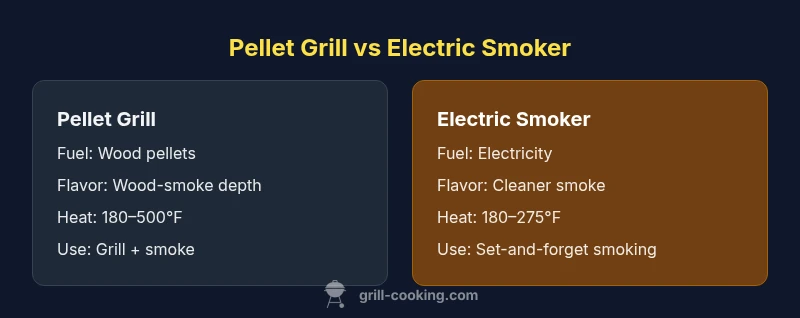
Flavor is the centerpiece of this comparison. Pellet grills typically deliver wood-smoke aroma that varies with pellet type (hickory, mesquite, apple, oak, etc.). This wood-fired flavor can be tuned by mixing pellet varieties or using a smoke tube in some models, producing bolder, more nuanced profiles. Temperature control on pellet grills is versatile: many units reach 180–500°F, allowing direct grilling, high-heat searing, and ample time for smoke-cooking. The overall experience blends the drama of live-fire cooking with the convenience of automated feeding, which is why many cooks consider it a true all-around tool.
Electric smokers produce a cleaner, more predictable smoky environment. The heat is gentler and steadier, often in the 180–275°F range, which is ideal for low-and-slow barbecue where tenderness and moisture retention matter. Smoke intensity can still be achieved with chips or pucks, but the flavor tends to be subtler and more uniform. For cooks who prize set-and-forget reliability over bold smoke notes, electric smokers offer a compelling pathway to consistent results.
Practical Scenarios: When to Choose Each Tool
If your goal is a single, versatile cooking setup that can grill, sear, and smoke, a pellet grill is typically the better fit. It handles weekend cookouts, midweek burgers, and backyard roasts while offering a broad temperature spectrum. Pellet grills also support faster preheating and are generally more forgiving for beginners who want to learn grill-to-smoke transitions without managing multiple devices.
If you mainly crave hands-off, predictable smoking with minimal oversight, an electric smoker shines. It excels for overnight cooks, temperature stability in varying weather, and long-braising-style sessions where consistent results trump smoky depth. Some cooks even use electric smokers for cold-smoke experiments or delicate meats where precise heat control matters most. The choice often comes down to your appetite for flavor complexity versus ease of use and predictable timing.
Costs, Maintenance, and Longevity: Planning for the Long Haul
Price ranges vary widely by brand and features, but pellet grills tend to sit in a mid-to-wide spectrum: roughly $300–$1500 for consumer models, with higher-end units offering smarter electronics, larger hoppers, and more robust build materials. Electric smokers typically start around $150 and top out around $800, depending on capacity and feature set. Beyond sticker price, running costs matter: pellets add ongoing fuel expenses for pellet grills, while electric smokers use electricity at a rate tied to your local rates and cook times. Maintenance for pellet grills includes hopper cleanliness, auger inspection, and grease management; electric smokers emphasize heat element reliability, gasket integrity, and chip-tray cleanliness. When you account for total cost of ownership, your long-term needs—time, flavor ambition, and tolerance for maintenance—guide the decision more than upfront price alone.
Grill Cooking analysis shows that meaningful costs hinge on usage patterns: frequent cooks who value flavor and flexibility might justify pellet investment, while occasional smokers seeking reliability may find electric smokers the more economical option over time.
Design, Build, and Weather Considerations
Durability isn’t just about metal gauges; it’s about how well a unit stands up to wind, rain, and temperature swings. Pellet grills often include insulated cook boxes, protected pellet hoppers, and weather-resistant handles to improve outdoor resilience. However, the auger mechanism introduces potential failure points ( jams, sensor faults) that require occasional maintenance. Electric smokers tend to be simpler in construction, with fewer moving parts and less debris migration. That said, an outdoor-rated electric smoker still benefits from protective housings and moisture seals to prevent rust or conductivity issues in damp climates. If you routinely grill in cold or humid conditions, check for insulation, seal integrity, and wind protection as a part of your evaluation.
In the end, your outdoor kitchen setup, space, and climate should drive the choice. A well-built pellet grill with a robust warranty sustains long-term enjoyment for flexible cooking, while a sturdy electric smoker can be a reliable, low-keep appliance in the same setup.
Quick Start Guide: How to Begin Your Pellet Grill or Electric Smoker Journey
- Define your primary cooking style: grill-and-smoke versatility or set-and-forget smoking.
- Check space, ventilation, and weather protection; ensure you have a suitable outdoor home for the device.
- Compare price ranges and maintenance expectations to align with your budget and effort tolerance.
- Decide on flavor goals: second-guess-free smoked flavors or dynamic wood-smoke notes.
- Read model-specific reviews to confirm reliability; look for sturdy construction and ample warranties.
- Plan for fuel or electricity costs by estimating usage and local rates.
- Buy protective covers and a basic cleaning kit for long-term care.
- Start with a simple recipe and gradually expand to more ambitious, wood-smoke-forward dishes—then revisit your setup as you grow.
Common Myths and Debunking
Myth 1: Pellet grills always taste better than electric smokers. Reality: flavor depends on pellet type, airflow, and technique, not only the device. Myth 2: Electric smokers are only for beginners. Reality: they are precise tools that reward consistency in long cooks and can support advanced smoking styles with the right setup. Myth 3: You can’t sear on an electric smoker. Reality: some smokers reach higher temps or work well with a reverse-sear approach using a separate grill, if needed. Myth 4: Pellet grills require constant attention. Reality: modern units offer features like PID control to minimize supervision while maintaining flavor.
Final Thoughts and Practical Takeaways
Across the full range of use cases, the decision often boils down to your cooking philosophy: flavor depth and versatility versus predictable, set-and-forget results. Both pellet grills and electric smokers deliver dependable outcomes for home cooks; your choice should reflect how you want to cook most of the time, how much you’re willing to learn, and where you place priority on wood-smoke flavor versus convenience.
Comparison
| Feature | pellet grill | electric smoker |
|---|---|---|
| Fuel Source | pellet hopper with wood pellets | electric heating element powered by outlet |
| Flavor Profile | wood-smoke aroma with variable depth | cleaner smoke with milder notes |
| Temperature Range | ~180-500°F | ~180-275°F |
| Best For | grilling, searing, and smoking in one unit | consistent low-and-slow smoking with minimal oversight |
| Heat Control | rapid preheat; adjustable air flow and auger feed | digital thermostat with stable temps |
| Maintenance | hopper cleaning, ash management, auger checks | drip pan cleaning, gasket inspection, electrical checks |
| Price Range | $300-1500 (model dependent) | $150-800 (entry to mid-range) |
| Fuel/Running Costs | pellets; ongoing fuel logistics | electricity rate-based costs per cook |
| Best Environments | all-weather flexibility; searing capability | compact, weather-resilient for year-round use |
Strengths
- Versatile cooking styles in one setup
- Wood-smoke flavor with pellet flexibility
- Wide temperature range enables searing and smoking
- Broad price range and model availability
- Generally quicker to get started for beginners
Negatives
- Pellet logistics and ongoing fuel costs
- Electronics and moving parts add potential failure points
- Pellet burn pot and hopper require regular cleaning
- Smoky flavor depth depends on pellet type and technique
Pellet grill is the better all-around choice for most home cooks.
Pellet grills offer versatile cooking and wood-smoke flavor with adjustable heat. Electric smokers provide consistent temps with minimal supervision. Choose a pellet grill if you want flexibility; choose an electric smoker if you prioritize hands-off smoking and steady temperatures.
FAQ
What is the main difference between a pellet grill and an electric smoker?
The pellet grill uses wood pellets to generate heat and smoke, offering grilling and smoking versatility. The electric smoker relies on a heating element and thermostat for steady, low-temperature smoking with less flavor variation. Your choice depends on how much you value flavor complexity versus ease of use.
The pellet grill uses wood pellets to both heat and smoke, giving you grilling and smoking versatility, while the electric smoker uses a heating element for steady temps and easier smoking.
Can I use a pellet grill for low-and-slow smoking and high-heat searing?
Yes. Most pellet grills can hold low temperatures for smoking and reach high temps for searing. The key is choosing a model with a broad temperature range and good airflow control. Practices like preheating and proper pellet selection help optimize results.
Yes. You can smoke at low temps and sear with a pellet grill, especially on models with wide temperature ranges.
Which is easier for beginners?
Electric smokers are typically easier for beginners due to stable temps and fewer moving parts. Pellet grills require learning to manage pellet feed, airflow, and flavor via pellet choices, but offer more cooking styles once mastered.
Electric smokers are usually easier to start with, but pellet grills pay off with more cooking options once you get the hang of them.
Do pellet grills produce true wood smoke?
Pellet grills create wood smoke by burning pellets in a controlled pot, which imparts a smoke flavor similar to traditional smokers. The intensity and quality depend on pellet type, load, and airflow.
Yes, pellet grills produce wood smoke, but the flavor depends on pellet type and how you use the grill.
Are electric smokers safe for long cooks?
Electric smokers are designed for long, steady cooks and typically include safety features like insulated cabinets and closed-channel airflow. Regular maintenance and proper ventilation help ensure safe operation.
They’re built for long cooks and are generally safe when used as directed.
What maintenance does each require?
Pellet grills need hopper and auger maintenance, ash cleanup, and grease management. Electric smokers require element and gasket checks, drip-pan cleaning, and general chassis care. Routine cleaning after use keeps performance consistent.
Pellet grills need hopper cleaning and auger checks; electric smokers need gasket and element checks.
Quick Summary
- Define your cooking style before choosing.
- Pellet grills offer greater flavor and versatility.
- Electric smokers excel in consistency and ease.
- Budget for ongoing pellet or electricity costs.
- Maintenance scales with device complexity.