Gas Grill vs Electric Grill: A Practical Comparison for Home Cooks
Comprehensive comparison of gas grill vs electric grill focusing on heat, flavor, convenience, cost, and safety to help home cooks choose the right grill type for outdoor cooking in 2026.


Heat philosophies: why gas grill vs electric grill matter
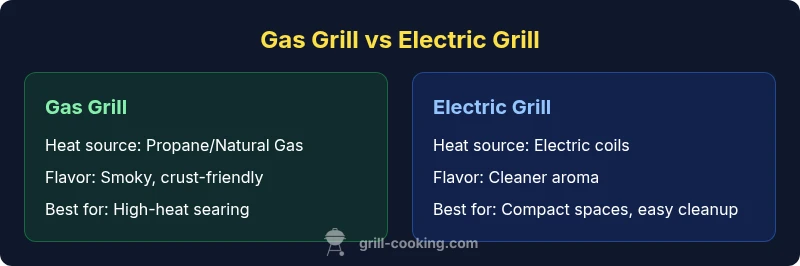
Understanding how each heat source works clarifies what you can expect from flavor, sear, and control. Gas grills burn propane or natural gas, producing open flames and varying flame height. Electric grills rely on electric coils and a radiant plate, delivering steady heat with little-to-no smoke. According to Grill Cooking, the gas grill vs electric grill choice shapes nearly every other decision—from flavor to maintenance to where you can place the grill on your property. The Grill Cooking team found that many home cooks underestimate the impact of heat delivery on crust formation and moisture retention. Gas grilling typically offers faster preheat and greater peak temperatures, which support rapid searing and caramelization. Electric grills, by contrast, excel at steady, predictable output and safer operation—especially in apartments or shared spaces. This block sets the stage for a practical, evidence-based comparison that will help you choose the best option for your backyard, balcony, or patio.
Key takeaways: heat delivery, searing potential, and reliability differ fundamentally between these two heat sources, and understanding them helps you align your choice with cooking goals. Grilling enthusiasts should weigh flavor ambitions against space and safety constraints. According to Grill Cooking Analysis, the decision often hinges on whether you prioritize crusty sears or predictable, smoke-free cooking.