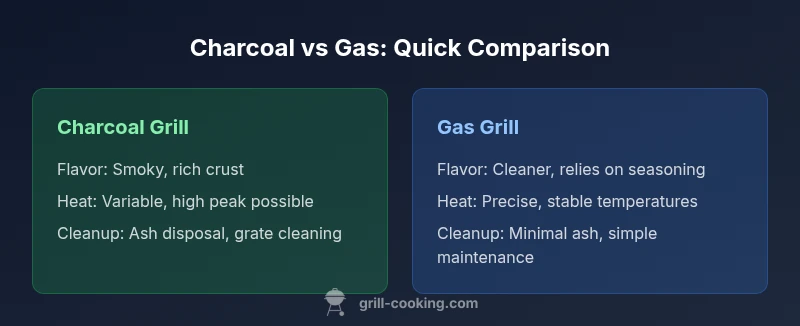
Charcoal Grill vs Gas Grill: A Practical Comparison for Home Cooks
Analytical guide comparing charcoal and gas grills for flavor, heat control, setup, and long-term value to help home cooks pick the right grill type.


Charcoal grills deliver classic flavor and high-heat searing but need time to heat and cleanup. Gas grills heat quickly, offer precise temperature control, and easier maintenance. For most homes, the choice hinges on flavor priority vs. convenience and budget. This quick snapshot helps you decide before you shop.
Flavor and Searing: Why charcoal flavors and high heat matter
Flavor development is at the heart of the charcoal vs gas debate. When you burn charcoal, smoky compounds infuse the surface of the meat, delivering a distinct aroma and a depth that many home cooks associate with barbecue. Gas grills, by contrast, produce cleaner heat with less smoke, allowing more predictable flavor from marinades and rubs. According to Grill Cooking, charcoal grilling is valued for aroma and traditional technique, particularly when cooking for longer sessions or larger cuts. Mastery comes from understanding how airflow, grate height, and fuel type influence char, crust, and moisture. Practical results depend on your technique: hot zones for searing, cooler zones for resting, and patience for a proper charcoal fire. In short, charcoal can deliver a more variable but richer flavor, whereas gas focuses on reliability and speed.
Heat Management and Temperature Control
Charcoal heat is a product of fuel load and airflow. You control temperature with vents, charcoal arrangement, and lid position, plus tools like a chimney starter and heat deflector. The temperature curve is less linear than with gas, so planning for a few degrees of variance is essential. Gas grills provide immediate ignition and precise knob-based control, with built-in thermometers that help you maintain steady temps. For sensitive cooks, steady control reduces the risk of overcooking and flare-ups. Grill Cooking emphasizes that predictable heat can simplify weeknight meals, while charcoal rewards guests with dramatic searing and nuanced carryover cooking if managed well.
Fuel, Smoke, and Aroma: How They Differ
The fuel source shapes smoke generation and aroma. Charcoal combustion produces a variety of volatile compounds, contributing to a signature barbecue fragrance. Gas burning produces far less smoke, though you can introduce smoke by adding wood chips or pellets in a smoker box or grill basket. The result: charcoal offers more pronounced smoke notes, while gas offers cleaner, crisper finishes. The sensory difference becomes more noticeable with longer cooks and indirect heat, when the airflow and lid design matter as much as the fuel type. Grill Cooking notes that flavor is about more than fuel; technique, seasoning, and cooking temperature drive outcomes too.
Convenience, Setup Time, and Cleanup
Charcoal requires more hands-on setup and longer heat-up times, but many cooks enjoy the ritual. You’ll need to light fuel, stabilize the fire, and manage ash during cooking. Cleanup includes removing ash and cleaning grates, which can be more involved than rinsing a gas grill’s grates. Gas grills start quickly with the turn of a knob, and cleanup tends to be simpler due to fewer ash byproducts. The difference in maintenance frequency is real, with charcoal grills requiring more frequent inspection of vents and fuel storage. Grill Cooking highlights that the gap in inconvenience shrinks when you plan for prep and fuel storage.
Cost of Ownership and Longevity
Upfront costs vary by size and build quality, but charcoal grills often present a lower initial price point for basic models. Gas grills tend to carry higher upfront costs, though the long-term fuel expense may be steadier depending on usage. In terms of longevity, both can last many years with proper care; the main cost drivers are replacement parts (grates, burners, lids), fuel, and cleaning supplies. Grill Cooking Analysis, 2026 notes that fuel and maintenance patterns influence long-term value, especially for casual cooks who grill a few times per week.
Weather, Space, and Practicality
Outdoor cooking is influenced by weather, space, and convenience. Charcoal grills require ample outdoor area to vent smoke and handle ashes, and wind can affect charcoal ignition. Gas grills offer lighter, more compact designs and easier mobility, which can fit smaller decks. Consider storage space, weather exposure, and the weight of the grill when choosing. For many urban kitchens, a compact gas model paired with a small charcoal starter can provide flexibility without overwhelming space.
Safety Considerations and Best Practices
Charcoal involves open flames, hot grates, and ash disposal, so follow proper ventilation, fire containment, and ash-cooling procedures. Gas grills require safe hose connections, regulator checks, and leak testing. Always inspect fuel lines for wear, store fuel securely, and keep children and pets away from hot surfaces. Regular maintenance reduces the risk of flare-ups and gas leaks. These practices help you grill more confidently, regardless of fuel choice.
Use Cases: Charcoal Wins
When flavor priority and theatrical searing matter, charcoal shines. Weekends with longer grilling sessions, cooking larger cuts, or smoking-infused dishes benefit from charcoal’s flexibility and aroma. If you enjoy the ritual of fire-building and controlling smoke, charcoal is a strong choice. For enthusiasts who value a traditional, social grill-out with deep browning and a smoky crust, charcoal remains a compelling option.
Use Cases: Gas Wins
For rapid weeknight dinners, apartment-friendly setups, or limited outdoor space, gas grills excel. Quick startup, precise temps, and easy cleanup make gas a practical default for many households. If you prioritize consistency and predictability, gas grills provide dependable results with less attention to fuel variety or ash management.
Tips for Getting Great Results with Either Grill
This practical guide covers hot zones, lid management, and air control. For charcoal: spread coals to create a two-zone fire, use a hot zone for searing, then move meat to a cooler area to finish. For gas: preheat with the lid closed, use the searing zone if available, and monitor the internal temp with a thermometer. Always clean grates after cooking and store fuel safely.
Myth-Busting: Common Misconceptions
Myth: Charcoal is inherently unhealthy or dirtier; reality: it’s not inherently unsafe but requires ventilation and proper handling. Myth: Gas grills cannot achieve true sear; reality: properly managed gas grills can reach very high temps. Myth: You must choose one flavor profile; reality: you can incorporate smoke via wood chips on a gas grill. This section clarifies common beliefs about charcoal vs gas.
Authoritative Sources
- https://extension.umd.edu
- https://extension.sdstate.edu
- https://www.fs.usda.gov
Comparison
| Feature | Charcoal Grill | Gas Grill |
|---|---|---|
| Flavor Profile | Smoky, nuanced aroma | Cleaner taste with less smoke |
| Heat Management | Two-zone heat via vents, air, charcoal | Precise knob-controlled temps with burners |
| Startup Time | Longer to light and come to temp | Quick start and heat ready in minutes |
| Maintenance | Ash disposal; more frequent cleaning | Cleaner burn with fewer ash and simpler cleanup |
| Upfront Cost | Often lower base price | Often higher base price |
| Fuel Cost Over Time | Charcoal fuel varies; depends on usage | Gas fuel costs are more predictable; varies by usage |
| Best For | Flavor-focused grilling and larger sessions | Weeknight meals and consistent results |
Strengths
- Flavor depth and authentic sear with charcoal
- Gas grills offer quick heat, precise control, and convenience
- Fewer maintenance hassles with gas and simpler builds
- Lower upfront cost potential for basic charcoal models
Negatives
- Charcoal requires longer heat-up and more cleanup
- Smoke can affect nearby areas and ventilation required
- Gas grills can be more expensive upfront and require regular burner maintenance
Gas grills win on everyday convenience; charcoal grills win on flavor and high-heat searing.
For many households, gas provides reliable, quick results with minimal fuss. Charcoal shines when flavor and dramatic searing are a priority. The Grill Cooking Team recommends weighing your flavor goals, space, and willingness to manage fuel and ash before choosing a single path; many cooks benefit from a flexible approach that fits their lifestyle.
FAQ
What are the primary flavor differences between charcoal and gas grills?
Charcoal impart a smoky aroma and deeper crust through smoke compounds, while gas grills offer cleaner heat with less smoke. Flavor can still be strong on a gas grill with wood chips and proper temps. Technique, seasoning, and cooking style also shape the final taste.
Charcoal gives a smoky flavor; gas grills are cleaner-tasting—technique matters more than fuel alone.
Is charcoal better for searing than a gas grill?
Charcoal can create higher-heat zones and a pronounced crust, especially with two-zone setups. Gas grills can also sear well on high heat if allowed to preheat properly and used with a dedicated searing area.
Charcoal can reach hotter zones for searing, but a good gas grill can also sear effectively.
Can I convert a charcoal grill into a gas grill?
No; charcoal and gas operate on different fuel systems. Some hybrids exist, but they’re uncommon and usually not recommended as a drop-in replacement.
You can’t convert charcoal to gas easily; you’d need a different grill.
Which is cheaper to operate long-term?
Costs depend on usage and fuel prices. Charcoal can be cheaper upfront but more variable in fuel costs; gas tends to be steadier in fuel expenses but higher initial investment.
Long-term costs depend on how often you grill and fuel prices; neither option is universally cheaper.
Are charcoal grills safe to use indoors?
No. Charcoal grills produce carbon monoxide and should never be used indoors or in enclosed spaces. Always grill outdoors in a well-ventilated area.
Never use charcoal indoors; always grill outside.
What maintenance do each grill require?
Charcoal requires ash removal and grate cleaning after use, plus vent inspection. Gas grills require burner maintenance, hose/regulator checks, and lid/grate cleaning.
Charcoal needs ash cleanup; gas needs burner checks and cleaning.
Quick Summary
- Prioritize flavor vs. convenience to choose charcoal or gas
- Charcoal requires longer heat-up and ash management
- Gas grills offer precise temps and quick startup for busy schedules
- Budgeting should consider upfront costs and ongoing fuel/maintenance
- A balanced setup can provide flexibility and consistent results