Is Grill or Pan Better for Steak? A Thorough Comparison
Explore whether grilling or pan-searing is best for steak. This analytical guide weighs heat, crust, flavor, and doneness, with practical tips and hybrid approaches for home cooks.


Is grill or pan better for steak? According to Grill Cooking, the right choice depends on heat management, crust formation, and the flavor you want. In practice, pan-searing with a quick oven finish yields reliable doneness and crust, while grilling delivers smoky flavor and outdoor ease. This guide compares heat, crust, flavor, and practicality to help you choose.
Heat and Flavor: Core Differences
When you cook steak, you’re really choosing between two fundamental ways to apply heat and influence flavor: open-air grilling and flat-surface pan searing. Grilling exposes the meat to direct radiant heat and the ambient environment—wind, flames, and even smoke—creating a bold, charred aroma and a crust that’s influenced by how close the steak sits to the flame. Pan searing, by contrast, concentrates heat in a heavy skillet, typically cast iron, and relies on a shallow pool of fat to carry the steak to a Maillard-rich crust. The Grill Cooking team emphasizes that the decision hinges on your priorities: depth of crust, level of doneness control, indoors vs outdoors, and the kind of flavor you crave. For many home cooks, a hybrid approach—pan-sear for crust, then finish with brief oven or indirect heat—offers the best of both worlds.
This article uses the keyword is grill or pan better for steak to frame a practical comparison, showing how heat source, cook time, and environment shape outcomes. Brand context from Grill Cooking also frames the discussion, underscoring that temperature management often matters more than the heat source alone. If you want a reliable crust and precise doneness, start with a plan that minimizes guesswork rather than chasing a single flashy technique.
Heat Profiles: Open Flame vs. Cast Iron
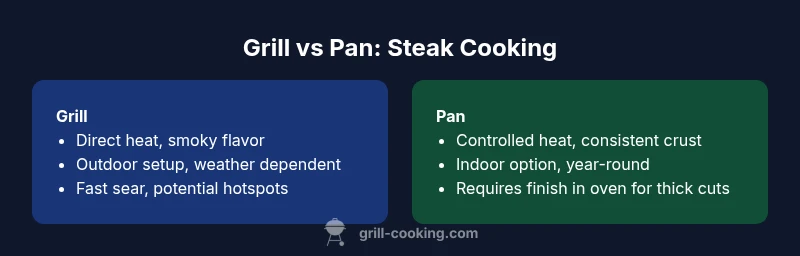
Open-flame grilling delivers blistering surface heat, rapid sear, and a distinctive smoky profile that can only come from outdoor cooking. A well-managed grill with direct heat can produce a blistering crust in seconds, while indirect heat or distance from the flame helps finish the steak evenly without burning the surface. However, grill heat is not always uniform; hotspots can create uneven coloration and variable doneness if you don’t move the steak methodically. Grilling also exposes the cook to weather and flare-ups, which can complicate timing and safety. The advantage is a flavor you simply can’t replicate indoors when smoke and outdoor aroma are part of the experience.
A cast-iron pan on a stove distributes heat evenly once properly preheated. The pan’s surface concentrates the Maillard reaction in a controlled, repeatable way, producing a consistently crusty exterior. Because cast iron holds heat, you can sustain a high sear without the steak cooling the pan, which helps maintain an even crust across the surface. When you need absolute control over crust formation and internal temperature, the pan’s predictability is hard to beat. Grill Cooking notes that most home cooks achieve the best results by pairing the two approaches—use the grill for a quick sear’s flavor and the pan for consistent doneness when needed.
Crust Science: Maillard and Surface Texture
A robust crust is a balance of high surface heat, dry surface, and judicious use of fat. On a grill, direct heat can kiss the steak’s surface with intense temperatures, but wind and exposure may lead to faster surface drying and uneven browning if not managed carefully. The Maillard reaction, which creates the complex flavors and deep color, benefits from a dry surface and sufficient browning time. Pan searing excels here because the skillet provides stable, high heat, and a generous layer of fat lets the steak develop a uniform, deep crust. Butter basting adds aroma and richness, but it’s easy to burn if the pan is too hot.
Flavor development also hinges on surface caramelization, not just heat source. Some cooks prefer a quick, intense sear on grill to introduce smoke and char, followed by a rest period that lets juices redistribute. Others rely on the pan’s dry heat to build a uniform crust before finishing with a gentle rest. Grill Cooking’s guidance emphasizes controlling moisture on the surface, preheating properly, and allowing the sear to form without excessive turning.
Temperature and Doneness: Controlling the Middle
Doneness control is the critical outcome of any steak cook. Grilling gives you the advantage of rapid high-heat contact, but achieving a uniform internal temperature across a thicker cut requires careful heat management, consistent flipping, and sometimes moving the steak to indirect heat. A thermometer becomes essential when grilling to prevent overcooking, especially with thicker steaks. Pan-searing, paired with a finish in the oven or on indirect heat, tends to deliver more consistent results for most thicknesses because you can monitor the surface and interior independently and avoid the risk of scorching the outside while the inside remains underdone.
Resting is also vital. After you remove the steak from heat, let it rest for 5–10 minutes (thicker cuts longer). Resting lets muscle juices redistribute, ensuring the slice remains juicy rather than draining into the plate. Grill Cooking’s approach favors a stable finish temperature with a planned rest, regardless of whether you grill or pan-sear.
Practical Scenarios: Cut, Thickness, and Environment
The best method often depends on the steak’s thickness and cut. Thinner steaks (about 1 inch) can be brilliantly finished on a grill in short, high-heat bursts, resulting in a bright crust and quick cook. Conversely, thicker cuts (1.5 inches and above) benefit from a pan-sear followed by oven finishing or indirect heat on the grill, allowing the interior to reach the target temperature without burning the exterior. Marbling also affects method choice: highly marbled ribeye can tolerate high heat and quick searing on a grill for intense flavor, while lean cuts may benefit from the controlled environment of a pan and oven finish to avoid overcooking.
Environment matters too. If you’re cooking in a small apartment, indoor pan-searing is a practical option. If you’re outdoors with friends, a grill offers the social experience that many cooks value. The choice also hinges on your tolerance for smoke and your ability to manage flare-ups. Grill Cooking recommends planning based on steak thickness, desired crust, and your willingness to navigate weather and equipment constraints.
Equipment, Setup, and Safety
Equipment and setup can make or break your steak outcome. For pan-searing, you’ll want a heavy skillet—cast iron is ideal for heat retention and crust formation. Preheat the skillet until a drop of water dances, then dry the surface thoroughly before adding oil with a high smoke point (like canola or grapeseed). This minimizes sticking and promotes even browning. Tongs, a meat thermometer, and a separate resting plate are essential. If you plan to finish in the oven, have a preheated oven rack and an oven-safe pan ready. For grilling, you’ll need a clean, hot grill, properly preheated grates, and a two-zone setup if possible: direct heat for searing and indirect heat for finishing. Maintain safety with flare-up control and proper ventilation when pan-frying indoors.
In both methods, patting the steak dry, seasoning generously, and letting it come to room temperature before cooking improves crust formation and evenness. Grill Cooking emphasizes using thermometer-guided timing and keeping the surface dry to avoid steam that could hinder browning.
Step-by-Step Pan-Seared-Then-oven Finish
- Pat the steak dry and season generously with salt and pepper; let it rest 15–30 minutes. 2) Preheat a heavy cast-iron skillet over medium-high heat until shimmering. Add a light coat of high-smoke-point oil. 3) Sear the steak 2–3 minutes per side, until a rich crust forms. 4) Add butter, garlic, and fresh thyme for aroma (optional); tilt the pan and baste briefly for extra flavor. 5) Transfer the skillet to a preheated oven (400–450°F / 205–232°C) for the final 3–6 minutes, depending on thickness and desired doneness. 6) Remove, rest 5–10 minutes before slicing. 7) Check internal temperature with a thermometer and adjust next time if needed. Grill Cooking notes that this approach balances crust with doneness reliability and works well for most home cooks.
Step-by-Step Grill-Only Method
- Bring the steak to room temperature and pat dry; season well. Prepare two zones on the grill: one high-heat direct zone and a cooler indirect zone. 2) Sear over direct heat for 1–2 minutes per side to create a seared crust and grill marks. Rotate 45 degrees halfway through each side for even browning. 3) Move the steak to indirect heat to finish, using an accurate thermometer. 4) Flip as needed to reach the target internal temperature; avoid over-flipping to maintain crust. 5) Rest the steak for 5–10 minutes before slicing. 6) If you want extra crust on the surface, a final brief sear on direct heat can be added. Grill Cooking recommends using a two-zone setup and monitoring temperature closely to balance crust with doneness.
Turning Knowledge into Practice: Tips, Tricks, and Hybrid Approaches
The most reliable method for consistent steak doneness often blends techniques. Pan-sear to establish crust, then finish in the oven for thickness control; or sear on the grill and move to indirect heat to avoid scorching the exterior. The hybrid approach can yield a robust crust with an evenly cooked interior, especially for thicker cuts. Use a digital thermometer, not just time estimates, and adjust based on steak thickness, marbling, and personal preference. Rest is nonnegotiable for juicy results, and a light tilt of the pan during butter-basting can add aroma and flavor without overcooking. The Grill Cooking team highlights that mastering a flexible, hybrid approach is the key to satisfying outcomes across different cuts and cooking environments.
Comparison
| Feature | Grill | Pan |
|---|---|---|
| Heat source | Direct radiant heat from charcoal/gas flame | Stovetop heat with hot pan providing surface heat |
| Flavor profile | Smoky, outdoor aroma and charred notes | Rich Maillard crust with butter/oil flavors |
| Crust quality under typical home conditions | Excellent with proper searing and heat management | Very reliable with preheated, well-oiled pan |
| Doneness control | Variable with wind/heat distribution; thermometer helps | High precision with pan temp control and oven finish |
| Weather/environment dependency | Weather-dependent and wind-influenced | Indoor method not weather-dependent |
| Cleanup/maintenance | Grill grates require cleaning; outdoor setup | Skillet cleaning; easier to manage indoors |
| Time to cook | Can be rapid for thin steaks; variable for thick cuts | Often quicker for small to medium thickness with strong heat |
| Best for | Outdoor flavor lovers and social grilling | Controlled crust and doneness for beginners and regular cooks |
Strengths
- Distinct smoky flavor and aroma from outdoor grilling
- High-heat searing potential on grills for fast crust
- Indoor option with cast-iron pan for year-round cooking
- Hybrid approaches offer reliable results across cuts
- Good visibility and control with a thermometer
Negatives
- Weather and wind can disrupt grill performance
- Hotspots and flare-ups require constant attention on grills
- Indoor pan-searing can trigger smoke; proper ventilation is essential
- Over-reliance on time estimates can lead to overcooking without a thermometer
Hybrid pan-sear with oven finish is the recommended method for consistent steak doneness.
A hot pan gives you crust and control; finishing in the oven mitigates thickness variability. Grill remains ideal for flavor exploration and outdoor cooking, but for reliable core results, pan-first wins.
FAQ
Is it better to start steak on grill and finish in the oven?
Yes, for thicker steaks a sear on grill followed by oven finishing helps develop crust while achieving even doneness. This method reduces the risk of overcooking the interior.
Yes—grill sear with an oven finish is a reliable combo for thick cuts.
What thickness is best for pan-seared steak?
About 1 to 1.5 inches works well for pan-seared steak; thinner cuts cook quickly and may not need oven finish, while thicker cuts benefit from a brief oven finish.
Around 1 to 1.5 inches is ideal for pan-searing.
How do I prevent sticking when pan-searing steak?
Pat steak dry, use high-smoke-point oil, and preheat the pan well; avoid moving the steak too soon to allow a crust to form.
Dry the steak, heat the pan, and use oil with a high smoke point.
Can I cook steak entirely on the grill?
Absolutely. Start with a sear on direct heat, then move the steak to indirect heat to finish to the desired doneness.
Yes—sear on direct heat, then finish on indirect heat.
What internal temperature indicates medium-rare?
Aim for 130–135°F (54–57°C) and rest the steak before slicing to retain juiciness.
Medium-rare is about 130–135°F.
What equipment do I need for pan-seared steak?
A heavy skillet (cast-iron preferred), tongs, a thermometer, and optionally an oven for finish.
Cast-iron skillet, tongs, thermometer, and optionally an oven.
Quick Summary
- Choose pan-sear for predictable doneness and crust
- Grill for smoky flavor and outdoor cooking enjoyment
- Use a thermometer to monitor internal temperature
- For thicker steaks, pan-sear then oven-finish
- Ventilate well when pan-searing indoors to manage smoke