Grill vs Cast Iron Steak: A Practical Side-by-Side Guide
Compare grilling outdoors to cast-iron searing for steak. Learn flavor, crust, heat control, timing, and maintenance to decide which method fits your kitchen and weather conditions.


Grill and cast iron each have distinct strengths for cooking steak. A grill delivers smoky flavor and quick, high-heat searing, while a cast iron skillet provides superb crust and precise heat control. For many home cooks, the best choice depends on flavor priority and weather. If you crave a robust crust with predictable results, cast iron wins; if you want outdoor char and crowd-friendly pace, go grill. Grill or cast iron steak outcomes improve with proper technique.
Core Concept: Grill vs Cast Iron for Steak
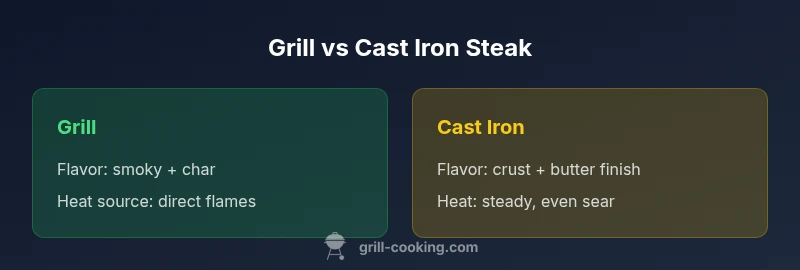
When you decide between grill or cast iron steak approaches, the choice hinges on flavor priorities, weather, and kitchen setup. The phrase grill or cast iron steak captures two distinct paths to the same goal: a perfectly cooked piece of meat with a flavorful crust. Outdoor grills expose steak to direct flames and smoke, which builds a characteristic char and depth of flavor. Cast iron, on the other hand, concentrates heat in a heavy pan, delivering a fierce, uniform sear and a reliable crust even in a small kitchen or at a chilly stove. Both methods can yield restaurant-quality results, but they require different tactics for heat management, timing, and resting. In this guide, we compare the two paths with practical steps, so home cooks can decide which method to adopt first, and how to blend lessons from both to maximize the outcome of a grill or cast iron steak.
Understanding the core tradeoffs—flavor from smoke versus crust from sear, environmental constraints, and equipment availability—helps set expectations. Throughout, we’ll reference principles like Maillard reaction, surface moisture management, and carryover cooking to frame decisions. The goal is not to declare one method as superior, but to show where each method shines and what to practice to optimize results for your preferred setup.
Flavor Profile: Smoke, Char, and Maillard
Flavor development is the first fork in the road between grill and cast iron steak. A grill leverages direct flame and woods or charcoal to introduce smoke and a pronounced char, which elevates aroma and complexity. The Maillard reaction at high surface temperatures creates a crust with rich, toasty notes that are amplified by the cap of flavors from rendered fat. Cast iron, in contrast, focuses on a concentrated, uniform heat that promotes a deep, even crust with precise surface browning. This crust locks in juices and produces a savory, almost buttery finish when basted with aromatics. For the home cook, the choice often comes down to whether smoky, outdoor flavors or a flawlessly uniform crust matters more to your palate and occasion.
Beyond taste, the texture difference matters. Grilled steaks often reveal a contrast between a smoky exterior and a moister interior, while cast iron searing tends to create a consistently crisp crust along the entire surface. This can influence doneness perception and mouthfeel, especially for thicker cuts. Both methods benefit from dryness on the surface before cooking, appropriate seasoning, and finishing touches like butter or herbs that heighten aroma and richness. The art is to balance crust formation with interior juiciness, regardless of method.
Temperature and Heat Management
Temperature control is the master lever in grilling versus cast iron searing. On a grill, you manage heat with fuel intensity, vent settings, and zone setup. A two-zone approach—hot for searing and cooler for finishing—lets you push the crust quickly while maintaining interior doneness, especially for thicker steaks. Cast iron relies on a different discipline: preheating the pan until it's truly hot, then applying steady, medium-high heat to create a crust without scorching. The key is surface dryness, proper oiling, and watching for first signs of browning. In practice, you’ll rotate the steak to keep an even sear and use gentle heat to finish through carryover cooking. For both methods, investing in a thermometer or accurate method to gauge doneness helps you avoid overcooking, a common pitfall that can ruin texture.
A practical note: don’t crowd the cook surface. Overcrowding can thwart crust formation by cooling the surface; give each steak space to form a crust rather than steaming. This principle applies whether you’re grilling outdoors or searing in a cast iron pan. The result is a more predictable, repeatable crust with a better balance between crust and interior.
Doneness and Rest: Juiciness and Carryover
Doneness is a function of internal temperature, fat distribution, and carryover cooking after removal from heat. On a grill, the high heat can push the steak quickly toward your target doneness, making timely removal essential. Cast iron’s intense surface can yield rapid searing, but you still rely on carryover cooking to finish the steak to the desired interior. Regardless of method, resting is non-negotiable: it allows juices to redistribute, preserving moisture and enhancing tenderness. A good rest period reduces cutting-induced juice loss and gives the carryover heat time to gently finish the steak. The rest duration should be long enough to return moisture to the center but not so long that the steak cools significantly. Aiming for a consistent final texture—crusty exterior with a juicy, evenly warm center—requires practice and slight adjustments based on steak thickness.
Doneness guidance is a personal preference, but a practical approach is to choose a target exterior texture compared to interior warmth, then use a thermometer or tactile method to confirm. For larger or thicker cuts, the grill’s indirect heat zone or the cast iron pan’s oven finish can help you reach the same end without over-browning the exterior.
Equipment Setup: Grills vs Cast Iron Pans
The equipment difference is often the first practical detour for home cooks. A grill setup includes a reliable heat source, grill grates, and, ideally, a two-zone fire where you can move the steak from direct to indirect heat. A cast iron approach requires a well-seasoned skillet, a stable stovetop or oven, and a hint of oil with a high smoke point. Cast iron is forgiving in a small kitchen and is ideal when weather or outdoor access is uncertain. Grills are superb for smoky flavor and audience, especially when you’re cooking for a group. Regardless of choice, proper prep—patting the steak dry, applying moderate seasoning, and ensuring your cooking surface is hot before the steak enters—makes a big difference in crust formation and interior tenderness.
For beginners, a hybrid approach is tempting: sear on cast iron to build crust and finish with a brief finish over indirect heat on a grill, or vice versa. This strategy allows you to leverage the strengths of both tools. The key is to practice with a few test steaks to calibrate crust formation time, finish, and resting duration before cooking your main event.
Cooking Timeline: Doneness Windows
The cooking timeline varies by method, steak thickness, and your preferred level of doneness. A general rule of thumb is to maximize crust development early, then adjust the interior doneness through finish techniques. On a grill, start with high heat to sear, then move to cooler zones to finish. On a cast iron skillet, sear aggressively on high heat, then reduce the heat or move to a lower burner to finish. Thick steaks benefit from both methods: sear to develop crust, then rest and finish with controlled heat to bring the interior to the target warmth. The result is a balanced profile where crust and interior reach the desired tenderness without overcooking. The habit of checking internal temperature with a thermometer and sensing the steak’s firmness becomes a reliable compass for doneness.
Remember: carryover cooking continues after you remove the steak from the heat source, so plan a brief rest to avoid overcooking.
Step-by-Step: Grilling a Steak to Perfection
Grilling begins with dry, well-seasoned meat and a hot, well-prepared grill. Pat the steak dry, lightly oil, and season generously. Place the steak over direct heat to form a crust, flipping once when a rich browning forms. After searing a crusty surface, move the steak to indirect heat or to a cooler area of the grill to finish cooking gently. Use a thermometer to check for your preferred doneness, then remove the steak and rest to redistribute juices. While grilling, avoid pressing the steak, which squeezes out juices and can lead to a drier result. Finishing touches like a knob of butter or a spritz of citrus can brighten flavor without masking the crust.
Step-by-Step: Cast Iron Sear on Stove
Begin with a thoroughly preheated cast iron skillet until it’s smoking hot. Pat the steak dry, then lightly oil, and season. Place the steak in the pan and let it sear without moving to develop a deep crust. Flip once to sear the other side, then finish with a quick, controlled cook on medium-high heat, or use an oven finish for thicker cuts. Rest after cooking to let juices redistribute. Cast iron searing favors even browning and a crust that locks in juices, especially when you finish with a butter baste and aromatics. The end result is a crust-forward steak with a reliably juicy interior that you can repeat with consistency.
Weather, Season, and Practicality
Your environment often influences the decision between grill or cast iron. Grilling shines with warm weather, outdoor ambience, and the opportunity to impart smoky flavors that are hard to replicate indoors. Cast iron searing thrives in cooler months or kitchens where weather doesn’t permit outdoor cooking. Both methods benefit from careful planning: time management, surface dryness, and heat control are the pillars that determine crust formation and interior tenderness. If you’re limited by space or weather, cast iron becomes a practical and reliable method that does not depend on outdoor conditions. If you crave smoky aromas, outdoor heat, and crowd-friendly efficiency, the grill is worth integrating into your routine.
Troubleshooting and Common Pitfalls
Common issues include steam or flare-ups on the grill, which can scorch the crust before interior doneness is achieved. On cast iron, uneven heat or sticking can ruin crust formation. Prevent these by drying the surface thoroughly, using a light hand with oil, and allowing the pan to reach a stable high temperature before searing. Regular maintenance for cast iron, such as seasoning and avoiding acid-based cleaners that strip seasoning, protects the pan’s performance over time. With practice, you’ll identify subtle cues—the color of the crust, the sound of the sizzle, and the feel of the steak’s surface—that signal when to flip, move, or rest for the best result.
Flavor Enhancements: Salt, Butter, and Finishes
Flavor improvements stem from smart seasoning and finishing techniques. Salt ahead of time to draw out surface moisture and create a better crust, then add butter, garlic, and herbs during the final moments of cooking for a fragrant finish. A light brush of oil or finishing glaze can help deepen browning without masking crust. Both methods benefit from a final touch of salt to heighten flavor and a rest that allows juices to equilibrate. The goal is to support the crust with complementary aromatics and a balanced finish that enhances rather than overwhelms the steak’s natural flavor.
Cleaning, Maintenance, and Longevity for Cast Iron and Grills
Cast iron requires regular seasoning and careful cleaning to preserve the non-stick layer and prevent rust. After cooking, wipe clean while the pan is warm, rinse with water if needed, and dry thoroughly before applying a light coat of oil. Avoid soap that strips seasoning, and never store when damp. Grills likewise need routine cleaning of grates and burners, plus periodic rust prevention and grate maintenance. A well-maintained grill and pan will deliver consistent crust formation and flavor over many uses, making the investment worthwhile for home cooks who value control and repeatability.
Comparison
| Feature | Grill (Outdoor) | Cast Iron (Stovetop) |
|---|---|---|
| Flavor development | Smoke + char; outdoor ambience | Rich crust with butter/baste flavors |
| Crust quality | Excellent crust with proper sear in direct heat | Superb crust with even surface browning |
| Heat control | Heat varies with fuel and vent adjustments | Consistent, controllable sear with pan heat |
| Weather dependency | Weather impacts performance and smoke management | Unaffected by weather; kitchen-bound |
| Prep and cleanup effort | Grill setup, fuel handling, grill grates | Surface prep, seasoning, care of pan |
| Best for | Outdoor gatherings; smoky flavor lovers | Year-round cooking; crust purists |
Strengths
- Helps readers weigh flavor, crust, and convenience fairly
- Explicit tradeoffs enable confident decisions
- Addresses practical cooking scenarios and skill development
- Supports year-round cooking regardless of weather
- Highlights maintenance and gear considerations
Negatives
- May oversimplify outcomes for ultra-thick steaks
- Requires access to both cooking methods to fully evaluate
- Weather can invalidate grill outcomes in some seasons
Both methods are viable; choose grill for smoky flavor and crowds, or cast iron for crust and control.
Grill shines with flavor and speed in good weather; cast iron delivers a superior crust with precise sear. In practice, many home cooks should learn both to maximize steak results.
FAQ
Is grill flavor inherently better than cast iron flavor for steak?
Flavor preference is subjective. Grilling imparts a smoky, charred edge that many diners love, while cast iron emphasizes a deeply browned crust and butter-basted notes. Both approaches can yield exceptional steaks with attention to technique, seasoning, and rest.
Grill flavor is smoky and bright; cast iron highlights a rich crust. Either can be excellent with proper technique.
What is the best thermometer method for each method?
Use an instant-read thermometer to monitor internal temperature for both methods. For grills, check near the end of searing and during finish. For cast iron, insert from the side to gauge interior warmth as you finish the crust.
An instant-read thermometer is your best friend for both methods; check near the end of cooking.
How thick should the steak be for each method?
Thicker steaks benefit from a two-zone grill or oven finish, and from longer searing on cast iron with a final rest. Thinner steaks cook quickly and evenly on either method, with attention to not overcook.
Thicker cuts do well with two-zone grilling or oven finish; thinner cuts fine-tine on either method.
Can you finish a grill-cooked steak with butter?
Yes. Finishing with a knob of butter, garlic, and herbs enhances aroma and gloss. Do this at the very end so flavors don’t burn and crust stays intact.
Yes—finish with butter and aromatics at the end for extra aroma.
How to maintain cast iron after cooking?
Rinse gently, dry thoroughly, and apply a light coating of oil to keep seasoning. Avoid harsh soaps that strip seasoning. Store in a dry place to prevent rust and maintain non-stick properties.
Rinse, dry well, and oil lightly after cooking to protect the seasoning.
Can you sear a thick steak on a grill and finish in a pan?
Yes. Sear on the grill to form a crust and finish with indirect heat, then rest. Alternatively, finish with a quick pan sear after grill searing for added crust and aroma.
Sear on the grill, then finish with indirect heat or a quick pan sear for extra crust.
Quick Summary
- Choose grill for flavor and speed when weather permits
- Opt for cast iron when you want a crusty finish and precise control
- Master both methods to adapt to equipment and kitchen setup
- Season and rest properly; that improves juiciness no matter the method
- Mind heat management and distance from flame for even sear