Grill or Pan Sear Filet Mignon: A Comprehensive Comparison
Analytical guide comparing grill vs pan sear filet mignon to optimize crust, flavor, and doneness. Learn techniques, heat management, and practical tips for home cooks.


When deciding between grill or pan sear filet mignon, prioritize crust, control, and convenience. Pan searing on a hot cast-iron skillet, followed by a brief oven finish, delivers a reliable crust and consistent doneness. Grilling adds smoky flavor and social appeal, but requires careful heat management to avoid charring or uneven cooking. For most home cooks, pan searing with oven finish is the balanced, repeatable choice.
The core decision: grill or pan sear filet mignon
When you’re deciding how to cook filet mignon, the choice often boils down to two widely practiced approaches: grill or pan sear filet mignon. According to Grill Cooking, the objective is the same: a deeply browned crust on the outside and a juicy, even doneness on the inside. The method you choose influences flavor development, texture, and timing, but both paths can deliver restaurant-quality results with the right technique. In this block we’ll lay out the practical factors that shape the decision, including flavor goals, kitchen setup, and how much outdoor cooking you’re prepared to do. We’ll also touch on whether your goal is a smoky, charred profile or a precise, controlled finish. Throughout, you’ll see how the Grill Cooking Team weighs pros and cons and how to tailor your approach to your own grill, skillet, and pantry. grill or pan sear filet mignon
The science behind searing meat
Searing meat isn’t just about color; it’s a chemical process called the Maillard reaction, where amino acids and sugars react under high heat to create complex flavors and a crust. For filet mignon, which is exceptionally tender, that crust is crucial for texture and perception of juiciness. Whether you choose grill or pan sear filet mignon, ensuring a hot surface and minimal moisture on the surface accelerates crust formation. Patience matters: let the surface brown without moving the steak too soon, then flip to develop even browning on the other side. The interior’s doneness is governed by heat transfer, so a fast initial sear followed by controlled cooking is the sweet spot. As Grill Cooking emphasizes, moisture retention and surface concentration are the two levers to balance when you’re deciding between methods.
Equipment matters: cast iron, grills, thermometers
Your toolkit shapes the outcome of grill vs pan sear filet mignon. A well-seasoned cast-iron skillet delivers a superior crust and even heat distribution, while a sturdy grill grate can impart authentic smoke and char. In a pinch, a stainless-steel skillet over high heat can work, but cast iron remains the preferred choice for most home cooks seeking reliability. An accurate thermometer is non-negotiable: aim for an adjustable dial probe for the interior, and use an infrared or surface thermometer to gauge surface temperature. If you’re cooking on a grill, zone management (direct heat for searing, indirect heat for finishing) is critical to prevent flare-ups and uneven cooking. Regardless of method, consistent surface temperature matters more than the absolute surface heat. grill or pan sear filet mignon
Heat management: from sear to finish
Crucial to either path is mastering heat. For a pan-seared filet mignon, preheat the pan until it glows, then sear for 1.5–2 minutes per side to build a crust, followed by a gentle oven finish at around 400°F (204°C) to your target doneness. On the grill, establish a two-zone setup: searing over high direct heat to form a crust, then moving the steak to indirect heat to finish slowly. In both cases, don’t rush the interior — a thicker filet benefits from a rest period and a longer, gentler finish. Temperature targets vary by doneness, but for many home cooks, medium-rare requires the interior to reach roughly 130–135°F (54–57°C) before resting. grill or pan sear filet mignon
Prep steps that matter
Dry the surface thoroughly, then season generously with salt and pepper or a simple rub. Moisture on the surface hinders browning, so pat dry and let the meat come to room temperature for 20–30 minutes before cooking. For extra flavor, consider a light oil with a high smoke point to aid browning without smoking the meat itself. Some cooks choose a small amount of butter or neutral oil to finish with a gloss of richness. Filet mignon shines when its natural tenderness is complemented by careful seasoning and dry surface; avoid heavy marinades that can overwhelm the delicate beef flavor. grill or pan sear filet mignon
The grill route: direct and indirect heat options
Direct heat is ideal to form a crust, while indirect heat prevents overcooking the interior. With grill, you’ll want a two-zone setup: hot for searing, cooler for finishing. Sear for 1–2 minutes per side, then move to indirect heat and cook to your target doneness with a meat thermometer. Wind, ambient temperature, and grill grate cleanliness all affect results, making grill a bit more variable but offering a distinct smoky profile when done right. For thick filets, consider a brief reverse-sear: start with indirect heat to approximate doneness, then finish with a high-heat sear to crust the exterior. grill or pan sear filet mignon
The pan-sear route: step-by-step guide
Preheat a heavy skillet (cast iron ideal) over high heat until just smoking. Add a thin film of high-heat oil, place the filet in the pan, and resist the urge to move it for 1.5–2 minutes to form a crust. Flip, and sear another 1.5–2 minutes. Transfer the pan to a preheated oven (around 400°F/204°C) to finish to the desired doneness. Use a thermometer to check the center, aiming for about 125–130°F (52–54°C) for medium-rare before resting. The pan-sear method offers precise control and an excellent crust, with less exposure to wind and outdoor variables. grill or pan sear filet mignon
Resting, butter baste, and flavor boosters
Resting is essential after cooking to redistribute juices and maintain moistness. A 5–10 minute rest under loose foil lets carryover cooking finish gently. Butter basting—while optional—adds richness; tilt the pan and spoon melted butter, aromatics, and meat juices over the top for extra flavor. Finishing sauces or herb compound butter can elevate the dish without masking the beef’s tenderness. For grill or pan sear filet mignon, the resting period is a non-negotiable step that unlocks juiciness and crust integrity. grill or pan sear filet mignon
Common mistakes and how to fix them
Common errors include crowding the pan or grill, overflipping, and cutting into the meat too soon. Crowding traps moisture and prevents crusting, so cook steaks in a single layer with space around each piece. Flip only once or twice, letting a crust form before turning. Resist the urge to press down on the steak, which squeezes juices out. If the crust isn’t forming, the pan wasn’t hot enough or the surface wasn’t dry. For grill cooking, wind and temperature fluctuations can skew results; use a thermometer and consider closing the lid to steady temperature. grill or pan sear filet mignon
Flavor variations: finishing sauces and rubs
A light rub of kosher salt, black pepper, and a touch of garlic powder complements filet mignon well. For finishing touches, a pat of herb butter or a drizzle of a reduction sauce enhances depth without masking meat flavor. If you enjoy smoky notes, a small amount of smoked salt can be an interesting highlight. Avoid overpowering sauces that overwhelm the delicate beef; the best profile for grill or pan sear filet mignon emphasizes crust, beef flavor, and balanced richness. grill or pan sear filet mignon
Quick-reference decision framework
To decide between grill and pan sear filet mignon, weigh your priorities: reliability vs flavor (pan sear for consistency; grill for smoke), indoor convenience vs outdoor ambiance (pan sear indoors; grill outdoors), and timing (pan sear + oven usually finishes faster with predictable results). Use a thermometer as your ultimate arbiter of doneness, and tailor heat and resting time based on filet thickness. grill or pan sear filet mignon
Real-world tweaks: thickness and cut variations
Thickness matters: thicker filets demand longer finishing time or an extended indirect heat phase. If your cut is under 1.5 inches, a straightforward pan sear with a hot oven finish is often ideal. For thicker cuts, consider a reverse-sear approach on the grill or in the oven followed by a final sear. In all cases, rest and even heat distribution are non-negotiable for a juicy, flavorful filet mignon. grill or pan sear filet mignon
Comparison
| Feature | Grill | Pan Sear |
|---|---|---|
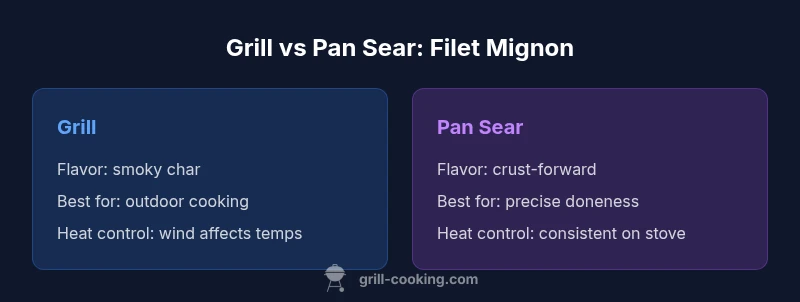
| Flavor & crust | Smoky notes and char from outdoor heat | Rich crust with precise browning in a hot skillet |
| Heat control | Two-zone grill setup allows searing and finishing, sensitive to wind | Precise control with stovetop skillet; easier temperature management |
| Cook time range | Variable based on grill temp and wind; potentially longer | Typically faster to crust and finish with oven, predictable timing |
| Doneness consistency | More variable due to outdoor conditions | High consistency with thermometer and oven finish |
| Equipment needs | Grill setup, fuel, utensils, and ash/flare management | Cast iron pan, oven or broiler, and thermometer |
| Best for | Social outdoor cooking with a smoky profile | Home cooks seeking reliable crust and precise doneness |
Strengths
- Crust development with robust flavor on either path
- Pan sear offers precise doneness with consistent results
- Grill provides smoky notes and outdoor cooking enjoyment
- Flexible finishing options (oven, broiler, or indirect heat)
Negatives
- Outdoor variables can affect grill outcomes (wind, temperature)
- Grill cleanup and fuel management add overhead
- Pan sear requires access to an oven or broiler for thicker cuts
- Risk of flare-ups on gas grills when fat drips
Pan sear with oven finish is the most reliable method for filet mignon
Pan searing delivers a consistent crust and doneness with controlled heat. Grilling offers flavor, but requires more attention to wind, temperature, and flare-ups. For most home cooks, the pan-sear-then-finish approach is the safer, repeatable choice.
FAQ
Which method yields a better crust on filet mignon, grill or pan sear?
Both methods can produce an excellent crust. Pan searing offers more consistent crust formation and doneness, while grilling can add smoky flavor when heat is managed carefully. Your choice depends on whether you prioritize texture control or outdoor flavor.
Pan searing generally gives a more reliable crust and doneness; grilling can add smoke if you manage heat carefully.
What internal temperature should filet mignon reach for medium-rare?
For medium-rare, target an internal temperature around 130–135°F (54–57°C) before resting. Remove from heat slightly before reaching the exact target to account for carryover cooking during resting.
Aim for about 130 to 135°F, then rest to finish cooking.
Should I marinate filet mignon before cooking?
Filet mignon benefits from dry pat and simple seasoning to preserve its delicate beef flavor. Marinades aren’t necessary for a great crust and can dull the steak’s natural texture if used in excess.
A light salt and pepper finish with patting dry is usually best.
How long does each method typically take?
Pan sear plus oven finish often totals 12–20 minutes depending on thickness. Grilling times vary with heat and outside conditions, usually longer and less predictable without careful heat management.
Plan around 12–20 minutes for pan-sear plus finish, longer and wind-dependent on the grill.
Is resting important for filet mignon?
Yes. Resting for 5–10 minutes after cooking lets juices redistribute, improving tenderness and juiciness. Slice after resting to preserve moisture.
Resting is essential for juicy, evenly done meat.
Quick Summary
- Start with dry surface and room-temperature meat
- Use a hot cast-iron pan for crust, then finish in oven
- Grill for smoky flavor, but manage two heat zones carefully
- A thermometer is essential for doneness
- Rest before slicing to preserve juiciness