How to Cook Filet on Grill: Expert Guide
Master how to cook filet on grill with a perfect sear and tender center. Learn selection, seasoning, heat control, timing, resting, and common troubleshooting for juicy results.


Learn how to cook filet on grill to achieve a perfect sear with a tender center and rich flavor. This guide covers selecting the right filet, proper seasoning, heat management, timing, resting, and troubleshooting common issues. With pro tips from Grill Cooking, you’ll consistently serve juicy, restaurant-quality filets at home.
Why Filet on Grill Deserves Attention
Filet mignon, commonly known as filet, is celebrated for its exceptional tenderness and mild beef flavor. Learning how to cook filet on grill opens the door to a crusty, caramelized exterior and a juicy, melt-in-your-mouth center. The Grill Cooking team emphasizes that a two-zone grill—hot direct heat for searing and a cooler indirect area for finishing—delivers the most reliable results. By mastering this method, you control crust formation, doneness, and texture in a way that’s hard to achieve with other techniques. When done well, grilled filet feels luxurious yet remains approachable for home cooks. This article will guide you through practical steps, gear, and timing so you can reproduce restaurant-quality filets with confidence at home.
Choosing the Right Filet for Grilling
The cut matters as much as the technique. Center-cut filet mignon offers uniform thickness and the most consistent tenderness, making it ideal for grilling. Look for filets that are evenly shaped, with a comfortable 1.5- to 2-inch thickness and bright, fresh color. Favor cuts with light marbling near the edges to boost flavor without tipping toward heaviness. Thicker portions take longer to finish, so thickness should guide your grilling plan more than overall weight. When you pick a high-quality filet, you’ll notice that the grill does a lot of the flavor work, allowing shortcuts to shine through less.
Preparing Filet: From Fridge to Grill
Preparation sets the stage for success. Pat the steaks dry with paper towels to remove surface moisture that can steam the crust. Let the filets sit at room temperature for about 20-40 minutes to promote even cooking. A light brush of oil is optional, but not required if the surface is clean and dry. Generously season just before cooking—salt for flavor and moisture control, pepper for spice and crust formation. Have your thermometer ready and your grill prepped for a clean, well-oiled surface. This prep reduces unpredictability and helps you hit a predictable finish.
Seasoning and Marinades: Simple, Effective Flavor
Keep seasoning simple and direct: a liberal shower of kosher salt and a few grinds of fresh black pepper let the beef shine. If you want a touch more richness, a small pat of butter at the end or a light brush of olive oil can add depth without masking the beef’s natural profile. Marinades are optional for filet mignon because the cut is naturally tender; if you do marinate, keep it brief—30 minutes max—so you don’t break down the fibers. The goal is a well-seasoned crust with a juicy interior, not an overwhelmed flavor profile.
Grill Setup: Direct High Heat and Indirect Finishing
A two-zone grill setup is ideal for filet: direct heat to create a fast, flavorful crust, followed by finishing on indirect heat to reach the desired internal temperature without drying out. For charcoal grills, push the coals to one side; for gas grills, light one or two burners and leave the rest off. Close the lid during the finish phase to maintain steady heat and prevent flare-ups. This approach, sometimes called reverse searing, delivers a deeply browned crust while preserving a juicy interior.
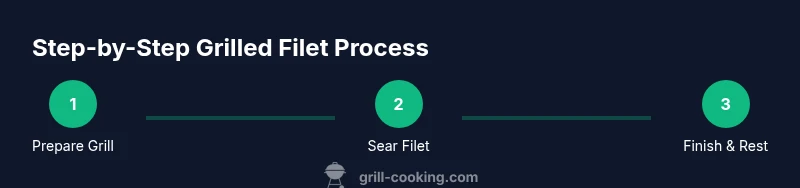
The Sear: Getting the Crust Right
Place the filet over direct heat and resist the urge to flip too soon. Sear for roughly 1.5–3 minutes per side, depending on thickness and heat. Use tongs to turn, avoiding piercing the meat and lost juices. A rich, brown crust signals a successful Maillard reaction and sets the stage for even doneness. If the crust stalls, lift the steak briefly and reapply a tiny bit of oil to the surface before continuing.
Finishing, Resting, and Doneness
After the initial sear, move the filets to indirect heat and monitor internal temperature with a thermometer. Target about 125–130°F for medium-rare, knowing carryover heat will lift the final temp a few degrees. Remove the filets from heat and rest for 5–10 minutes; rest lets juices redistribute and makes carving easier. Slice against the grain for maximum tenderness and finish with a light pat of butter or a spoonful of pan sauce if desired. Properly rested, the filet should be juicy, tender, and full of flavor.
Troubleshooting Common Issues
If the filet sticks to the grill, give it more time to form a crust before attempting to flip. A pale crust indicates insufficient heat or surface dryness; increase heat slightly or pat dry again and resurface. Overcooking happens when you ignore thermometer readings—trust the numbers and pull early for a perfect medium-rare. Flare-ups can char the crust—keep a spray bottle handy and move the meat away from flames. For thicker filets, plan for longer indirect cooking and account for carryover heat when deciding doneness.
Serving Ideas and Sauces
Keep the service simple to honor the beef’s natural quality. A dab of herb butter, a splash of good pan jus, or a bright chimichurri can elevate the plate without overpowering the filet. Pair with classic sides like roasted asparagus, mashed potatoes, or a crisp green salad. The goal is to present a warm, rested filet on a clean plate that showcases a crusty exterior and a tender center.
Tools & Materials
- Gas or charcoal grill(Two-zone setup preferred for sear + finish)
- Meat thermometer (instant-read ideal)(Monitor internal temperature precisely)
- Tongs (long-handled)(Turn, don’t pierce)
- Paper towels(Pat dry surfaces well)
- Fine kosher salt(Even, generous coverage)
- Freshly ground black pepper(Crust-building spice)
- Optional: olive oil or butter(For light surface coating or finishing)
- Optional: butcher’s twine(For thick or irregular shapes)
Steps
Estimated time: 25-40 minutes
- 1
Preheat and configure grill
Preheat your grill and establish a two-zone setup: one hot zone for searing, another cooler zone for finishing. This ensures a fast crust without overcooking the interior. Keep the lid closed to stabilize temperature.
Tip: Preheating thoroughly helps crust formation and even cooking. - 2
Pat dry and season filet
Pat the steaks dry with paper towels. Season generously with salt and a light touch of pepper just before cooking. Dry surfaces promote searing rather than steaming.
Tip: Salt early for flavor; avoid salting too far in advance to prevent moisture drawout. - 3
Sear on direct heat
Place filets on the hot side and sear 1.5–3 minutes per side until a deep crust forms. Do not pressure or move too much; the crust will form best when left alone briefly.
Tip: Resist the urge to flip too early; crust needs time to form. - 4
Finish in indirect heat
Move filets to the cooler zone. Use the thermometer to gauge doneness and pull when near your target temperature, allowing carryover heat to finish.
Tip: Close the lid to maintain heat and even cooking. - 5
Check doneness
Aim for about 125–130°F for medium-rare. Remove at the target, accounting for carryover heat. Keep in mind thickness affects time.
Tip: Always rely on a thermometer over visual guesses. - 6
Rest before slicing
Let the filets rest on a warm plate for 5–10 minutes. Resting redistributes juices and makes slicing easier.
Tip: Tent lightly with foil if desired, but don’t steam the crust. - 7
Slice and serve
Slice against the grain to maximize tenderness. Arrange neatly and serve promptly for best texture.
Tip: A quick tablespoon of pan sauce or herb butter adds elegance without overpowering flavor. - 8
Optional finishing touches
Finish with a pat of herb butter or a light drizzle of pan jus. This boosts aroma and gloss without masking beef flavor.
Tip: Keep it light so the beef remains the star.
FAQ
What is the best thickness for grilling filet mignon?
Aim for about 1.5 to 2 inches thick to balance a quick sear with a properly finished center. Thicker filets require more indirect cooking time and careful temperature monitoring.
Aim for 1.5 to 2 inches thick for best balance between sear and doneness.
Should I marinate filet mignon before grilling?
Filet mignon is naturally tender and flavorful. Marinating is optional and can add flavor, but salt and pepper plus a good sear often suffice.
Marinade is optional; salt and pepper plus a good sear usually suffice.
What internal temperature indicates doneness for filet on grill?
Common targets are about 125–130°F for medium-rare and 130–135°F for medium. Remember carryover heat will raise the final temperature after resting.
Aim for about 125–130°F for medium-rare; carryover heat will finish the job.
Can I cook filet from frozen on the grill?
Thaw the filet before grilling for the most even sear and doneness. Cooking from frozen leads to uneven texture and longer cook times.
Thaw first for best results.
How long should I rest filet after grilling?
Rest the filet for about 5–10 minutes after cooking to allow juices to redistribute and improve slicing.
Rest for about five to ten minutes.
Why did my filet overcook so quickly?
Likely too high heat or extended exposure during sear. Use a thermometer and remove when near target doneness.
Watch the temperature and pull early if needed.
Is wrapping filet in foil recommended after cooking?
Wrapping traps steam and softens the crust. Rest uncovered to maintain crust unless you’re keeping warm before serving.
Best to rest uncovered on a warm plate.
Watch Video
Quick Summary
- Master two-zone grilling for even sear and finish.
- Pat dry and salt ahead for crust quality.
- Monitor internal temperature with a thermometer.
- Rest and slice against the grain for tenderness.