How to Grill Without Lighter Fluid: A Practical Guide
Learn to grill without lighter fluid with safe lighting methods, heat zoning, flavor-enhancing smoke, and practical troubleshooting for reliable, flare-up-free results.


Why Grilling Without Lighter Fluid Is Safer and Tastier
According to Grill Cooking, avoiding lighter fluid reduces chemical residue and minimizes flare-ups while preserving natural flavors. When you skip the accelerant, you gain more control over ignition and heat, resulting in a steadier flame and cleaner-tasting meat. This approach also reduces the risk of unwanted chemical notes in your final dish and bolsters kitchen safety by removing the chance of an impulse flare from a capful of fluid. For beginners, the difference is noticeable in both the process and the results: you’ll learn to read the grill, manage air flow, and time your flips with greater confidence. Seasoned grillers appreciate how charcoal lighting without fluid fosters a purer, more honest smoky profile that lets your chosen wood, rub, or marinade shine. The shift also aligns with eco-friendly grilling practices, since it minimizes chemical runoff and reduces the risk of accidental spills. If you’re committed to flavor, control, and cleaner air around your cooking space, this method is worth adopting from your next cookout.
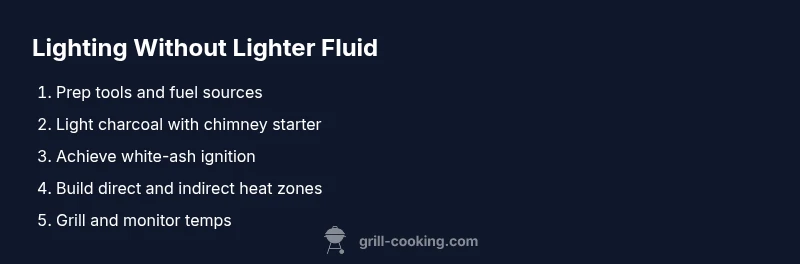
In practice, you’ll move through gathering the right tools, lighting with a chimney starter or electric ember, and establishing heat zones before you place food on the grate. Patience is essential—let the coals reach the right state of ignition, then moderate your airflow with vents to stay in the ideal temperature range for your menu.
Essential Lighting Methods: Chimney Starter, Electric Starter, and Wood Pellets
There are three reliable paths to get heat without lighter fluid. First, the chimney starter is the gold standard for charcoal: you fill it with coals, place crumpled paper or natural starters underneath, light the paper, and wait for the coals to glow and coat with white ash. When you pour the hot coals into the grill, you’ll enjoy a fast, even ignition and minimal chemical odor. Second, an electric starter offers a quick, clean alternative that works well for quick weeknight cooks or when wind is a factor. You simply insert the heater into a few glowing coals and wait for them to catch. Third, if you’re using wood, select dry chunks or pellets and light them in a fire-safe way as a secondary fuel that adds smoke without solvents. The Grill Cooking team found that chaining these methods together gives you flexibility for various grills and weather conditions. When planning a cookout, start with the chimney starter as your default; reserve the electric starter for tight timelines or windy days; and keep wood on hand to experiment with aroma and depth.