How to Keep Your Grill from Flaming Up: A Practical Guide
Learn proven, practical steps to prevent flare-ups on your grill with two-zone setups, cleaning, fat management, and safe techniques. Grill Cooking offers expert guidance for safer, tastier grilling.


Keep grill flare-ups under control by mastering two-zone cooking, proper cleaning, and fat management. This quick guide walks you through practical setup, safe flame handling, and fuel-smart grilling techniques to prevent sudden flames. You’ll learn how to shield food from fire, reduce drippings, and respond quickly when flames appear, so every cookout stays delicious and safe.
Understanding Flare-Ups: What Starts the Flames
Flare-ups on a grill happen when fat and juices from meat drip onto the heat source, creating a brief burst of blue or yellow flames. This is not just a cookout nuisance—it can char food, burn sauces, and pose a burn risk. How to keep grill from flaming up starts with understanding the stack of variables at play: the type of grill (gas vs charcoal), how you manage heat, how clean the grates are, and how you control airflow. According to Grill Cooking, the leading cause is uncontrolled fat drippings meeting hot grates. Set expectations early by choosing a reliable two-zone setup and by prepping your grill for a safer cook. Keep a cool head, and remember that small flare-ups are common; your goal is to prevent them from escalating. In practice, a well-managed grill will have most flare-ups confined to the indirect zone, leaving your food evenly cooked and less scorched. The foundation is prevention: clean grates, dry surfaces, and mindful heat control before you even light the burner.
Prep Your Grill to Minimize Flare-Ups
Before you ignite, a clean grill is your best defense against flare-ups. Remove old grease with a stiff grill brush and wipe down the grates. A dry surface reduces unpredictable flames. For gas grills, preheat with all burners off initially, then light to a medium high and wait until the grates glow. Charcoal grills benefit from a well-established two-zone configuration: a hot zone for searing and a cooler zone for finishing. If you see fat accumulating on the flames, move the meat to the indirect zone and let the fire settle. Grill Cooking analysis shows that clean grates and proper vent management dramatically cut the frequency of dramatic flare-ups. Keep a tray or aluminum pan to catch grease, and lightly oil the grate to minimize sticking without creating extra flare sources.
Cooking Techniques That Reduce Flare-Ups
Two-zone cooking is a cornerstone technique: sear over high heat, then move to indirect heat to finish cooking. This keeps fat from hitting the flame at full force and lets you control doneness without chasing flames. When marinating, choose sugar-free or low-sugar sauces for surface contact or apply sugary sauces late in the cook to prevent caramelization flare-ups. Use a cast-iron grill plate or a grill pan for extra control over hot spots and to shield fat from direct contact with flames. Maintain steady, moderate heat rather than maxing out the flame; aggressive bursts cause larger flare-ups and burnt-seasoned exterior with undercooked interiors.
Airflow and Vent Control for Flaming
Vent management is a powerful, often overlooked, tool. On a gas grill, keep main vents open enough for airflow but not so wide that flames howl. On charcoal, add or restrict air to balance fire intensity. A closed lid during a flare-up helps starve the fire of oxygen and slows the flames, allowing you to reposition the meat or move it to the indirect zone. If flames surge, consider briefly closing all vents to dampen the fire, then reopen gradually as the situation stabilizes. Always keep a safe distance and use long-handled tools to avoid burns. Remember: the goal is to control heat, not smother the flavor.
Fat Management, Marinades, and Grilling Timings
Fat management begins with trimming excess fat and patting the surface dry. Too much surface fat can cause more dramatic flare-ups when it hits the heat. Use lean cuts for beginners or custome rubs that minimize oil release. Marinades with sugar or honey caramelize faster and can spark additional flames; apply these sauces toward the end of cooking rather than at the start. Timing also matters: high-fat foods go on the grill earlier only after the fire is stabilized, and you monitor closely for signs of flare. The right balance of heat, surface moisture, and timing yields juicy interiors with minimal charring.
Quick Fixes for Small Flare-Ups
For small flare-ups, keep calm and use practical tactics: move food off direct flames, close the lid to deprive the fire of oxygen, and wait for flames to subside. If flames persist, brush away the flames with a long-handled tool or use a baking soda dusting on the coals or grate to smother the fire. Avoid water on grease fires, which can create dangerous steam and spread the fire. A nearby spray bottle with water can help manage minor bursts, but never spray directly at a large flame. Reposition food to indirect heat and resume cooking when the flame has died down.
Safety and Maintenance to Keep Flare-Ups Down
Regular cleaning and proper maintenance are your long-term defenses. Clean grates after every cookout to prevent built-up grease that can erupt into flames. Inspect seals, burners, and vents for blockages that can surge flames when heat rises. Keep a fire extinguisher rated for grease, or have baking soda ready for a small fire. Train the family on safe handling and establish a go-to routine for flare-ups to reduce panic and injuries. A well-maintained grill yields safer cooking and more consistent results.
Tools & Materials
- Long-handled grill brush(Stiff bristles; use to scrape clean grates before each cook.)
- Tongs (10-14 inch)(Stable grip for moving meat without getting close to flames.)
- Fire-safe gloves(Heat-resistant up to at least 450°F.)
- Two-zone grill setup (indirect heat)(Essential for managing flare-ups on both gas and charcoal grills.)
- Baking soda(Smothers small grease fires without harmful chemicals.)
- Spray bottle with water(Use sparingly for small bursts; never spray on a large fire.)
- Aluminum foil catch tray or drip pan(Collect grease to reduce flare triggers.)
- Fire extinguisher (class B)(Only for grease fires that won’t die down; know how to use it.)
- Grill cleaner or degreaser(Keep grates and burners clean for safer grilling.)
Steps
Estimated time: 60-75 minutes
- 1
Clean and prep your grill
Begin by scrubbing the grates with a stiff brush to remove residue. Wipe with a damp cloth and dry thoroughly. A clean surface reduces the chance of fat igniting unexpectedly.
Tip: Dry grates between steps to prevent oil buildup that can catch fire. - 2
Set up two-zone grilling
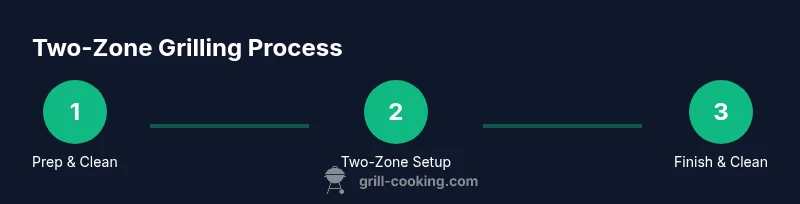
Arrange heat sources so you have a hot direct zone and a cooler indirect zone. This gives you control to sear and finish without letting flare-ups overwhelm the food.
Tip: Keep the indirect zone ready for immediate transfers when flames spike. - 3
Trim and pat meat dry
Trim excess fat and pat surface dry before placing on the grill. Moisture reduces splatter and the intensity of flames.
Tip: Pat, don’t rub; rubbing can push moisture into meat and increase flare potential. - 4
Season and apply sauces wisely
Apply dry rubs or low-fat marinades early; reserve sugary sauces for late in the cook to avoid caramelization flare-ups.
Tip: Have sauces ready for the final minutes of cooking. - 5
Control airflow and flame height
Adjust vents and lid position to moderate oxygen supply. Close vents briefly to suppress a flare, then reopen gradually as the fire stabilizes.
Tip: Never rush to remove meat from the grill during a flare-up. - 6
Move to indirect heat when needed
If flames rise, slide food to the indirect zone and finish cooking with the lid closed.
Tip: Use tongs to prevent burns and avoid piercing meat, which releases juices that can ignite. - 7
Smother small fires safely
Dampen small flare-ups with baking soda or a dampened, closed lid approach; avoid water on grease fires.
Tip: If you must use baking soda, sprinkle lightly and evenly. - 8
Inspect and clean after cooking
Clean grates again after cooking; check for grease buildup in trays or pans, and wash surfaces to prevent future flare-ups.
Tip: A routine cleanup builds safer grilling habits over time.
FAQ
What causes grill flare-ups?
Flare-ups are typically caused by fat and juices dripping onto hot surfaces. Proper heat management and a two-zone setup help keep flames under control.
Flare-ups happen when fat hits the hot surface. A two-zone setup and good heat control keep flames manageable.
Is it safe to use water on grill flames?
Water should not be used on grease fires. It can cause dangerous steam and spread flames. Use baking soda or close the lid to smother the fire.
No. Water on grease flames can be dangerous; use baking soda or lid control instead.
How do I set up two-zone grilling on a gas grill?
Turn on burners on one side for the hot zone and leave the other side off for indirect cooking. Place the food on the cooler side when flare-ups occur.
Turn on one side for heat and use the other side for indirect cooking when needed.
What foods are most prone to flare-ups?
Foods with higher fat content or sugary marinades are more likely to flare up. Trim fat and apply sugary sauces late in cooking to minimize risk.
Fatty foods and sugary sauces flare up more; trim fat and sauce late to reduce risk.
What should I do during a flare-up?
Move the food away from the flames, close the lid to cut oxygen, and wait for the flames to subside. If needed, smother small fires with baking soda.
Move food aside, close the lid, and let it subside; use baking soda for small fires.
Do marinades with sugar increase flare-ups?
Yes, high-sugar marinades caramelize quickly and can cause flare-ups. Apply sugary sauces late in cooking or after searing.
Sugar in marinades can fuel flare-ups; add late in cooking.
Watch Video
Quick Summary
- Start with a clean grill to reduce flare-ups.
- Use a two-zone setup to manage high heat and finish cooking safely.
- Avoid sugary sauces on high heat; apply later to prevent caramelization flare-ups.
- In a flare-up, close vents, move food to indirect heat, and smother small fires with baking soda.