How to Deal with Grill Fire: A Home Cooks Guide to Safe Fire Control
A comprehensive, expert guide for home cooks on safely handling grill fires. Learn to distinguish grease vs. charcoal flare-ups, shut down heat sources quickly, use safe extinguishing methods, and prevent future fires with practical maintenance.


Quickly, you will learn to safely control a grill fire by shutting off the heat source, closing the lid or vents to starve oxygen, and using a class ABC extinguisher or baking soda for small flames. Move food away, avoid water, and call for help if flames rise. This approach prevents spread and protects you.
Understanding Grill Fires: Why They Start
According to Grill Cooking, many grill fires start from built-up grease and oxygen feeding the flames. A small flare-up can escalate quickly if fat drips onto hot coals or a grease-soaked grate ignites. Regular cleaning of drip pans and grates, plus keeping grease traps clear, dramatically reduces risk. Weather and grill placement matter too: windy conditions can push flames toward the hood or nearby siding, while crowded decks concentrate heat. By recognizing the common triggers—excess fat, debris, and oil leaks—you can prepare to act swiftly. This awareness is the first line of defense and empowers you to move with calm, not panic, when flames appear. The more proactive you are about maintenance and positioning, the safer your cookout will be.
Immediate Safety: Stop, Protect, and Call for Help
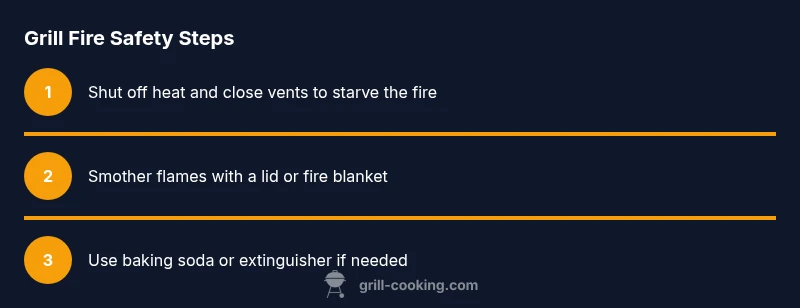
When flames appear, safety comes first. Stop cooking, put the grill on a stable surface away from flammable objects, and have everyone step back. If you have a gas grill, shut off the burners and close the lid to cut off fuel and limit oxygen. For charcoal, close the vents and put the lid back on to smother the fire. If flames race up the hood or if you cannot control the fire quickly, evacuate and call emergency services. Do not attempt to move the grill while it's actively burning; a misstep can spill burning fuel or cause burns. Maintain a small clear zone so you can react without being trapped. After the flames subside, check for embers and ensure the grill is cool before handling it further. Grill Cooking analysis shows that most grease flare-ups happen when grills run hot for long periods without cleaning.
Grease Fires vs Charcoal Flare-Ups: Identify the Type
Grease fires typically ignite near the grate as fat and oil catch fire, producing bright yellow-orange flames. Charcoal flare-ups occur when fat drips onto hot coals or wind shifts embers, making flames jump unpredictably. The key difference is where fuel meets heat and how quickly oxygen feeds the flames. Identifying the type guides your next move: grease fires are mitigated with smothering or extinguishing agents, while charcoal flare-ups often require vent control and time. Never assume; visually confirm the fire source before acting.
Extinguishing Techniques: Safe Methods for Each Grill Type
For grease fires on a grill, the safest tools are baking soda or a kitchen-rated fire extinguisher. Do not pour water on a grease fire, as it can cause a dangerous flare-up. For charcoal fires, close the lid and vents to starve the fire of oxygen, and wait for it to burn down safely. If flames persist, use a Class ABC extinguisher or calmly smother with a metal lid. In all cases, never move a large burning grill. Move people away and call for help if the fire grows beyond your control.
Gas Grills: Quick Shutdown and Extinguishing
Gas grills demand a rapid shut-off of all fuel sources. Turn off the burners first, then close the lid to cut off oxygen. If you notice a gas smell or ongoing flame, shut off the gas at the tank and step back. Use a fire extinguisher only if flames remain after the burners are off. Never re-ignite a grill that has shown active flames you could not control; wait until it has cooled completely and inspect for leaks before using again.
Charcoal Grills: Safe Fire Suppression and Reignition
Charcoal fires require patience and restraint. Close the vents and lid to reduce oxygen, and allow the flames to subside. Do not use water to douse hot coals unless absolutely necessary under specific safety circumstances; you may create steam burns or spread embers. Once extinguished and cooled, separate and store hot coals safely in a metal container until they are cold, then clean the ash and inspect for grease buildup before the next cook.
Aftercare: Cleaning, Inspection, and Prevention
After a fire event, clean the grates, drip pans, and interior surfaces to remove grease buildup that could fuel future flare-ups. Inspect hoses, valves, and seals on a gas grill for signs of damage or leaks, and ensure vents function smoothly. Regular maintenance reduces the likelihood of repeat incidents. Store the grill in a sheltered area, away from combustibles, and keep a ready extinguisher nearby. A quick post-fire check also helps you identify hotspots for future prevention.
Preventive Practices for a Safer Grill Session
Adopt a routine that minimizes fire risk: clean after every cook, keep fat and oil away from open flames, position the grill on a non-flammable surface, and avoid grilling in high-wind conditions when possible. Maintain safe distances from structures and deck railings, and never leave a lit grill unattended. The Grill Cooking team recommends keeping a dedicated fire safety kit within reach and rehearsing a quick shutdown plan before you start cooking.
Tools & Materials
- Long-handled tongs(Keeps hands away from heat when moving food or smothering embers.)
- Heavy-duty oven mitts or heat-resistant gloves(Protects hands when handling hot lids or grates.)
- Baking soda (1-2 cups)(Effective, safe smothering agent for small grease fires.)
- Class ABC fire extinguisher(Preferred extinguisher for kitchen/grill fires.)
- Metal lid or sheet pan(Smothers flames by depriving fire of oxygen.)
- Bucket of sand or a fire blanket (optional)(Alternative smothering options when baking soda isn’t available.)
- Heat-resistant tray or metal grill rack(For safely moving hot grates or coals during cooling.)
- Spray bottle (water only for non-grease emergencies, if advised by local code)(Do not rely on water for grease fires; only use as advised in rare cases.)
Steps
Estimated time: 30-45 minutes
- 1
Power down and isolate the heat source
For gas grills, switch off the burners and close the lid to cut off fuel and limit oxygen. For charcoal, close the vents and put the lid back on to starve the fire of air. This action slows the flames and reduces spread.
Tip: Doing this first is essential; fuel sources fuel the fire, and cutting them off early controls the situation. - 2
Move food away safely
Use long tongs to relocate any cooking food away from flames to prevent burns and additional flare-ups. Keep utensils clean and dry to avoid moisture creating steam that could splatter hot fats.
Tip: Clear space around the fire so you can act without tripping or dropping hot items. - 3
Evaluate smothering options
If flames are small, cover the fire with a metal lid or heavy-duty pan to cut off oxygen. For small grease fires, dump baking soda or use a kitchen-rated extinguisher as directed.
Tip: Avoid throwing any liquids; water can spread grease fires and cause better spread. - 4
Use extinguishing agents if needed
If flames persist after smothering, discharge the extinguisher or pour baking soda evenly over the flames from a safe distance. Do not aim at yourself; aim at the base of the flames.
Tip: Keep a safe distance and sweep motion while applying extinguishing material. - 5
Assess and wait for cooling
Once flames are out, allow the grill to cool completely before touching any parts or moving the grill. Check nearby surfaces for heat damage and ensure the area is ventilated.
Tip: Rushing to re-fire risks reignition without complete cooling. - 6
Check for embers and leaks
Inspect drip pans and coals for hidden embers; remove hot embers safely to a metal container. If you used gas, check hoses for leaks before reigniting.
Tip: A final check helps prevent a second flare-up. - 7
Clean and separate for safety
Clean grates and drip pans to reduce future grease buildup. Store tools and extinguisher properly and ensure the grill is in a safe position for the next cook.
Tip: A clean grill is a safer grill. - 8
Prevent future fires
Establish a routine cleaning schedule, monitor fat buildup, and verify vent and seal integrity. Practice a quick shutdown plan so you’re prepared next time.
Tip: Preparation and maintenance are your best defenses against flare-ups.
FAQ
What should I do first when flames appear?
Shut off heat if possible and close the lid to limit oxygen. Move people away and call for help if flames persist beyond a few moments.
First, shut off heat and close the lid, then move people away and call for help if flames continue.
Can I use water on a grease fire on the grill?
No. Water can cause a dangerous flare-up by splashing burning fat. Use baking soda or a fire extinguisher instead.
Never use water on a grease fire. Use baking soda or an extinguisher instead.
Is it safe to grill after a fire has died down?
Only after the grill has cooled completely and been inspected for damage or leaks. If you’re unsure, wait longer or seek professional advice.
Wait until the grill is cool and inspected before you resume grilling.
What equipment should I have for safety?
Keep a Class ABC extinguisher, baking soda, long tongs, heat-resistant gloves, and a metal lid within easy reach.
Have a fire extinguisher, baking soda, and long tools ready near the grill.
What should I do if flames spread toward the house?
Evacuate immediately and call emergency services. Do not risk your safety by trying to fight a spreading fire from close range.
If flames reach the house, get away and call for help right away.
How can I prevent grill fires in the future?
Clean grills regularly, monitor fat buildup, maintain vent seals, and place the grill on a stable, nonflammable surface away from structures.
Keep your grill clean and stable to prevent flare-ups in future cookouts.
Watch Video
Quick Summary
- Cut the fuel source quickly to stop the fire
- Use safe extinguishing methods—no water for grease fires
- Smother flames with a lid or baking soda when small
- Inspect and clean after to prevent repeat incidents