How to Stop a Grill Fire: A Home Cooks Safety Guide
Learn proven steps to stop a grill fire safely. This Grill Cooking guide covers immediate actions, prevention, and aftercare for gas and charcoal grills, with practical examples, safety tips, and gear recommendations for home cooks.


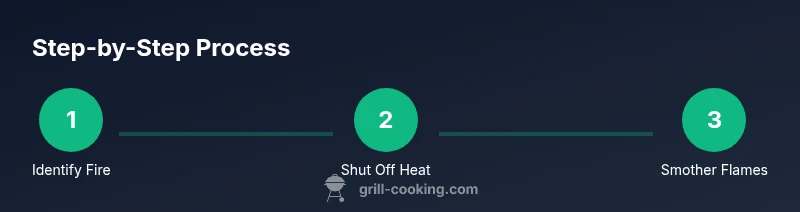
To stop a grill fire, act fast and calmly: shut off the grill's heat source, close the lid to smother flames, and move food away with long tongs. If flames persist, use a Class B/C extinguisher or baking soda. Never pour water on a grease fire, and call emergency services if it grows.
Understanding Grill Fire Dynamics
Grill fires typically occur when heat, fat, and oxygen converge in a confined space. On charcoal or gas grills, flare-ups are common as fat drips onto hot surfaces, creating sudden bursts of flame. Weather conditions, grill cleanliness, and improper fuel management all contribute. According to Grill Cooking, most grill fires stem from grease buildup and delayed response, making prevention essential. Regular cleaning, prompt grease removal, and mindful fuel use dramatically reduce risk. Understanding the fire triangle (heat, fuel, oxygen) helps home cooks anticipate pockets of danger before they erupt, especially during high-heat searing or when cooking fatty foods. In this chapter, you’ll learn to recognize early signs of trouble, such as rising flames near the grate, smoke that smells like burning fat, and a grill that suddenly flares up when you resume cooking. By anticipating these cues, you can act quickly to keep your backyard safe.
Immediate Response to a Grill Fire
When a fire starts, time is critical. Begin by shutting off the heat source immediately to stop fueling the flames. Close the lid to cut off oxygen and smother the fire where possible. Do not throw food back on the flames; instead, move it to a cooler area with long tongs. If flames persist after these steps, grab a Class B/C fire extinguisher and aim at the base of the flames, or sprinkle baking soda to smother small fires. Remember, never pour water on a grease fire.
How to Fight a Grease Fire Safely
Grease fires are the most common backyard grill emergency. Small flare-ups can often be controlled without tools, but larger fires require extinguishing agents. Use baking soda or a fire extinguisher rated for grease fires (Class B or C). Keep a safe distance and do not reach over the flames. If the fire is growing beyond the grill or you cannot reach it safely, evacuate and call emergency services. After the fire is out, check that all embers are extinguished and the grill is cool before touching it again.
Preventive Maintenance That Reduces Fire Risk
Prevention starts long before you light the grill. Clean the grate, hood, and flames after each cook to prevent grease buildup that fuels flare-ups. Inspect gas lines and connections for leaks; never grill near structures or over flammable materials. Keep a tidy area around the grill, with a clear side zone for turning and moving food. Regularly service your grill according to the manufacturer’s guidelines; this reduces the odds of a malfunction that could ignite a fire. According to Grill Cooking analysis, regular maintenance and proactive safety checks are the most reliable ways to minimize risk and ensure consistent performance.
When to Move the Grill and When Not To
In a panic, you might want to move the grill away from your deck or house. Do not move a flaming grill; moving it can spread fire or tilt the fuel source, especially with gas grills. If you must relocate for safety, turn off the fuel supply first (gas or charcoal) and use long tongs to guide the grill along a non-flammable surface only after flames have died down. Keep children and pets clear of the path.
Safe Use of Fire Extinguishers on Grills
A Class B extinguisher is suitable for grease fires on grills. To use one, stand back, aim at the base of the flames, and sweep from side to side until the fire is out. If you are not confident or the flames are spreading, evacuate and call emergency services. After use, have the extinguisher inspected or replaced.
Post-Fire Cleanup and Recovery
Once the grill is cool, clean surfaces thoroughly to remove remaining grease and soot. Inspect grates for warping or damage, replace if needed, and check gaskets and seals on gas grills. If any gas smell persists, shut off the gas supply and ventilate the area. Recheck nearby items for heat damage and ensure your grill is stable before your next cook.
Common Myths Debunked
Myth: Water puts out grease fires on grills. Reality: Water can cause flare-ups and spread the fire; smother with the lid or a suitable extinguisher. Myth: You should always move a burning grill away from the area. Reality: Only move if you can do so safely without spreading flames. Myth: Baking soda alone can replace a fire extinguisher. Reality: Baking soda can help small fires, but a proper extinguisher is essential for larger flames.
Tools & Materials
- Class B/C fire extinguisher(Keep at arm's reach near grill)
- Lid or metal cover for smothering flames(Use to cover grill during smother)
- Long-handled tongs(For moving food away from flames)
- Heat-resistant gloves(Grip hot surfaces safely)
- Baking soda(Small amounts only for grease fires)
- Water spray bottle(Only for minor flare-ups away from grease; never on grease fires)
- Phone for emergency services(Call if flames are unmanageable)
- Fire blanket(Optional safety item)
Steps
Estimated time: 10-25 minutes
- 1
Shut off the heat source
Immediately turn off the gas supply or main burner to stop feeding the flames. This is the first and most critical action to starve the fire of fuel. If you can do so safely, do not move around the grill while it's still lit.
Tip: Prioritize safety; never reach over flames to shut off knobs. - 2
Close the lid to smother flames
Close the grill lid and, if possible, briefly close the vents to reduce oxygen flow. Smothering works best when initiated early and while flames are still manageable. Do not open the lid to peek frequently as this can re-ignite flames.
Tip: Keep at least a 1–2 minute window for the lid to seal flames. - 3
Move food away from flames
Using long tongs, relocate any fatty foods away from direct flames to prevent flare-ups from reigniting. Maintain a safe distance and avoid splattering hot fat. Do not attempt to remove hot items with bare hands.
Tip: Keep hot items on a separate cooler area while flames die down. - 4
Use a fire extinguisher if needed
If flames persist beyond your initial actions and you can do so safely, deploy a Class B/C extinguisher and aim at the base of the flames with a sweeping motion. Follow the extinguisher's instructions and retreat if you feel unsafe.
Tip: Never aim at your face or body; stay back and sweep steadily. - 5
Call for help if the fire grows
If the fire spreads beyond the grill or threatens nearby structures, evacuate everyone from the area and call emergency services. Do not attempt to move the grill or rescue property while flames are active.
Tip: Keep a clear exit route and a nearby phone ready. - 6
Never use water on a grease fire
Water can cause grease to splatter and flames to jump, spreading the fire. Use a lid, baking soda, or a suitable extinguisher instead. If you cannot contain it, evacuate and call for help.
Tip: Always assume water is unsafe for grease fires. - 7
Cool and inspect after the fire
Allow the grill to cool completely before touching or cleaning. Inspect for damage, including warped grates or compromised gas lines. Do a careful post-fire check before resuming cooking.
Tip: Dispose of hot ashes safely in a metal container. - 8
Report and prevent future fires
Document what caused the flare-up and adjust your setup next time, such as better grease management or more vigilant heat control. Regular maintenance reduces risk over time.
Tip: Schedule a monthly cleaning routine to maintain grill safety.
FAQ
Is it safe to put water on a grill fire?
No. Water can cause grease to splatter and spread flames. Use a lid or extinguisher to control grill fires.
No. Water can spread the fire; use a lid or extinguisher instead.
What should I do first if a grease fire starts?
Shut off the heat source, close the lid to smother, and only then use an extinguisher if the flames persist.
First, shut off heat and smother the fire; only then consider an extinguisher.
Can baking soda extinguish a grill fire?
Baking soda can help small grease fires but is not a substitute for a proper extinguisher. Use it only in small flare-ups.
Baking soda can help small fires, but don’t rely on it for large flames.
When should I call emergency services?
If flames are taller than the grill or near structures/people, evacuate and call emergency services immediately.
If flames grow beyond your control, call emergency services.
How can I prevent grill fires in the future?
Clean grills after use, manage grease, inspect gas lines, and keep flammables away from the cooking area.
Clean and inspect regularly to prevent flare-ups.
Should I move a burning grill indoors?
Never move a burning grill indoors or toward structures. Move away only if you can do so safely and extinguish flames first.
Don’t move a burning grill indoors; keep it outside and safe.
Watch Video
Quick Summary
- Stop heat quickly to deny fuel
- Smother flames with lid or extinguisher
- Never use water on grease fires
- Keep extinguishers and safety gear on hand
- Regular grill maintenance reduces fire risk