What to Do If Your Grill Catches Fire: A Safe, Step-by-Step Guide
Learn proven, step-by-step safety actions to handle a grill fire, prevent flare-ups, and recover calmly after an incident. Expert tips from Grill Cooking guide home cooks to grill safely.


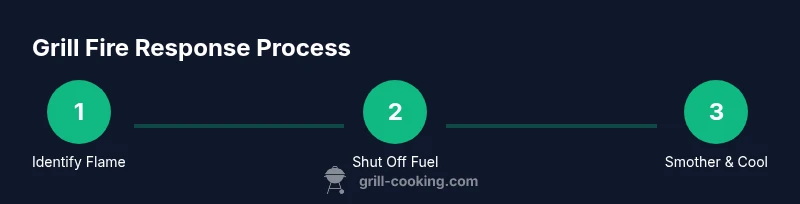
To handle a grill fire, act quickly: turn off the gas at the knob or propane tank, close the grill lid, and move the grill away from the house. If flames are small, smother them with the lid or baking soda; never use water on grease fires. If the fire grows, use a Class B extinguisher or evacuate and call emergency services.
What to Do If Your Grill Catches Fire: Causes and Prevention
According to Grill Cooking, flare-ups on grills are often triggered by accumulated fats and juices that ignite when exposed to high heat. Poor ventilation, overflowing grease trays, and unattended flames increase risk. The Grill Cooking team found that regular cleaning, proper airflow, and safe fuel handling dramatically reduce flare-ups. By understanding common causes and implementing practical prevention—from keeping drips under control to ensuring vents are clear—you set yourself up for safer cookouts. This section helps you spot trouble signs early and establish routines that minimize dangerous fires without sacrificing flavor.
Immediate Actions to Take When Fire Breaks Out
The moment you notice flames, stay calm and move quickly through a short checklist. First, shut off the gas supply at the knob or tank to stop the fuel source. Then, close the lid to limit oxygen and help smother the flames. If a second person is present, designate one person to keep bystander safety and the other to manage the grill. Do not lean over the grill or reach across the flames. If the fire is small, you can attempt to smother it with the lid; if it grows or involves the hose or tank, evacuate and call emergency services immediately. Remember: safety is the priority, and a controlled response reduces risk for everyone.
Proper Use of Baking Soda, Water, and Fire Extinguishers
Grease fires on grills respond best to smothering methods and appropriate extinguishing agents. Do not pour water on a grease fire; water can cause a violent flare-up. For small fires, baking soda can smother flames and cool hot surfaces. For larger fires, use a Class B (or BC) fire extinguisher, aimed at the base of the fire in short bursts. If you are unsure or the fire continues to grow, evacuate and seek professional help. After use, inspect the extinguisher and ensure everyone is accounted for before returning to the area.
Smothering vs Venting: When to Leave the Lid On
Smothering fires by closing the lid deprives flames of oxygen, which is effective for small, contained flare-ups. Venting (opening vents) can feed flames if the fire is not controlled and may expose you to heat and smoke. In most grill flare-ups, closing the lid is the safer first move, followed by keeping people away and allowing the grill to cool. Only reopen after flames have ceased and the unit has cooled to a safe handling temperature.
Gas Grills vs. Charcoal: Fire Response Differences
Gas grills and charcoal grills require slightly different responses. For gas grills, shutting off the propane at the tank and knobs is crucial; never disconnect hoses while flames are active. For charcoal grills, close the vents to starve the fire of oxygen, and use heat-resistant tools to manage embers. In both cases, move the grill away from structures and never attempt to relocate a hot grill while flames are present. Proper shutdown and containment reduce risk dramatically.
After the Fire: Cooling, Cleaning, and Rechecking Equipment
Once flames are extinguished, allow the grill to cool completely before handling any parts. Remove and clean grates to prevent residue buildup, and inspect fuel lines and hoses for damage. Wipe down surfaces to remove grease that could ignite later. Store the grill in a safe, ventilated area away from combustibles. If hoses or seals show wear, replace them before the next cookout to prevent future flare-ups.
Prevention Is Worth Mastering: Maintenance and Setup for Safer Grilling
Develop a routine for cleaning grills after every use: scrape grates, empty trays, and check grease management systems. Keep a clear zone around the grill, free of flammable materials, and ensure proper ventilation. Use a dedicated fire extinguisher and heat-resistant gloves within arm’s reach. Position the grill on a stable, level surface away from structures, awnings, or cabinets. Regular maintenance reduces the chance of a dangerous flare-up and makes grilling safer and more enjoyable.
Common Myths Debunked About Grill Fires
Myth: Water quells all grill fires. Reality: Water can make grease fires worse. Myth: You can move a burning grill. Reality: Moving a hot grill can spread flames or tip the unit. Myth: Only inexperienced cooks have flare-ups. Reality: Even seasoned grillers encounter flare-ups; prevention and quick action are essential for safety. By separating myths from facts, you’ll respond calmly and effectively when flames appear.
The Grill Cooking Approach: Steps, Tools, and Safety Mindset
Adopting a safety-first mindset makes handling grill fires straightforward. Always have a plan, know where to turn off fuel, and keep protective gear handy. Practice makes perfect: rehearse your response at a calm moment so you can act decisively if a flare-up occurs. Grill Cooking’s philosophy emphasizes prevention, clear actions, and calm, methodical responses to keep your cookouts safe and enjoyable.
Tools & Materials
- Long-handled tongs(For moving food and adjusting vents without getting close to flames)
- Heat-resistant gloves(Protect hands when handling hot grates and lids)
- Metal lid or baking sheet(Use to cover the grill and smother small fires)
- Baking soda(Smothers small grease flames; keep in pantry or grill area)
- Class B (or BC) fire extinguisher(Appropriate for grease fires on grills; ensure charged and accessible)
- Fire blanket (optional)(Extra measure for smothering flames around the cooking area)
- Water spray bottle (for cooling nearby surfaces, not for flames)(Use only to cool nearby surfaces away from the fire; do not spray on flames)
- Trash can with metal lid or metal bucket(Safe disposal for cooled charcoal embers or ashes)
Steps
Estimated time: 30-60 minutes
- 1
Shut off fuel source
If using a gas grill, turn off the knobs and then close the propane valve to stop feeding the flame. Do not unplug while flames are active. This step helps prevent flare-ups from continuing.
Tip: Act quickly but don’t rush to move a hot grill; prioritize cutting the fuel supply first. - 2
Close the lid to smother
Close the lid and, if possible, shut the vents to starve the fire of oxygen. Keep the grill undisturbed until flames die down and the unit has cooled safely.
Tip: Ensure any wind is blocked to prevent embers from spreading. - 3
Smother small flames
If flames remain small, use baking soda or cover with a metal lid to smother. Do not use water on grease fires. Keep hands protected with gloves.
Tip: Never throw water on a grease fire; the reaction can spray burning grease. - 4
If flames escalate, evacuate
If the fire grows beyond your control, evacuate everyone and call emergency services. Do not re-enter the area until authorities declare it safe.
Tip: Have a clear exit path and wait at a safe distance away from the grill. - 5
Cool and inspect after
Once flames are out, allow the grill to cool completely. Inspect hoses, valves, and gaskets for damage. Clean the grill thoroughly before next use and replace damaged parts.
Tip: Document any damage and consider professional service if you’re unsure about integrity. - 6
Store and prep for safety
Store extinguishers, gloves, and baking soda in an accessible place. Move combustibles away from the grilling area and maintain a tidy, dry space for future cookouts.
Tip: Review your safety plan with all household members.
FAQ
What should I do first if my grill catches fire?
First, shut off the fuel supply at the knob or tank to stop feeding the fire, then close the lid to smother the flames. Move everyone away and assess the situation before taking further action.
First, turn off the fuel and close the lid to smother the flames, then check for safety and call for help if needed.
Can I use water to put out a grill grease fire?
No. Water can cause a grease fire to flare up or spread. Use baking soda for small flames or a Class B extinguisher for larger fires.
No—water makes grease fires worse. Use baking soda or a proper extinguisher instead.
Should I disconnect the gas supply during a fire?
If safe to reach, shut off the gas at the propane tank first. Do not attempt complex moves that could endanger you.
Yes, shut off the gas at the tank if you can do so safely, then smother the flames.
What if flames spread to the deck or house?
Evacuate and call emergency services if flames threaten structures. Do not attempt to fight a growing fire alone.
If flames threaten structures, evacuate and call authorities immediately.
Is it safe to reuse a grill after a flare-up?
Only after a full cooling period and thorough inspection of hoses, seals, and wiring. If you see signs of damage, replace parts before cooking again.
Only after it cools and you’ve inspected for damage; replace any worn parts.
When should I call the fire department?
Call emergency services if the fire cannot be controlled quickly, if flames spread beyond the grill, or if you feel unsafe.
Call emergency services if you can't quickly control the fire or it spreads.
Watch Video
Quick Summary
- Shut off fuel and smother small flames quickly.
- Never use water on grease fires; use baking soda or a suitable extinguisher.
- Ventilate or smother as appropriate; avoid moving a hot grill during active flames.
- Cool, clean, and inspect the grill after any flare-up to prevent repeats.