What to Do When a Grill Grease Fire Breaks Out at Home
Learn proven steps to safely control a grill grease fire, protect your family, and prevent flare-ups. A practical safety guide from Grill Cooking.


A grease fire on a grill is dangerous but controllable when you act fast. Start by closing the lid and vents to smother the flames, turn off all burners, and keep a safe distance. If flames persist, use a fire extinguisher rated BC/ABC or baking soda; never spray water on hot grease.
Why grease fires happen on grills
According to Grill Cooking, most grill grease fires start when fat and oil from meat drips onto a hot surface or flames rise from the grease tray. Over time, a layer of fat builds up in the drip pan and below the grates. When the flame surges, the fat vaporizes and ignites, causing sudden flare-ups that can catch the grill's surfaces and nearby deck or patio objects on fire. Even when you clean regularly, high heat can cause a sudden ignition if oil is lingering in hidden crevices or the grease trap is full. Weather and wind can exaggerate flare-ups, pushing flames toward the lid vents and turning a small flare into a dangerous fireball. The key to safety is prevention plus rapid, calm response. Understanding how grease fires start helps you anticipate risk and act before flames exceed your control.
Immediate safety protocol (0-60 seconds)
If you notice a flare or glow under the grill lid, stay calm. Do not panic move heavy items or lean over the flames. Close the lid and the vents to starve the fire of oxygen, then turn off all burners and the fuel source if it’s safe to reach them. Keep children and pets away, and have a working fire extinguisher or baking soda within arm’s reach. Do not pour water on a grease fire, as it can cause a violent flare-up. If your grill has a dedicated secondary shut-off, use it. After taking these steps, reassess from a safe distance and prepare to extinguish if needed.
Gas grills vs charcoal grills: how fire behaves
Gas grills tend to flare when fat ignites at or near the burners, often near the grease tray or drip pan. Charcoal grills can ignite when grease drips onto hot coals or the hot grate, causing flames to lick up the sides. In both cases, the flames are fed by oxygen; limiting airflow by closing the hood slows the burn. For gas grills, turning off the gas supply is a critical action alongside closing the lid. For charcoal grills, the lid and vents should be closed to block air, but avoid moving the grill while flames are actively burning to prevent spreading embers.
Safe extinguishing methods: why not water
Water on grease fires is dangerous because it can spread burning fat and cause steam burns. Use a Class B or ABC fire extinguisher if the fire is spreading or you cannot smother it with the lid. Baking soda can also be used to smother small, contained flames; use a generous handful, but avoid attempting to smother a large fire with baking soda alone. If you have to move the grill, only do so if it is safe and the fire is small and contained. Do not attempt to carry or transport a burning grill.
Tools and setup you should have ready
Prepare a ready-to-grab kit: a Class B/ABC fire extinguisher, a box of baking soda, a metal lid or large baking sheet to smother flames, long-handled tongs, heat-resistant gloves, and a spray bottle of water only for minor flare-ups away from the fire source. Keep a fire blanket nearby if you grill indoors or in a covered patio. Regular cleaning supplies—scraper, brush, degreaser—make post-incident cleanup easier and safer.
Step-by-step action plan during a flare-up
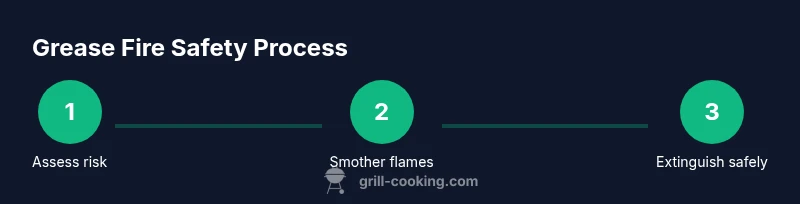
- Assess risk and clear the area. 2) Close the grill lid and vents. 3) Turn off all burners or the charcoal source. 4) If flames remain, smother with baking soda or the metal lid. 5) If needed, discharge a Class B/ABC extinguisher from a safe distance. 6) Evacuate if flames grow uncontrollable and call emergency services. 7) After cooling, inspect drip pans and grease traps for damage and clean thoroughly.
Aftercare: cleaning and prevention to reduce flare-ups
Once the grill has cooled completely, remove grease traps and drip pans for thorough cleaning. Scrub surfaces to remove built-up oil and fat, then inspect seals and burners for damage. Re-seat grates, wipe down the hood, and consider applying a light coat of oil to grates to prevent sticking. Establish a cleaning schedule and keep the grease management system free of obstructions to lower future risks. Regular maintenance is the best defense against recurring grease fires.
Training family members and practicing drill
Teach household members to recognize early signs of a grease fire and to respond with a pre-planned drill. Practice the steps at a safe, non-fire simulation first (lid close, vent shut, burners off, and extinguisher accessible). Emphasize not to panic, not to use water on grease fires, and to call for help if the fire spreads beyond a small, contained flare. Regular rehearsals build muscle memory and reduce hesitation during actual emergencies.
Common mistakes to avoid and quick actions
Avoid moving a burning grill unless it is absolutely safe. Never pour water on a grease fire or use a pan to smother away flaming fat while flames exist. Do not ignore a growing flame or delay extinguisher use; quick action saves lives and property. If you’re unsure of the fire’s scope, evacuate and contact emergency services rather than risking injury.
Tools & Materials
- Fire extinguisher (Class B/ABC)(Keep within arm's reach of the grilling area)
- Baking soda(Plenty on hand to smother small flames)
- Metal lid or large baking sheet(Used to smother flames by depriving oxygen)
- Long-handled tongs(For moving hot items safely without getting close to flames)
- Heat-resistant gloves(Protect hands when handling hot components)
- Water spray bottle (optional)(Only for tiny flare-ups away from the fire source; never on grease fires)
- Grill brush and scraper(Useful for post-incident cleaning and prevention)
Steps
Estimated time: 20-30 minutes
- 1
Assess risk and clear area
Take a quick look at the flames and flames' reach. If anyone is in danger or the flames are spreading, evacuate and call emergency services. Keep children and pets away and identify the nearest exit.
Tip: If you can do so safely, move utensils and food away from the fire to prevent burns and contamination. - 2
Close the lid and vents
Shut the grill's lid to cut off oxygen. Close the vents to further starve the fire of air. This is often the fastest way to dampen a grease flare.
Tip: Avoid opening the lid repeatedly; each opening feeds the flames. - 3
Power down the heat source
If you can reach the controls safely, turn off all burners or extinguish the charcoal source. This stops new fuel from feeding the fire.
Tip: Do not touch hot surfaces while turning off gas; use gloves. - 4
Smother flames with baking soda or lid
If flames remain, cover them with baking soda or slide a metal lid over the flames to block oxygen. Don’t try to lift the lid while flames are active.
Tip: Keep a safe distance and use long-handled tools to position the lid. - 5
Use a fire extinguisher if needed
If the fire won’t go out with smothering, discharge a Class B/ABC extinguisher at the base of the flames from a safe distance, sweeping side-to-side.
Tip: Aim at the base of the flames; lift and sweep as flames retreat. - 6
Evacuate if flames persist
If flames continue to grow or you cannot control them, evacuate the area and call emergency services. Do not risk injury.
Tip: Know your exit route and keep others calm during evacuation. - 7
Cool and inspect after extinguishing
Allow the grill to cool completely before moving or cleaning. Inspect drip pans, grease traps, and burner components for damage or clogging.
Tip: Record any needed repairs and replace damaged parts before the next use. - 8
Clean and prevent future flare-ups
Clean the entire grill, especially grease pans and trays. Establish a routine to remove old fat and oil and verify proper ventilation during cooking.
Tip: Clean after each use; prevention is more effective than response. - 9
Practice a safety drill
Walk family members through the steps in a non-fire scenario to build muscle memory and confidence when real danger occurs.
Tip: Rehearse with kids so everyone knows what to do quickly.
FAQ
Is it safe to pour water on a grease fire on the grill?
No. Water can cause the fat to splatter and spread flames. It can also turn into a dangerous steam burst. Use a fire extinguisher or baking soda to smother instead.
Water should not be used on a grill grease fire; extinguish with a Class B or baking soda instead.
What is the first thing I should do if I see flames under the lid?
Close the lid and vents to cut off oxygen, then power down the grill and step back to a safe distance. This is usually enough to tame small flare-ups.
Close the lid and vents first, then turn off the heat and step back.
Can baking soda safely extinguish a grill grease fire?
Baking soda can smother small grease fires, but it may not be sufficient for larger fires. If flames persist, use a fire extinguisher rated for grease.
Baking soda can help for small flames, but call for help if it grows.
When should I call emergency services?
If the fire continues after smothering, if you cannot quickly control flames, or if the fire affects nearby structures, evacuate and call emergency services immediately.
Call emergency services if you can't control the fire fast or it threatens structures.
Is it safe to move the grill during a fire?
Only move the grill if it is safe and the flames are small. Moving a hot, burning grill can spread fire or cause severe burns.
Only move it if you’re sure it won’t spread the fire or cause injury.
How can I prevent grease fires in the future?
Regularly clean drip pans and grease traps, trim fat from meat, avoid over-oiling foods, and ensure good ventilation. Store a fire extinguisher nearby.
Keep things clean, trim fat, and keep a extinguisher ready—prevention reduces flare-ups.
Watch Video
Quick Summary
- Identify and reduce ignition sources quickly
- Smother flames before resorting to extinguishers
- Do not use water on grease fires
- Inspect and clean after cooling to prevent recurrence
- Practice safety drills with family