Grill Fire Troubleshooting: What to Do When the Grill Is On Fire
Urgent, practical steps to safely handle a grill fire, extinguish flames, and prevent flare-ups. Learn quick actions, safety tips, and prevention strategies for home cooks.


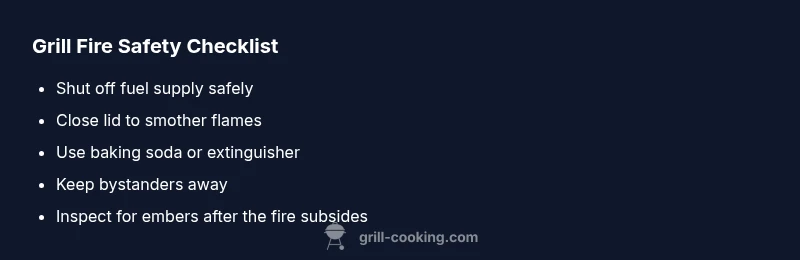
Quick Answer: If your grill catches fire, prioritize safety and control. Immediately turn off burners and the gas supply if you can do so safely, keep the lid closed to starve the flames, and use a Class B or multi‑purpose fire extinguisher rated for grease fires or baking soda to smother the flames. Do not fling water on a grease fire.
grill is on fire what to do: Immediate danger and why fires happen
Grill fires are startling but survivable when you act calmly and quickly. If you hear grill is on fire what to do, your first moves must prioritize safety: cut fuel off if you can safely reach the valve or bottle, and close the grill lid to starve the flames. Grease and fat buildup can ignite and flare with wind, so keep the area free of combustibles and ensure bystanders are at a safe distance. According to Grill Cooking, most flare-ups start in the grease tray, drip pan, or charred fat on grates. The quicker you intervene, the less chance the fire has to spread. Always have a small extinguisher rated for grease fires within reach, and plan an escape route for everyone nearby. This moment demands presence of mind and a clear sequence, not panic. If you see embers continuing after the initial surge, you may need additional assistance, especially if you’re using a tall propane tank or a large charcoal setup.
Safety-first: secure area and cut fuel
Before touching the grill, ensure kids and pets are away, and keep a clear path for you to retreat. If you can do so safely, shut off the gas at the tank or the valve and close the lid fully. For charcoal grills, close the vents to suffocate the fire. Do not pour water on a grease fire, as it can splash burning oil and spread flames. Keep your extinguisher within arm’s reach and be ready to deploy. If the fire is growing beyond the hood or spreading to nearby patio furniture, evacuate and call emergency services. After cutting fuel, stay low to protect your lungs from smoke and listen for crackling embers. Once the flames subside, inspect the grill for trapped embers and hot spots, and prepare to repeat as needed. The aim is to remove oxygen and fuel while preserving safety, not to win a firefight with speed alone.
Quick checks before you intervene
- Check wind direction and intensity; strong gusts can feed flame and push embers toward you. - Assess whether you can safely reach the gas valve or charcoal vents without stepping into hot zones. - Confirm you have a rated grease-fire extinguisher or baking soda within reach. - Clear any nearby flammable items (folding chairs, tarps, lighter fluid) from the vicinity. - If in doubt, back away slowly and call for help rather than risk a bigger fire. - Avoid opening the lid if flames surge; opening increases oxygen and can flare the fire.
Diagnostic flow: symptoms and likely causes
Symptom: sudden flare on the grill during cooking. Likely causes include grease buildup on the drip tray or grate (high likelihood), leaving the lid open during ignition (medium), a gas leak or damaged hose (low), or fat/oil igniting from very high heat (medium). In each case, the first priority is to cut fuel and restrict oxygen. If the fire persists or you suspect a hose leak, evacuate and contact emergency services. Based on Grill Cooking analysis, many fires are preventable with regular cleaning and proper shutdown procedures.
Step-by-step: extinguishing a grill fire safely
This section lays out exact actions you should take in order, tailored for typical home grills.
Steps
Estimated time: 15-20 minutes
- 1
Shut off the fuel supply safely
If you can reach the valve or bottle without risking a burn, turn off the gas supply completely. For charcoal, close the vents to stop air flow. This step deprives the fire of fuel and oxygen, which is the fastest way to control a flare-up.
Tip: Know your grill’s shut-off locations before you start cooking. - 2
Close the lid and vents
Close the grill lid securely to smother the flames. For charcoal, keep vents closed to limit oxygen. Do not open the lid repeatedly, as that reintroduces oxygen and can reignite embers.
Tip: Keep hands away from hot surfaces and vent openings. - 3
Smother flames with baking soda or a grease-rated extinguisher
If flames persist, gently apply baking soda or use a suitable fire extinguisher (Class B). Do not use water on a grease fire. Aim at the base of the flames and sweep slowly.
Tip: Have baking soda and a rated extinguisher within arm’s reach. - 4
If fire continues, evacuate and call for help
If you cannot control the fire quickly, retreat to a safe distance and call emergency services. Do not attempt to move the grill once flames are large.
Tip: Safety first—never put yourself at risk for a stubborn fire. - 5
Inspect and cool down the grill
Once flames are out, allow the grill to cool completely before touching any hot components or cleaning. Check for hidden embers under lids and within trays.
Tip: Use heat-resistant gloves and long-handled tools. - 6
Clean and prevent future flare-ups
After cooling, clean grease trays, scraper grooves, and grates. Regular maintenance reduces the chance of future flare-ups and improves safety during future cookouts.
Tip: Create a monthly cleaning routine and keep a grease-management plan.
Diagnosis: Grill catches fire during cooking
Possible Causes
- highGrease buildup on drip pan or grate
- mediumLid left open during startup or flare-up
- lowPropane leak or damaged hose
- mediumFat or oil igniting from high heat
Fixes
- easyShut off the fuel source safely (gas valve or propane tank) if you can do so without putting yourself at risk, then close the lid to starve the flames
- easySmother flames with baking soda or a grease-rated fire extinguisher; never use water on a grease fire
- hardMove people away and evacuate if the fire grows beyond the grill or you can't safely reach controls
- easyAfter flames subside, recheck for embers and heat spots before resuming cooking or leaving the area
FAQ
Is it safe to open the grill lid during a flare-up?
Opening the lid during a flare-up can feed the fire with more oxygen and make it worse. If flames are already large, keep the lid closed and wait for the fire to subside before cautiously checking.
Opening the lid during a flare-up often makes it worse, so keep it closed unless you’re sure flames are dying down.
What should I do if the fire spreads to nearby surfaces?
Move flammable items away, evacuate if flames threaten surroundings, and call emergency services if the fire grows beyond the grill. Do not try to fight a spreading fire alone.
If flames reach nearby objects, back away and call for help.
Can I use water on a grease fire on a grill?
No. Water can cause burning grease to splatter and spread flames. Use a grease-rated extinguisher or baking soda instead.
Never pour water on a grease fire; use an extinguisher or baking soda.
When should I call 911?
Call emergency services if flames are uncontrolled, the fire threatens your home, or you cannot safely manage the situation.
Call emergency services if the fire is spreading or you’re unsure you can control it.
How can I prevent grill fires in the future?
Regular cleaning of grease traps, keeping vents clean, storing fuel properly, and placing the grill on a stable, clear surface reduces flare-ups.
Keep your grill clean, manage fuel properly, and keep it away from flammable stuff to prevent fires.
Watch Video
Quick Summary
- Act fast and cut fuel safely.
- Do not use water on grease fires.
- Keep an extinguisher within reach.
- Close the lid to starve the fire of oxygen.
- Clean and maintain grease trays to prevent flare-ups.