What to do when grill fire goes out
Urgent, practical steps to relight and prevent grill flameouts on gas and charcoal grills. Learn safety, relighting methods, and maintenance to keep every cookout on track.


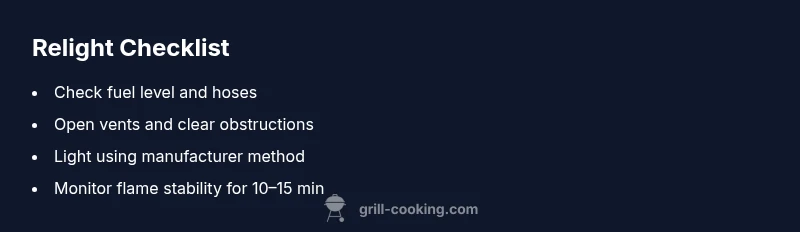
What to do when grill fire goes out? Quick fix: for gas grills, shut off, examine the propane supply and hoses, clear obstructions, reopen vents, and relight per the manufacturer’s instructions. For charcoal, ensure fresh coals are lit evenly with vents open before reigniting. Never rush a relight.
What to do when grill fire goes out: quick safety overview and causes
When the flame dies during a cook, stay calm and act safely. The two most common reasons are fuel-related shortages and airflow problems. For gas grills, a empty or low propane tank, a kinked hose, or a closed valve can kill the flame. For charcoal grills, damp charcoal, insufficient lighter fluid, or blocked vents can snuff the fire. In all cases, prioritize safety: keep kids and pets away, use heat-resistant gloves, and work in a well-ventilated outdoor area. By understanding why flames go out, you’ll know exactly which quick checks to run before attempting a relight.
This section sets the stage for the relighting process, emphasizing safety and a systematic approach to diagnosing a flameout rather than rushing to restart.
Immediate safety steps
Before messing with the grill, close the lid and turn off all burners or the charcoal vents. If you smell gas, move away and call for help. Do not lean over the grill while investigating fuel lines. Clear the area of flammable objects and have a spray bottle of water or a fire extinguisher within reach. After a safe pause of 2–5 minutes, perform a controlled relight following the appropriate gas or charcoal procedure. This pause helps dissipate any accumulated gas and reduces the risk of a flare-up when you relight.
Safety culture matters: assume nothing, verify fuel and vent status, and use proper tools. This prepares you to move into a step-by-step relight with confidence.
Gas grills: diagnosing and relighting safely
Gas grills depend on a steady gas supply and clean air flow. Start by turning off all burners and closing the lid for 5 minutes to clear any gas buildup. Check the propane tank valve, hose for cracks, and regulator for frost or hiss. If hoses are clear and propane is available, re-open the lid, set burners to high, and reignite at the ignition button, or with a long match if necessary. If the flame won’t catch, turn everything off again, wait longer (10 minutes), then try again, ensuring vents are open and the area is ventilated. If you hear a hissing sound or smell gas, evacuate and call a professional.
In this section we detail common gas-relight sequences and safety checks to prevent unsafe relight attempts.
Charcoal grills: relighting and maintaining airflow
With charcoal, ensure the coals are not damp and that enough oxygen is reaching them. Open the lid completely and confirm vents are wide open to promote air intake. If using lighter fluid, apply only manufacturers’ recommended amounts and light from the edge away from your hands. If the fire has died, arrange fresh charcoal in a chimney starter or spread hot coals evenly and light them. Once you have steady flames, reduce airflow gradually to maintain the right cooking temperature. Never use accelerants in a closed space.
This block covers clean relight strategies and airflow management to keep temperatures steady.
Common pitfalls and troubleshooting quick checks
Common mistakes include peeking into the grill while it’s hot, using cold or damp coals, and failing to ventilate. Check for ash buildup blocking vents, inspect hoses and gas lines for leaks with soapy water, and verify the fuel gauge/propane level. If you’re constantly battling a flame-out, it may be time for a more thorough maintenance plan, including cleaning burners and replacing worn parts.
These quick checks help you distinguish between simple fixes and genuine wear-related issues.
Maintenance to prevent future flameouts
Regular cleaning and inspection prevent many flameouts. Clean the interior surfaces and remove ash from charcoal grills, clean burner ports on gas grills, and test the igniter. Ensure vents are free of obstructions and check fuel storage to prevent moisture exposure. Create a simple pre-grill checklist: fuel level, vent setting, ignition test, and a final flame check before cooking. By incorporating these steps, you’ll minimize flameouts and improve overall grilling consistency.
Good maintenance reduces risk and extends grill life, keeping weekend cooks on track.
When to call a professional
If you smell gas strongly, detect gas leaks after applying soapy water to hoses, hear a hissing sound that doesn’t stop, or cannot relight after multiple attempts, contact a qualified technician or your grill’s manufacturer. Safety should come first, and a professional should handle repairs that involve gas lines, regulators, or damaged hoses.
When in doubt about a persistent flameout, professional assessment can prevent costly damage or dangerous leaks.
Steps
Estimated time: 45-60 minutes
- 1
Prioritize safety and prepare tools
Put on heat-resistant gloves, keep a fire extinguisher or water spray handy, and ensure the area is clear of flammable objects. If you smell gas, evacuate and call emergency services.
Tip: Always have a clear escape route before starting. - 2
Check fuel and airflow
For gas grills, inspect propane tank level and hoses; for charcoal, verify the coals are dry and vents are accessible. Clear obstructions to allow airflow.
Tip: A quick vent check can prevent a stubborn flameout. - 3
Purge and reset (gas only)
Turn off all burners, close the lid, wait 5–10 minutes to dissipate gas, then re-open and attempt ignition with a safe method.
Tip: If you detect gas, do not ignite—ventilate and seek professional help. - 4
Relight with proper method
Gas: ignite via button or long lighter; Charcoal: light new coals in chimney starter and add to existing bed once hot.
Tip: Never rush the ignition—let the fuel reach proper temperature. - 5
Stabilize flame and test
Once lit, set vents to maintain steady heat and monitor flame stability for 10–15 minutes before cooking.
Tip: Use a thermometer to confirm target heat. - 6
Post-cook safety check
Turn off grill completely after cooking, close vents, and inspect hoses and burners for signs of wear.
Tip: Document any unusual sounds or smells for future reference.
Diagnosis: Grill won’t stay lit during cooking
Possible Causes
- highFuel depletion or empty propane tank
- highRestricted airflow due to dirty vents or ash buildup
- mediumFaulty regulator or damaged hoses (gas grills)
- lowWind or outdoor weather impacting flame stability
Fixes
- easyCheck fuel level, replace or refill tank, inspect hose/regulator for leaks or kinks
- easyClean vents and remove ash, then re-test ignition with vents fully open
- mediumPurge gas line, check for gas leaks with soapy water; if suspected regulator issue, stop and call a pro
- easyRelight in calm, sheltered conditions; shield grill from wind during ignition
FAQ
Why does my grill fire go out so quickly?
Flameouts typically come from fuel depletion, airflow blockages, or worn parts in gas lines. Charcoal can go out if coals are damp or vents are closed.
Flameouts usually come from fuel or airflow issues, or worn gas parts for gas grills.
Is it safe to relight a grill after it goes out?
Yes, you can relight safely by following the manufacturer’s relighting steps and ensuring proper ventilation. Do not rush the process.
Yes—relight safely by following the steps and keeping vents open.
What should I check before relighting a gas grill?
Check propane level, inspect hoses for cracks, and verify the regulator. Ensure there are no gas smells before attempting ignition.
Check propane level and hoses, and make sure there's no gas smell before relighting.
Can weather affect grill flames?
Wind and humidity can affect flame intensity and heat retention. Shield the grill from strong wind and adjust vents accordingly.
Yes, wind can rough up flames; shield the grill and adjust vents.
When should I call a professional?
If you smell strong gas, detect leaks, or can’t relight after multiple attempts, contact a professional or the manufacturer.
Call a professional if you smell gas or can’t relight after several tries.
Watch Video
Quick Summary
- Relight safely by following fuel-specific steps
- Open vents and clear obstructions before ignition
- For gas grills, inspect hoses and regulators; for charcoal, ensure dry coals
- If gas smells or persists, seek professional help immediately
- Maintain a simple pre-grill checklist to prevent flameouts