How to Put Grill Fire Out: Safe, Step-by-Step Guide
Learn to safely extinguish a grill fire with practical steps, tools, and best practices for propane, charcoal, and grease fires. Quick actions, proper gear, and prevention tips to protect your grill and home.


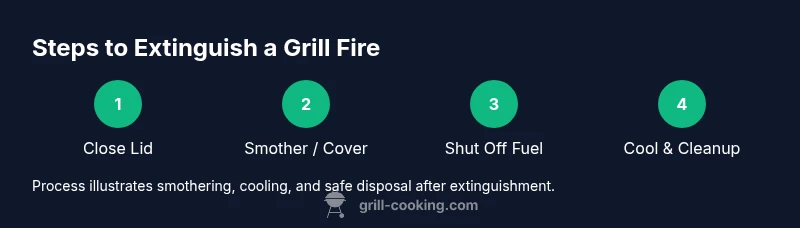
You're about to learn how to safely put out a grill fire and prevent flare-ups. Gather a metal lid or fire-safe screen, a Class B/C dry chemical extinguisher or bucket of sand for small flames, and a spray bottle of water for cooling certain fuels. Follow these steps for a controlled extinguishment.
Fire safety fundamentals for grilling fires
When you learn how to put grill fire out, safety is the first priority. Grills ignite fires through grease buildup, fat drips, and flare-ups driven by oxygen and wind. Understanding heat zones, fuel behavior, and airflow helps you pick the right extinguishing approach. According to Grill Cooking, a calm, prepared response is the most reliable way to protect your grill and home. Start with the basics: know your fuel type (charcoal, gas, or electric) and recognize the signs of an impending flare-up, such as rising smoke, strong gusts, or a sudden crackling sound. This foundation keeps you ahead of trouble and reduces panic when flames appear. With the right mindset and gear, you can terminate small fires quickly and minimize damage, buying time to fully assess the situation before deciding on disposal or professional help.
Immediate actions if a fire starts
A small grill fire can escalate quickly, so knowing immediate actions is essential. First, if you can do so safely, close the lid or a fire-safe screen to starve the flames of oxygen. Close vents on a charcoal grill to further reduce airflow. If you’re cooking on a gas grill, shut off the gas supply at the tank or regulator to curb fueling flames. Keep a safe distance and alert others nearby. Do not attempt to move burning coals or the grill itself—tip hazards and splashing embers can cause severe burns. After cutting off fuel and oxygen, assess whether the flames are contained to a small area or spreading. If the fire is spreading or you’re unsure, evacuate and call emergency services.
What not to do during a grill fire
Avoid common mistakes that worsen fires. Do not throw water onto an active grease fire; water can cause steam explosions and spread burning grease. Do not move a hot grill while flames are present; hot grease and metal edges can cause severe burns. Do not attempt to douse with a kitchen extinguisher if you’re not trained—misuse can spray burning material toward you or others. Never ignore flames that extend beyond the grill surface or threaten nearby structures. And never open the lid or vents during a large flare-up—sudden exposure to fresh oxygen can intensify the fire.
Tools and materials for safe extinguishment
Having the right tools ready makes a big difference. Key items include a metal lid or fire-safe screen that fits your grill, a Class B/C dry chemical extinguisher, and a bucket of sand or baking soda for small fires. Other helpful gear includes heat-resistant gloves, long tongs, and a fire blanket for close-range control. If you prefer non-chemical methods, a well-contained bag or tray of baking soda can smother small flames. Keep water handy only if you are certain it won’t cause flare-ups with your fuel type. Regular inspection of extinguishers (pressure gauge, accessibility) ensures readiness.
Step-by-step approach to smothering a flare-up safely
Smothering is often the fastest, safest option for small fires. Start by closing the lid and vents to deprive flames of oxygen. If you can do so safely, slide a metal lid or heavy baking sheet over the flames to trap heat. For charcoal, sprinkle baking soda or sand around the base rather than dumping it directly on burning coals to avoid scattering hot embers. If the flames persist, use a dry chemical extinguisher from a safe distance, aiming at the base of the fire with a sweeping motion. After suppression, wait for visual signs of cooling before touching anything, and never fan the flames to re-ignite.
Dealing with grease fires in a charcoal grill
Grease fires are particularly dangerous due to flare-ups fueled by fat dripping into hot coals. Keep a safe distance and avoid pouring liquids on the fire. Close the lid to cut off oxygen, and cover the coals with a metal shield if possible. Use baking soda or sand to smother rather than water, which can cause splatter. If you must use an extinguisher, select a Class B/C model and discharge at the base of the flames with steady pressure. After extinguishment, allow the grill to cool completely before inspecting for damage and cleaning residue.
Using a fire extinguisher correctly (PASS technique)
Understanding PASS—Pull, Aim, Squeeze, Sweep—helps you use a fire extinguisher effectively. Pull the safety pin, aim at the base of the fire, squeeze the lever evenly, and sweep side to side until the flames are out. Maintain a safe distance and retreat if the fire re-ignites. For larger fires, prioritize personal safety and evacuate, calling emergency services. After use, get a recharged extinguisher and have professionals inspect any damage to your grill or patio.
After extinguishing: cooling and cleanup
Cooling is critical after a fire. Leave the grill closed until temperatures drop to a safe level, then carefully remove embers or cooled rubble with tongs and place them in a metal container away from flammables. Inspect the grill grates, grease trays, and vents for damage and clean any soot once the unit is cool. Discard any compromised parts and ensure your extinguisher is serviced or replaced if it discharged. Document what happened for future prevention, and share a quick safety plan with household members to avoid repeats.
Prevention strategies to reduce future fires
Prevention combines routine upkeep and mindful grilling. Regularly clean grease buildup from grates and trays, and check the fuel system for leaks or blockages. Manage airflow by adjusting vents and using properly sized fuel loads to avoid overheating. Keep a dedicated fire extinguisher at hand and practice safe lighting procedures, especially with charcoal or gas. Create a designated grilling zone away from structures, foliage, and overhanging branches, and never leave a lit grill unattended. These habits dramatically reduce the risk of fire during cooking.
When to seek help or call emergency services
If flames are spreading beyond your grill, smoke heavily, or you cannot control the scene within a minute or two, evacuate and call emergency services. Do not attempt risky moves to save the grill. If there is any gas odor or a potential gas leak, abandon the area and leave the vicinity immediately. After help arrives, follow responders’ instructions and provide any safety notes or observations that could assist their assessment.
Tools & Materials
- metal lid or fire-safe screen(Fits your grill model; plan ahead for charcoal/gas variants)
- Class B/C dry chemical extinguisher(Check gauge and accessibility before cooking)
- bucket of sand or baking soda(For smothering small flames)
- spray bottle with water(Use only on fuels where water is safe)
- heat-resistant gloves( protects hands during quick handling)
- long tongs(Keep distance from flames when repositioning)
- fire blanket(Optional for wrap-and-smother technique)
Steps
Estimated time: Total time: 5-15 minutes
- 1
Close lid and vents
If safe, close the grill lid to cut oxygen. Close the vents to further starve the flame while keeping the grill controlled. Maintain distance and avoid lifting the lid repeatedly during the initial suppression.
Tip: Lid-down suppression is often the fastest way to smother a small flare-up. - 2
Move people and valuables away
Ensure everyone stays clear of the grill area; flames and hot surfaces can cause severe burns. Keep children and pets at a safe distance and designate a safe exit route.
Tip: Establish a temporary safety perimeter before attempting any extinguishing steps. - 3
Shut off fuel supply (if safe)
For gas grills, turn off the gas at the propane tank or regulator. For charcoal, remove the air source by closing the vents and lid. Do not touch hoses or tanks if they’re compromised.
Tip: Shutoff at the main valve before approaching flames when possible. - 4
Assess flame intensity
Gauge whether flames are contained to the grill or spreading. If flames threaten nearby structures, evacuate and call emergency services immediately.
Tip: Err on the side of caution; quicker action reduces risk. - 5
Smother with lid, sand, or baking soda
If flames are small, cover with the lid or spread baking soda/sand around the base to smother. Avoid showering coals with liquid; it can spread embers.
Tip: Apply baking soda or sand in a controlled, even layer. - 6
Use extinguisher if needed
If the fire persists, discharge the extinguisher at the base, using a sweeping motion. Maintain a safe distance and plan an exit path.
Tip: Remember PASS: Pull, Aim, Squeeze, Sweep. - 7
Do not move burning coals
Moving burning coals can spill embers and cause burns or spread the fire. Allow cooling with the lid closed when possible.
Tip: Stability reduces risk of injury. - 8
Check for re-ignition after suppression
Wait and re-assess for signs of continuing heat or flame. If flames reappear, evacuate and call for help.
Tip: Re-check vents and lids for any remaining fuel sources. - 9
Cool and clean after extinguishment
Let the grill cool completely before handling or cleaning; dispose of ashes safely in a metal container away from structures.
Tip: Never store a grill while still hot or smoking. - 10
Inspect and document
Inspect for damage to grates, hoses, and seals. Note what happened to inform prevention measures next time.
Tip: Keep a small safety log for your grilling setups. - 11
Prevent future fires
Clean grease traps, check fuel lines, and practice safe lighting procedures. Move grill to a clear, outdoor area free of combustibles.
Tip: Regular maintenance is cheaper than emergency repairs. - 12
Seek professional help if required
If structural damage or gas leaks are suspected, contact a professional for evaluation before using the grill again.
Tip: When in doubt, consult a qualified technician.
FAQ
Can I put out a grease fire with water?
No. Water can cause a grease fire to splatter and spread. Use baking soda, a Class B/C extinguisher, or a fire blanket if available.
Water can make a grease fire worse, so use baking soda or a suitable extinguisher instead.
What should I do if flames reach the propane hose?
Shut off the propane at the tank if safe, move away, and call for help if the fire continues or gas odor is detected.
Turn off the gas at the tank and back away; call for help if flames persist.
Is it safe to use a lid to smother a fire?
Yes, closing the lid and vents reduces oxygen and often stops flare-ups quickly when safe to do so.
Closing the lid helps cut off oxygen and can stop the flame fast.
When can I reuse a grill after a fire?
Only after the grill is completely cool and has been inspected for damage or leaks.
Wait until everything is cool and checked before using again.
Should I spray water on a charcoal grill fire?
Avoid spraying water on hot charcoal as it can cause steam burns and scatter embers. Use smothering methods first.
Water on hot charcoal can explode into steam—smother with lid or sand instead.
What extinguishers are best for grills?
Class B/C dry chemical extinguishers are versatile for grills. A fire blanket is helpful for small, contained fires.
A Class B/C extinguisher works well; a fire blanket is handy for small fires.
Watch Video
Quick Summary
- Smother flames quickly to starve oxygen.
- Use the right extinguishing tools for the fuel type.
- Never move burning coals or a hot grill during a flare-up.
- Cool, clean, and inspect before next use.