What Causes Grill Flare Ups and How to Fix Them
A practical, urgent guide to identifying, preventing, and handling grill flare ups for home cooks. Learn fat management, indirect heat techniques, and maintenance to keep your grill safe and your food perfectly cooked.


What causes grill flare ups
What causes grill flare ups is often a perfect storm of fat, grease, and heat. When meat renders fat, the drippings land on hot grates or a hot tray and ignite. The problem intensifies with fatty cuts, skinless poultry with excess fat, or marinated foods that leave sugar-laden sauces on surfaces. Another contributing factor is cooking at very high temperatures for extended periods, which makes even small amounts of fat burn vigorously. The environment around the grill matters, too: windy days push flames sideways and expose more fat to heat, while charcoal grills stack flames higher if the ash and grease tray aren’t cleaned. The key takeaway is that what you’re cooking, how you’re cooking it, and how well you manage the grill’s surface all influence the likelihood of a flare up.
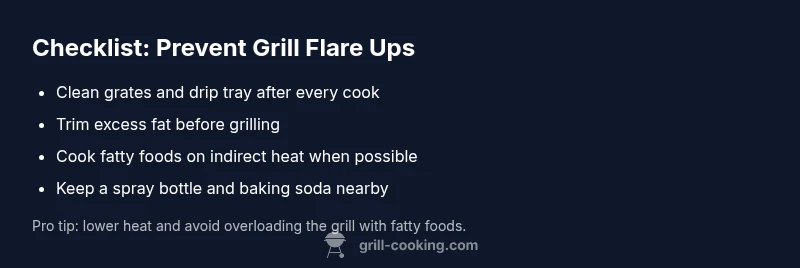
To minimize risk, practice fat management from the moment you start prep: trim visible fat, pat meats dry, and avoid overly sugary marinades that caramelize into a quick, fiery surface. The phrase what causes grill flare ups is not a mystery when you observe the sequence: fat renders, drips, contacts hot metal, flames surge. With this understanding, you can stage the cook so drippings are redirected away from direct heat and flare ups become manageable events rather than disasters.
In practice, the simplest starting point is to ensure your grill is clean before you light it. A clean slate reduces greasy build-up that can ignite when you reach high heat. Preheating briefly with the lid open allows any residual drips to burn off in a controlled way, preventing a surprise flame while you place meat on the grill. Remember, prevention is cheaper and safer than fighting a flare up mid-cook, especially when you’re serving guests.
Grill flare ups aren’t solely about fat; sauce sugars also play a role. If you baste or glaze foods with sugar-rich sauces late in the cook, you’ll be inviting a hotter, more dramatic flare up as those sugars caramelize. Plan your timing so sugary coatings are applied closer to the end of the cook, or use direct heat with caution for the final sear. This approach preserves moisture without inviting an early, chaotic flame.
Finally, always practice safe handling: keep a safety zone around the grill, tie back long hair, and avoid wearing loose sleeves. If you’re ever unsure about flames or smell gas, step back and follow standard safety procedures. A calm, methodical approach beats panic every time, and that mindset keeps flare ups manageable rather than dangerous.