What to Do When a Grill Flare-Up Happens: Quick Safety
Urgent, practical guidance for handling grill flare-ups fast, preventing damage, and cooking safely. Learn immediate actions, prevention tips, and maintenance to minimize future fires.


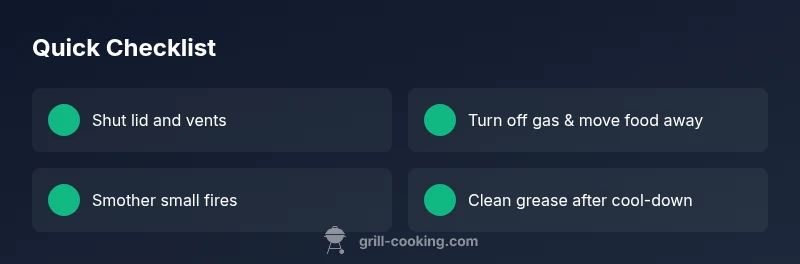
Quick fix: If a flare-up erupts, stay calm and act fast. Close the grill lid and vents to starve the flame, move food away, and turn off all burners. Do not spray water on a grease fire; instead, use a fire extinguisher or baking soda. After the flame subsides, scrub grease and inspect for hotspots before resuming cooking.
Why flare-ups happen on grills
Flare-ups are dramatic, but they have practical causes that any home grillmaster can understand. The headline reason is fat and oils splashing onto hot surfaces, instantly turning into bright flames that lick up toward the grates. When you see a flare-up, your first instinct should be safety, not panic. In many cases, a simple adjustment—closing the lid, throttling back fuel, and giving grease a moment to burn off—stops the fire before it grows. The question of what to do when grill flare up occurs boils down to oxygen, heat, and fuel. With practice, you can anticipate hotspots by knowing your grill’s layout, how much fat your chosen meat contains, and how wind can feed or snuff a flame. The Grill Cooking team emphasizes that recognizing early signs helps you act quickly without overreacting. Regular cleaning reduces built-up grease on trays and burners, which is a frequent trigger for sudden flames. By mastering these basics, you can keep cooking safe while maintaining grill flavor.
Immediate safety steps you should take
During a flare-up, safety must come first. Immediately step back from the flare, keep children and pets away, and avoid snagging your hands near the flames. If you’re using a gas grill, close the lid and vents to starve the fire of oxygen, then cut the gas supply by turning off the burners. If you can do so safely, move the food to a cooler area away from the flames with long tongs. Do not use water on a grease fire; water can cause a grease splash and spread flames. Instead, smother with a metal lid, baking soda, or a Class B fire extinguisher if the fire is small. After the flames subside, inspect for remaining embers and any signs of leaking fuel. Return to cooking only after everything has cooled and you’ve addressed the grease buildup that started the flare.
Diagnostic checks after a flare-up
Once the grill has cooled, run a quick diagnostic to prevent a repeat incident. Check for obvious grease buildup on the grease tray, burners, and underside of the lid. Ensure gas lines aren’t kinked or leaking by listening for hissing sounds or using a soapy water test if safe to do so. Inspect grates for stuck residues and clean them thoroughly. If you notice damage to burners, hoses, or ignition systems, those components can contribute to unpredictable flare-ups and may need replacement. Finally, review cooking practices: are you cooking fatty foods too close to heat? Are you grilling with the lid open for too long in high-oxygen conditions? Small changes can yield big safety dividends.
Step-by-step remediation to control a flare-up mid-cook
- Shut down or reduce heat and close the lid; 2) Move food away and keep a safe distance; 3) If flames are small, smother with a metal lid or baking soda; 4) If a controlled fire persists, use a fire extinguisher rated for kitchen use; 5) Once safe, clean grease and inspect fuel lines; 6) Start again with lower, controlled heat and monitor the grill closely. Tip: Keep a fire extinguisher accessible and practice a quick route to the exit. Safety first and always avoid panicking.
Preventing flare-ups: grease management and cleaning routines
Prevention starts with consistent grease management. Clean the grease tray and burners after every cook, scrape down the underside of the hood, and scrub grates to remove oil residues. When you grill fatty foods, consider indirect heat or finishing with the lid closed to reduce oxygen exposure. Use a two-zone setup on a gas grill to sear safely and reduce flare potential. Regular maintenance—replacing worn hoses, inspecting ignition systems, and checking for gas leaks—dramatically lowers the odds of a dangerous flare-up. Creating a simple cleaning schedule helps you stay proactive rather than reactive during peak grilling season.
Aftercare: inspection, seasoning, and restarting safely
After a flare-up, give the grill a thorough once-over before resuming cooking. Empty and clean grease traps, wipe down surfaces, and remove ash or char that could ignite later. If you used a fire extinguisher, recharge or replace it and ensure the area is ventilated. When you’re ready to grill again, reheat gradually and monitor flames closely. Consider adjusting your repertoire to include leaner cuts or more indirect-heat techniques until you’re confident the flare-up risk is minimized. Consistent practice builds safer, more predictable grilling sessions.
When to call a professional for flare-ups
If flare-ups occur repeatedly despite cleaning and proper technique, or you notice gas smells, damaged hoses, or hissing sounds, it’s time to involve a professional. A certified technician can assess fuel lines, regulators, burners, and ignition components for issues that increase fire risk. Do not attempt extensive repairs yourself if you’re unsure about gas safety. Prioritize safety above all else, and consult a pro before the next cook to restore reliability and peace of mind.
Steps
Estimated time: 30-45 minutes
- 1
Shut down heat and close the lid
Turn off all burners and close the grill lid to cut off oxygen supply. Keep hands away from the flames and use heat-resistant gloves if you need to touch the exterior.
Tip: Having a clear path to the exit is a safety advantage. - 2
Move food away from the flare
Use long-handled tongs to relocate food to a cooler area of the grill or to a side table if you’re using a portable unit. This prevents the food from catching and reduces heat build-up near the flare.
Tip: Stay out of the line of any sparks; keep kids and pets back. - 3
Smother small flames
If flames are small, place a metal lid over the flare or sprinkle baking soda around the edge. Do not use water on a grease fire, as it can spread flames.
Tip: Keep a ready-made lid or baking soda box near the grill. - 4
If the fire persists, use a fire extinguisher
If the flare continues beyond a minute or grows, use a Class B kitchen extinguisher and aim at the base of the flames. If you cannot safely control it, evacuate and call emergency services.
Tip: Know your extinguisher’s location and expiration date. - 5
Cool, clean, and inspect afterwards
Allow the grill to cool completely, then remove grease buildup, clean trays, and inspect hoses and burners for damage. Replace components as needed.
Tip: Recharge safety gear after use and check for leaks.
Diagnosis: Flare-up occurs during grilling
Possible Causes
- highExcess grease or fat buildup on trays, burners, or hood
- highFatty foods splashing onto hot surfaces
- mediumOpen lid for extended periods or high oxygen exposure
- lowDamaged burners or ignition components
Fixes
- easyShut the lid and vents, turn off all burners to starve the flame
- mediumCarefully clean grease from trays, burners, and hood interior
- easySmother small fires with baking soda or a metal lid; use a Class B extinguisher if needed
- hardIf flames persist or you suspect gas issues, call a professional
FAQ
What is the first thing I should do when my grill flares up?
Close the lid and vents to starve the flame, then turn off the burners. Move food away with long tongs if safe to do so. Do not use water on a grease fire.
Close the lid and vents, turn off the burners, and move the food away with long tongs. Do not use water on a grease fire.
Can I use water to put out a grease fire on the grill?
No. Water can cause the grease to splatter and spread flames. Use baking soda, a metal lid, or a fire extinguisher for small fires.
No. Water will spread the grease fire. Use baking soda, a metal lid, or a fire extinguisher for small fires.
Why do flare-ups keep happening after cleaning?
Grease buildup, high heat, and improper venting can cause recurring flare-ups. Regular cleaning and better heat management reduce risk.
Grease buildup and heat are common causes; clean regularly and manage heat to lower the risk.
Is it safe to continue cooking after a flare-up?
Only after the grill has cooled, grease is cleaned, and you’ve inspected for damage. Resume slowly and monitor flames closely.
You should wait for a full cool-down, clean up, and inspect before resuming.
When should I call a professional for flare-ups?
If flare-ups persist, you detect gas leaks, or you notice damaged hoses or burners, seek professional help.
If flames persist or you suspect a gas issue, contact a professional.
What maintenance prevents flare-ups long-term?
Regularly clean grease traps, inspect hoses, replace worn parts, and practice safer cooking methods like indirect heat for fatty foods.
Keep up with grease cleaning and part inspections to prevent flare-ups.
Watch Video
Quick Summary
- Act fast to cut oxygen and smother flames
- Never use water on grease fires
- Clean grease buildup to prevent future flare-ups
- Inspect hoses and burners after a flare and restart safely