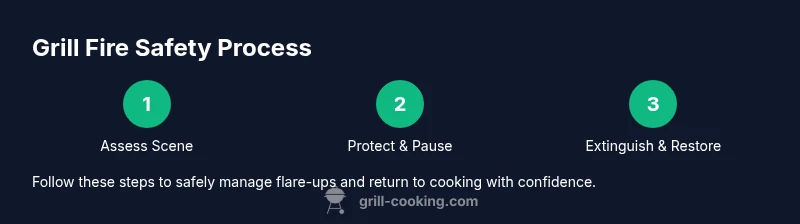
What to Do When a Grill Fire Happens
A practical, expert guide from Grill Cooking on how to respond to grill fires, prevent flare-ups, and safely extinguish flames during outdoor cooking.


Understanding Grill Fires: Causes and Consequences
Flare-ups during grilling are common but manageable. Most fires start when fat, oil, or juices drip onto hot coals or the burner, creating a rapid flame that can travel up the grill rack. Understanding why these fires happen helps you prevent them before they start. External factors include high ambient temperature, overloading the grill with food, and crowding the burners with fatty meats. By recognizing early warnings—popping fat, smoke that smells acrid, or flames licking the lid—you can respond calmly and prevent a small flare-up from becoming a dangerous fire. According to Grill Cooking, flare-ups are predictable when you maintain clean grates, manage fat buildup, and set up proper airflow. With the right setup, you’ll reduce surprises and keep your cookout on track.
This section establishes a practical foundation so you know what to watch for and how to position yourself before heat rises. It also frames the safety mindset you should bring to every grill session: plan, pause, and protect. The goal is to shift from reactive to proactive fire management, which lowers risk and preserves your grill’s longevity.
Key takeaways from this understanding include recognizing the difference between a flame that flares briefly from fat and a consuming fire that threatens equipment or people. Always have a plan for escape routes and a designated safety zone away from the grill. By combining observation with preparation, you set the stage for safe grilling even when flames appear.