Can You Use Grill Lighter Fluid in a Lighter? A Safety Guide for Grilling
Discover why grill lighter fluid should not be used in a lighter, the risks involved, safe ignition alternatives, and a practical, step-by-step method for lighting charcoal safely without fluid.


No. Do not use grill lighter fluid in a standard cigarette lighter or torch-style lighter. Lighter fluid is designed for charcoal ignition, and attempting to burn it directly in a lighter can cause flare-ups, fuel leakage, and burns. Use manufacturer-approved starters or a dedicated grill lighter. If you’re lighting charcoal, opt for chimney starters, natural firelighters, or starter squares, and always work in a well-ventilated area away from heat sources.
Safety First: Why lighters and lighter fluid don’t mix (and what to use instead)
Lighter fluid is formulated as a liquid fuel intended to saturate charcoal and wood for a controlled flame when ignition occurs. A standard lighter, whether it’s a disposable Bic-style model or a refillable butane device, is not designed to burn liquid fuel safely. The fluid can pool in the mechanism, drip onto your hands, or vaporize into highly flammable vapors. If the lighter malfunctions or the fluid vapor ignites too close to the device, you risk a rapid flare-up or explosion. Grill Cooking analysis emphasizes sticking to ignition methods approved by the manufacturer and using tools designed for grilling ignition. For safe practice, switch to chimney starters, natural firelighters, or electric coils designed for grills, and keep lighter fluid away from the ignition zone.
Safety First: Why lighters and lighter fluid don’t mix (and what to use instead)
Lighter fluid is formulated as a liquid fuel intended to saturate charcoal and wood for a controlled flame when ignition occurs. A standard lighter, whether it’s a disposable Bic-style model or a refillable butane device, is not designed to burn liquid fuel safely. The fluid can pool in the mechanism, drip onto your hands, or vaporize into highly flammable vapors. If the lighter malfunctions or the fluid vapor ignites too close to the device, you risk a rapid flare-up or explosion. Grill Cooking analysis emphasizes sticking to ignition methods approved by the manufacturer and using tools designed for grilling ignition. For safe practice, switch to chimney starters, natural firelighters, or electric coils designed for grills, and keep lighter fluid away from the ignition zone.
Tools & Materials
- Chimney starter(Metal cylinder that holds charcoal and uses paper or natural starters beneath for ignition)
- Long-reach lighter or grill wand(Keeps hands away from rising flames)
- Charcoal (lump or briquettes)(Use a blend you prefer; avoid uniform blocks for faster ignition without fluid)
- Long-handled tongs(For safe moving of hot coals)
- Heat-resistant gloves(Optional but helpful for handling hot equipment)
- Electric charcoal starter (optional)(Alternative to lighter fluid if you prefer electric ignition)
Steps
Estimated time: 15-25 minutes
- 1
Gather ignition gear
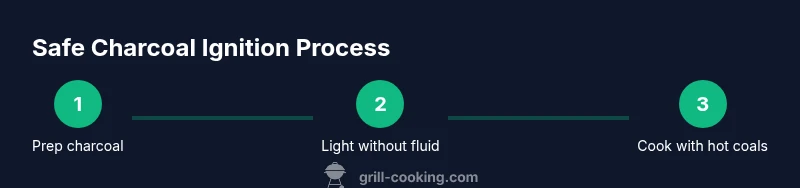
Collect your chimney starter, charcoal, a long lighter or wand, tongs, and gloves. Make sure the grill is in an open, well-ventilated area away from any heat sources. This preparation reduces the chance of accidental ignition from unexpected vapors.
Tip: Having everything within reach minimizes the need to move hot equipment near your body. - 2
Fill the chimney starter with charcoal
Pour charcoal into the chimney starter to about the top rim. Distribute evenly to avoid large clumps. An even load promotes uniform burning and reduces the time needed to reach a stable flame.
Tip: Aim for a balanced pile so hot air flows freely through the coals. - 3
Position the chimney over the grill
Place the chimney starter on a stable, heat-resistant surface over the grill grate. Ensure there is a clear path for flames to rise and for you to light with a long lighter.
Tip: Keep your body to the side of the grill to avoid any backdraft from the chimney. - 4
Ignite without fluid
Tuck crumpled paper, wood shavings, or natural starter cubes at the bottom of the chimney. Light the material with a long lighter, watching flames rise through the charcoal. Do not use lighter fluid or any liquid fuel.
Tip: Place the lighter at arm’s length and avoid leaning directly over the opening. - 5
Burn until coals are ashed and glowing
Let the coals burn until the top layer is glowing and a light gray ash forms. This usually takes about 10-15 minutes, depending on the breed of charcoal and wind. Expect steady flames in the first few minutes, then a steady glow as the heat builds.
Tip: If flames die back, add a little air by lifting the chimney slightly; never add more fuel mid-flame with liquid fuels nearby. - 6
Dump and spread the coals
Carefully pour the hot coals into the grill bowl and spread them evenly using tongs. This creates a stable heat zone for direct grilling and raises the surface area for even cooking.
Tip: Work with a partner to keep the weight balanced and protect your hands from radiant heat. - 7
Preheat and start cooking
Close the lid and let the grill preheat for 5-10 minutes, or until the grate reaches your target temperature. Remove any remaining charcoal pieces that are not fully ignited and position food sources accordingly.
Tip: Use a thermometer to gauge heat zones and adjust air vents for precise control. - 8
Cool-down and safety wrap-up
After grilling, leave the vents open to burn off residual heat, then let the grate cool before cleaning. Store charcoal and the ignition tools in a cool, dry place away from any sources of heat.
Tip: Keep a small baking soda box or a fire extinguisher within reach for emergencies.
FAQ
Can lighter fluid be used in a lighter at all?
No. Lighter fluid is intended for charcoal ignition and should never be burned in a lighter. Doing so risks a flare-up, leaks, or burns. Always use approved ignition methods.
No. Lighter fluid should not be burned in a lighter. Use approved methods instead.
What are safer ignition options for charcoal?
Safer options include a chimney starter, natural firelighters, or an electric charcoal starter. These methods reduce the chance of flare-ups and burns.
Safer options include a chimney starter or electric starter. They reduce flare-ups and burns.
Is it ever acceptable to use lighter fluid for lighting a charcoal grill?
Most safety guidelines advise against using lighter fluid for lighting a charcoal grill. If used, follow exact manufacturer instructions and maintain a wide margin of safety. Alternatives are preferred.
Generally not acceptable. Follow manufacturer instructions and prefer alternatives.
What should I do if lighter fluid spills or vapor is exposed?
If fluid spills, keep away from heat sources and ventilate the area. Wipe up spills with absorbent material, and wash hands after handling. Do not ignite the area until it’s fully dissipated.
If it spills, move away from heat, ventilate, and clean up. Do not ignite until fumes are gone.
How can I tell when the charcoal is ready to cook?
Look for a light gray ash coating and glowing edges. This indicates consistent heat for direct grilling and better control of temperature.
Look for gray ash and glowing edges to know it's ready.
What safety gear is recommended when igniting charcoal without lighter fluid?
Wear heat-resistant gloves and use long-handled tools to keep your hands and arms away from heat. Maintain a clear space around the ignition area.
Wear heat-resistant gloves and use long tools to stay safe.
Watch Video
Quick Summary
- Avoid putting lighter fluid in any lighter.
- Use chimney starters or electric igniters for charcoal ignition.
- Prepare a safe, wind- and heat-free ignition area.
- Wait for coals to glow with gray ash before cooking.