How to Start a Grill Without Lighter Fluid
Learn proven methods to start charcoal grills without lighter fluid. Discover chimney starters, natural fire starters, and other reliable ignition methods with step-by-step guidance, safety tips, and flavor-preserving techniques for better backyard grilling.


How to get grill started without lighter fluid is entirely doable with chimney starters, electric ignition, or natural fire starters. These methods heat charcoal quickly, promote clean flames, and avoid chemical odors. According to Grill Cooking, choosing the right ignition tool and controlling airflow yields reliable heat and safer operation, ensuring you can begin grilling with confidence and better flavor.
Why starting without lighter fluid matters
Starting a grill without lighter fluid matters for flavor, safety, and efficiency. Lighter fluid can leave chemical odors if not fully burned off, potentially tainting foods. By using a chimney starter, natural fire starters, or electric ignition, you ignite charcoal cleanly and control heat more predictably. Grill Cooking's analysis highlights that many home cooks prefer these methods for cleaner flavor and faster heat-up times. By focusing on proper airflow and ember development, you can create a strong bed of coals with minimal fuss. This section lays the groundwork: what you’ll gain by abandoning lighter-fluid ignition, what equipment matters, and how these approaches translate into better searing, even cooking, and easier cleanup. The core idea is simple—build heat in a controlled way, then transfer it to the grill for direct or indirect cooking as needed.
Quick overview of ignition options
There are multiple paths to ignition without lighter fluid, each with distinct advantages:
- Chimney starter: Heats charcoal evenly and rapidly, producing ready-to-use embers in 8–12 minutes.
- Natural fire starters: Wax or wood-based starters burn cleanly and quickly, offering a convenient alternative when a chimney isn’t available.
- Electric ignition: Simple plug-in or rechargeable devices provide a quick flame to start the first few coals.
Choosing among these options depends on your grill type, weather, and how much time you have. In calm conditions, a chimney starter is usually the fastest and most consistent method. In a rush, electric ignition can be a solid backup. Grill Cooking’s team notes that practice with each method makes you faster and more confident over time.
Tools & Materials
- Chimney starter(Metal cylinder with a hollow center; ensures safe handling of hot embers.)
- Charcoal (lump or briquettes)(Choose your preferred type; ensure you have enough to reach your planned cooking area.)
- Natural fire starters or newspaper(Wax-based starters or plain paper can aid ignition; avoid excessive use of paper to minimize ash.)
- Long matches or butane/propane lighter(Keeps hands away from heat; opt for long-reach options.)
- Heat-resistant gloves(Protects hands when handling hot grates or embers.)
- Long-handled tongs(Place embers and adjust charcoal position without burning yourself.)
- Grill vent controls(Have the vents ready to regulate airflow for heat management.)
Steps
Estimated time: 25-40 minutes
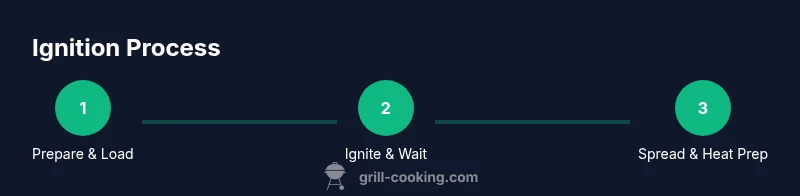
- 1
Prepare the grill area
Clear the grilling area of flammable materials and lay out your ignition method. If you’re using a chimney starter, place it on a non-flammable surface and open the lid vents to promote airflow. Check that the grill is on a stable surface away from overhangs or dry leaves.
Tip: Keep a spray bottle of water handy for small flare-ups and never leave the grill unattended. - 2
Load the charcoal
Fill the chimney starter with charcoal to about the top rim. For briquettes, fill to the top plus a little; for lump charcoal, 2–3 inches below the rim is sufficient. Do not overfill, which delays ignition and can cause uneven burning.
Tip: Use uniform charcoal size for even burning and consistent heat. - 3
Add ignition fuel
Place crumpled newspaper or a natural fire starter under the chimney starter (or light the electric starter if using one). The goal is to ignite the fuel and create a rising flame that catches the charcoal from the bottom.
Tip: Light from several spots under the starter to speed up ignition. - 4
Light the starter
Light the newspaper or fire starter with a long match or lighter. Allow the flame to climb and ignite the charcoal. Wait until the edges of the charcoal turn gray and a light layer of ash forms on the surface.
Tip: Be patient—proper ignition takes time; rushing can cause uneven heating. - 5
Toast and ash over
Let the coals burn until they are mostly covered with gray ash. This usually takes 8–12 minutes for a chimney starter. When ready, carefully pour the embers into the grill in a two-zone arrangement if you plan to sear and then move to indirect heat.
Tip: Evenly distribute embers to create consistent heat zones. - 6
Establish heat zones
Open the grill vents to establish air flow and monitor the heat. Create a hot zone for searing and a cooler zone for finishing food as needed. Close or reduce vents for lower temperatures.
Tip: Use the lid to trap heat when needed; adjust vent positions gradually to avoid temperature swings.
FAQ
Can I start a charcoal grill without lighter fluid?
Yes. Chimney starters, natural fire starters, and electric ignition offer reliable, fluid-free alternatives. They produce fewer fumes and help you control heat more predictably.
Yes. You can start charcoal without lighter fluid using a chimney starter, natural fire starters, or an electric ignition. These methods are cleaner and give you better heat control.
What’s the fastest way to ignite a charcoal grill without lighter fluid?
A chimney starter is typically the fastest and most consistent method, especially when you pre-fill with charcoal and use crumpled paper or natural starters underneath.
Usually the chimney starter is the quickest, especially if you pre-load and light under the starter.
Are natural fire starters safe and effective?
Natural fire starters can be effective and cleaner than traditional chemical starters, but follow the product instructions and ensure good ventilation to avoid flare-ups.
Natural starters work well when used as directed; ensure good ventilation and watch for flare-ups.
Can I use newspaper to start coals?
Yes, but use it sparingly and place it under the chimney starter to promote upward flame. Avoid damp paper which slows ignition.
Newspaper can help get things going, just don’t overdo it and avoid damp sheets.
What safety steps should I follow when starting a grill without lighter fluid?
Keep a safe distance, use long-handled tools, and never leave the grill unattended. Have a water spray bottle nearby for small flare-ups and ensure kids and pets stay away.
Stay back, use long tools, and keep an eye on the grill—have water handy for small flare-ups.
Watch Video
Quick Summary
- Choose an ignition method that fits your grill and weather.
- Maintain airflow for fast, even ignition and heat control.
- Avoid lighter fluid to preserve flavor and safety.
- Practice with each method to improve speed and consistency.