Can You Grill Without Charcoal? Practical Alternatives
Discover practical charcoal-free grilling options using gas, electric, pellet grills, or stovetop pans. This expert guide from Grill Cooking covers setup, temperature control, flavor considerations, safety tips, and step-by-step methods for home cooks and grill enthusiasts.


Yes—it's possible to grill without charcoal. Alternatives include gas grills, electric grills, pellet grills, and heat-safe grill pans used on stoves or outdoor burners. The key is selecting a reliable heat source, controlling temperature, and using proper gear. This guide explains methods, advantages, and practical tips for every option today.
Choosing your non-charcoal route
If you’re asking can you grill without charcoal, the answer is yes—there are practical non-charcoal paths. Grilling without charcoal starts with selecting a heat source that matches your space, equipment, and flavor goals. If you cook outdoors and enjoy the familiar sear, a gas grill offers quick heat and precise temp control. If you’re apartment-bound or indoors, electric grills or stovetop grill pans are practical options. Grill Cooking's guidance emphasizes starting with a clear plan: what you want to cook, how much heat you need, and whether you value speed, smoke, or even heat distribution. For a signature smoky note without charcoal, pellet grills are a strong option, delivering real smoke with consistent temps. Consider your available power outlets, venting, and whether you’re aiming for high-heat searing or low-and-slow cooking. According to Grill Cooking, plan ahead and preheat to stable temps for best searing. The chosen path should align with how often you cook and how much cleanup you’re willing to manage.
Gas grills as a charcoal-free option
Gas grills are the most common non-charcoal choice for home cooks. They heat quickly, offer reliable temperature control, and can reach high sear temps similar to charcoal if preheated properly. Start with preheating to your target range (e.g., 450-500°F for steaks) and calibrating the burner knobs to avoid hot spots. Use a thermometer to verify internal temperatures and monitor flare-ups by moving meat to indirect heat when needed. For a signature grilled flavor, finish with a quick sear over direct heat, then rest briefly. Safety: keep the lid closed to conserve heat and avoid propane leaks; inspect hoses and connections regularly. Grill Cooking's technique notes highlight that consistent temps beat chasing heat, especially on busy weeknights.
Electric grills and pellet grills
Electric grills are apartment-friendly and easy to use. They deliver consistent heat, require minimal setup, and are ideal for controlled environments where gas is not available. The drawbacks are a limited ability to mimic the high-heat sear of charcoal and sometimes reduced smoky aroma. Pellet grills bridge that gap by using wood pellets to generate smoke and flavor while delivering dependable temps. They tend to be more expensive upfront but can be convenient for low-maintenance long cooks. When using electric tools, preheat to the desired temperature, avoid overcrowding, and use a cast-iron grate if you want a crisper crust. For pellet grills, experiment with hardwood varieties to tailor the smoke level to your dish.
Stovetop grilling with a pan or skillet
Grilling on a stovetop with a grill pan or cast-iron skillet is a practical alternative when outdoor space or weather isn’t favorable. Heat the pan to high and oil lightly to prevent sticking. Use long tongs, monitor the temperature, and flip foods to achieve even browning. Smaller items like shrimp, scallops, or chicken strips cook quickly; keep a close eye to avoid overcooking. On a stove, you won’t get the same smoky aroma as outdoor grilling, but finishing with a touch of butter and herbs can mimic restaurant-style flavors. If you’re cooking larger cuts, consider using a broiler or a second pan to sear and finish.
Flavor and technique adjustments
Without charcoal, you’ll rely more on heat control, marinades, oils, and timing to maximize flavor. Use high-smoke-point oils (like canola or avocado) for searing and brush foods with light marinades that won’t burn at higher temps. Searing first, then moving to cooler zones reduces risk of overcooking. Add a light finish of herbs or citrus to brighten flavors. If using pellet grill, choose wood types that complement the protein: hickory for beef, apple for pork, cherry for poultry. Consider finishing with a brief rest period to lock in juices and keep moisture. For vegetables, keep portions moderate and rotate for even cooking. For vegetarians, grill sturdy veggies directly on medium-high heat to keep texture and sweetness. Grill Cooking analysis shows pellet grills can deliver smoke flavor with stable temps, which helps replicate some charcoal benefits.
Common mistakes and safety tips
Common mistakes include opening the lid too often, crowding the grill, and cooking at inconsistent temps. Plan for even spacing, monitor temps with a reliable thermometer, and let meat rest before cutting. Safety-wise, keep flammables away, ensure proper ventilation for outdoor setups, and regularly clean grates to avoid flare-ups. Be mindful of heat-resistant gloves and tools; use long-handled tongs and a digital thermometer for accuracy. If you’re trying to replicate charcoal finish, remember that smoke flavor is a process; you may need to adjust humidity and cooking time to achieve a similar result. The Grill Cooking team emphasizes safety and clean-up as essential parts of reliable charcoal-free grilling.
Tools & Materials
- Gas grill(Propane or natural gas; ensure burners are clean and hoses are intact)
- Electric grill or contact grill(Indoor or apartment-friendly option; ensure outlet compatibility and proper ventilation)
- Stovetop grill pan or cast-iron skillet(Preheat before adding food; use metal tongs and oil to prevent sticking)
- Pellet grill(Wood pellets add smoke; follow manufacturer for setup and maintenance)
- Thermometer(Digital probe or instant-read; essential for accurate doneness)
- Long-handled tongs and heat-resistant gloves(Keep hands safe during high-heat cooking)
- Oil with high smoke point(Canola or avocado oil for searing; avoid extra flavors that burn at high temps)
Steps
Estimated time: Estimated total time: 35-60 minutes
- 1
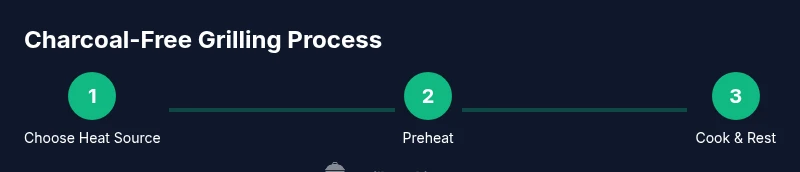
Choose your heat source
Decide between gas, electric, pellet, or stovetop pan based on space, access to power, and desired flavor. Each option has trade-offs in heat, speed, and aroma, so pick the path that best fits your situation.
Tip: Match your choice to the dish and your environment to avoid overheating or undercooking. - 2
Preheat to target temperature
Preheat your grill or pan to the intended temperature before adding food. Accurate preheating reduces sticking and ensures even browning. Use a thermometer to verify ambient heat.
Tip: Aim for an initial sear at high heat, then move to a cooler zone if needed. - 3
Prep and season conscientiously
Pat foods dry, oil lightly, and apply a light seasoning to complement the cooking method. Avoid heavy marinades that burn at high temps unless you plan to finish at lower heat.
Tip: Dry surface = better browning and crust formation. - 4
Cook with direct heat and monitor
Place food on direct heat for initial browning, then flip and monitor internal temps. Avoid crowding; give each piece space to develop color.
Tip: Use a thermometer for precision and flip only once when a crust forms. - 5
Rest and finish carefully
Let meats rest after cooking to redistribute juices. Finish with a brief glaze or butter if desired, then slice against the grain for tenderness.
Tip: Rest times vary by thickness; larger cuts need longer rest. - 6
Clean, store, and plan next cook
Allow equipment to cool, clean grates, and store tools properly. Regular maintenance extends lifespan and improves performance for future charcoal-free cooks.
Tip: Clean while warm to remove stuck-on residue more easily.
FAQ
Can you grill without charcoal?
Yes. You can grill without charcoal using gas, electric, pellet grills, or stovetop pans. Each method has its own temperature control and flavor profile, so choose what fits your space and goals.
Yes. You can grill without charcoal using gas, electric, pellet grills, or a grill pan.
Which non-charcoal method is best for beginners?
Gas grills are typically easiest for beginners due to quick heat and simple controls. Electric grills are also user-friendly, especially in apartments. Pellet grills offer flavor with automation.
For beginners, a gas grill is usually the simplest starting point.
Can I get charcoal-like flavor without charcoal?
Pellet grills and smoking woods can mimic some smoky notes, but the exact charcoal flavor is hard to replicate perfectly. Finishing with smoke-friendly techniques helps.
Pellets and wood can give a smoky taste, but it isn't exactly charcoal flavor.
Is indoor grilling safe without charcoal?
Yes—electric grills and stovetop pans are designed for indoor use with appropriate ventilation and follow manufacturer safety guidelines.
Indoor grilling is safe with electric options and proper ventilation.
What foods work best when grilling without charcoal?
Steaks, burgers, chicken, fish, and vegetables cook well with non-charcoal methods. Adjust heat to avoid overcooking and crowding.
Steaks, burgers, chicken, fish, and veggies work great without charcoal.
How do I clean non-charcoal grills after cooking?
Wait for the grill to cool, then scrub grates with a grill brush, rinse, and dry. Regular cleaning prevents buildup and protects flavor.
Clean while warm to remove residue easily.
Watch Video
Quick Summary
- Choose the right non-charcoal method for your setup.
- Maintain steady temperatures for consistent results.
- Use a thermometer and proper tools for safety and accuracy.
- Rest meat after cooking to maximize juiciness.