Using Charcoal in a Gas Grill: Pros, Cons, and Safety Tips
Learn whether you can use charcoal in a gas grill, the risks involved, and safe alternatives to achieve smoky flavor. Grill Cooking shows practical methods and best practices for home cooks who want the charcoal taste without compromising safety.


Short answer: Do not place charcoal directly on gas‑grill burners. Charcoal can clog vents, ignite flare-ups, and produce unsafe smoke. For charcoal flavor on a gas grill, use a smoker box or a foil pouch with wood chips, or opt for a dedicated charcoal grill. According to Grill Cooking, safety and flavor come from choosing the right method.
What this guide covers and why it matters
If you’re asking, can you put charcoal in a gas grill, you’re likely chasing a smoky flavor without buying a second grill. The short answer is generally no for direct charcoal use. Modern gas grills aren’t designed to burn charcoal in the main chamber, and introducing charcoal can disrupt gas flow, damage components, and create risky smoke. This guide walks you through why that is, safe alternatives to achieve that signature charcoal flavor, and step‑by‑step methods that keep your cooks delicious and safe. The Grill Cooking team has analyzed common grilling setups to help home cooks decide when to stick with gas and when to explore charcoal alternatives in 2026.
note: null}
How gas grills are designed and why it matters
Gas grills are engineered around gas burners that distribute heat beneath a metal grate. The burners and vapor barriers are calibrated for propane or natural gas, not hot charcoal embers. Charcoal produces intense, uneven heat and significant smoke that can clog vents, sputter ash into the burner area, and overwhelm the grill’s exhaust system. In addition, many gas grills rely on sealed cooking chambers and specific airflows. Introducing charcoal disrupts this balance and increases the risk of flare‑ups and fire on wiring or gas lines. Understanding this hardware helps you choose safer paths to flavor without compromising equipment integrity.
note: null}
The risks of putting charcoal in a gas grill
Direct charcoal burning in a gas grill can cause several hazards. Ash and embers may be drawn into the burner tubes, creating blockages and uneven heating. The intense, smoky byproducts from charcoal can also accumulate in the grill hood, posing a higher wildfire risk if fat drippings ignite. There’s also the possibility of carbon monoxide buildup if airflow is restricted, especially in enclosed or poorly ventilated spaces. Grill owners have reported heat runaway and damage to heat shields when charcoal is placed in a gas grill’s main chamber. These risks underscore why most manufacturers and safety guidelines discourage direct charcoal use in gas grills.
note: null}
Safe ways to get charcoal flavor without putting charcoal in the grill
If smoky flavor is your goal, you have solid, safer options:
- Use a smoker box or a sturdy foil pouch with wood chips on the grill’s heated surface. Place it over a burner to generate smoke that flavors food without charcoal exposure to the grill internals.
- Try indirect heat with a two‑zone setup. One side holds heat sources (gas burners), the other side remains cooler for slower cooking, while smoke flavors from wood chips drift through.
- Pre‑smoke foods in a charcoal grill or dedicated smoker, then finish on the gas grill for the best of both methods.
- Consider an external charcoal starter or chimney outside the gas grill, transferring prepared food to the gas grill to finish with controlled heat.
- For a quick smoke boost, add a small handful of wood chips directly on a hot grate in a disposable aluminum tray, away from the burners, and cover to trap smoke.
note: null}
Step-by-step approach to safe smoky flavor on a gas grill
Grill flavor can be enhanced safely by using wood chips and proper airflow rather than charcoal inside the grill. Below are practical steps to get a pleasant smoky finish without endangering the grill:
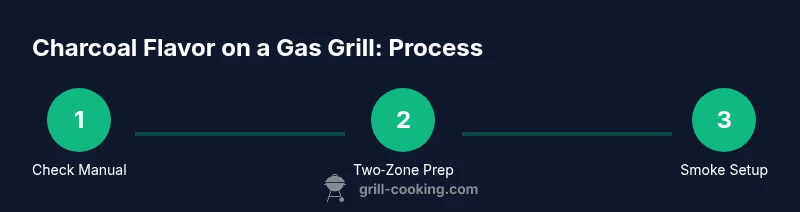
- Check your grill’s manual to confirm whether it allows any wood chips or a smoker box in the cooking chamber. If not, skip to the next method.
- Create a two‑zone setup with one hot zone and one cooler zone to control heat and smoke exposure.
- Soak wood chips for 20–30 minutes, drain, then place them in a smoker box or foil pouch with holes. Put it over a lit burner or on the warming rack above heat.
- Preheat the grill with the wood chips in place for 5–10 minutes to begin smoking before adding food.
- Cook with indirect heat, monitor temperature closely, and rotate food as needed to ensure even smoking and doneness.
- After cooking, turn off the heat, close the lid, and allow the grill to cool before cleaning. Dispose of ashes and residues safely.
tip: "Always start with the manufacturer’s guidance; if in doubt, don’t place charcoal inside the grill."
Tools & Materials
- Gas grill(Ensure burners, vents, and cooking grates are clean and in good working order.)
- Smoker box or metal foil with wood chips(Used to generate smoke without charcoal directly burning inside the chamber.)
- Long tongs(For safe placement of wood chips and food without burning fingers.)
- Aluminum foil (optional for pouches)(If not using a dedicated smoker box, create a perforated foil pouch.)
- Wood chips (hickory, maple, apple, or oak)(Choose chips that complement your meat or vegetables.)
- Grill brush(Clean grates before and after cooking to prevent residue buildup.)
- Digital thermometer (optional)(Helps monitor internal food temperature for safe cooking.)
Steps
Estimated time: 20-40 minutes
- 1
Check grill compatibility
Review your grill’s manual to confirm whether adding wood chips or a smoker box inside the cooking chamber is supported. If the manual warns against any form of charcoal exposure, follow the manufacturer’s guidance and use external smoke methods instead. This upfront check saves you from costly damage or safety risks.
Tip: If in doubt, contact the manufacturer or opt for external smoke methods only. - 2
Create two‑zone heat
Arrange the burners to form a hot direct zone and a cooler indirect zone. This setup lets you manage smoke production and prevent hot spots that can scorch food. Two zones also help you control airflow for safer, more predictable results.
Tip: Keep a consistent target temperature on the indirect side (usually 225–275°F for smoking). - 3
Prepare wood chip pouch
Soak chips for 20–30 minutes, drain well, then place in a smoker box or a perforated foil pouch. Position the pouch over the hot zone so it begins smoking without exposing charcoal directly to burners.
Tip: Do not overfill; a small, steady smoke is better than a dense, uneven smoke. - 4
Preheat with smoke
Close the lid and preheat for 5–10 minutes with the wood chips actively smoking. This stage sets the flavor foundation before meat ever touches the grill.
Tip: Avoid opening and closing the lid repeatedly; minimize heat loss during this stage. - 5
Cook with indirect heat
Place food on the indirect side to finish with smoke flavor. Maintain steady temps, rotate pieces as needed, and use the hood to trap smoke around the food.
Tip: Use a thermometer to track doneness and prevent overcooking. - 6
Finish and clean
Once cooking is done, move food to the direct heat briefly if you want a quick sear, then remove from the grill. Let the grill cool, clean grates, and inspect any residue from the smoke process.
Tip: Clean grates while warm to remove stubborn residue more easily.
FAQ
Is it dangerous to put charcoal directly in a gas grill?
Yes. Charcoal inside a gas grill can disrupt airflow, cause flame‑ups, and release unsafe smoke. Always follow the manufacturer’s guidance and use safer flavor methods.
Yes. Charcoal in a gas grill is risky because it can block airflow and cause flare-ups.
What are safe ways to get smoky flavor on a gas grill?
Use a smoker box or a foil pouch with wood chips on the grill surface, or smoke outside the grill and finish on gas for controlling heat and flavor.
Safe smoky flavor comes from a smoker box or wood chips; finish on gas for control.
Can I use charcoal in a gas grill if I remove the charcoal grate?
Even with modifications, most gas grills aren’t designed for charcoal under the grates. Refer to your manual; modifications can be dangerous and void warranties.
Modifying a gas grill to use charcoal can be dangerous and should be avoided.
What temperatures should I aim for when using smoke on a gas grill?
Aim for a low to medium range, typically 225–275°F, to allow slow, flavorful cooking with steady smoke production.
Target around 225 to 275 degrees for best smoky results.
Are there legitimate charcoal flavors I can achieve on a gas grill?
Yes—through wood chips, smoke boxes, and indirect cooking methods, you can achieve nuanced smoky notes without charcoal inside the grill.
You can get charcoal-like smoky flavor with wood chips and proper smoking methods.
Watch Video
Quick Summary
- Avoid placing charcoal in a gas grill unless the manufacturer allows it.
- Use smoker boxes or foil pouches with wood chips for flavor.
- Create two‑zone heat to control smoke and heat evenly.
- Monitor food with a thermometer for safe, accurate doneness.
- Clean the grill after use to maintain safe operation.