Do You Need a Lighter to Start a Propane Grill: Lighting Guide for Home Cooks
Discover whether you need a lighter to start a propane grill, explore built-in igniters, backup lighting options, and maintenance tips for reliable ignition.


Do you need a lighter to start a propane grill? Not necessarily. Most modern propane grills include an electric ignition that lights burners with a push of a button. If your model lacks an igniter or the battery dies, a long-reach lighter or a match can serve as a safe backup, provided you follow proper lighting steps and safety precautions.
Do you really need a lighter to start a propane grill?
Many home cooks ask: do you really need a lighter to start a propane grill? According to Grill Cooking, the answer depends on your grill's ignition system and how you plan to light it. Most modern propane grills come with an electric ignition that lights burners at the push of a button, reducing the need for matches or lighters during routine starts. If your model lacks this feature or the battery is dead, a long-reach lighter can serve as a safe backup. Grill Cooking's analysis (2026) shows that reliable ignition improves startup speed and safety by limiting unburned gas exposure. Regardless of method, always read the owner's manual and observe basic safety: keep the lid open during initial lighting, stand back from the gas line, and never lean over the grill while introducing a flame.
Built-in igniters: how they work and why they matter
Electric igniters in propane grills use a spark from a battery-powered circuit to ignite the gas. When you press the ignition button (or turn the knob if your model uses a piezo system), a spark travels to the burner ports and lights the gas. These systems speed startup and reduce the chance of unburned gas accumulating near the burner. Regular maintenance keeps them reliable: replace batteries as recommended, keep the ignition electrodes clean, and avoid getting water into the ignition area. Grill Cooking's analysis shows that a healthy igniter can dramatically improve starting times and safety by limiting the amount of gas you release before ignition.
Backup lighting options: long-reach lighters and matches
When the built-in igniter fails or you are using an older grill, a long-reach lighter is a safe and convenient backup. Choose a version with a long neck and a heat shield to avoid burns. Keep matches in a waterproof container as a second backup. Practice lighting in a well-ventilated area, open the grill lid fully during lighting, and never lean over the grill flame while striking or lighting. If you must light with a match, protect your hand and strike away from your body. For windy conditions, shield the flame with your body or move to a sheltered area. Having a reliable backup method reduces the risk of gas buildup and flare-ups.
Lighting sequence when ignition works
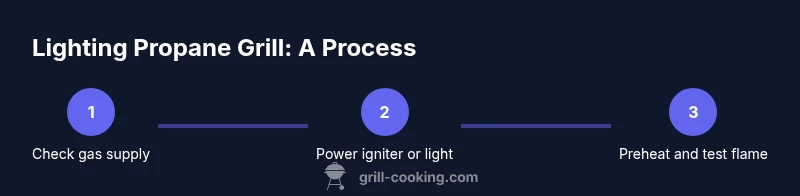
If your grill’s ignition is functional, follow these general steps to start safely and efficiently. Open the lid, ensure gas is off, and place food away from the grill. Press and hold the ignition button while turning on the corresponding burner knobs. You should hear a click and see a bright blue flame. If multiple burners, light the back burners first to vent heat; never light all burners at once unless your manual instructs you to do so. Once a flame is established, adjust the flame height to preheat the grates to the desired temperature.
Lighting sequence when ignition fails (backup lighting)
If the igniter is dead or unreliable, use a safe backup lighting approach. Open the lid, turn on the gas to a single burner, and carefully use a long-reach lighter from the side, keeping your body away from the flame. Once that first burner is lit, count to five seconds and then move to light the other burners as needed. Close the lid after lighting and allow the grill to preheat. If the backup lighting fails, turn off gas, wait a few minutes, and recheck connections before retrying.
Safety first: leaks, flame checks, and proper preheating
Gas grills require respect for leaks and flame quality. Before lighting, check hose connections for cracks and tighten any loose fittings. After lighting, apply quick soapy water to connections to verify no bubbles indicate leaks. Preheat with the lid closed for the recommended time per your grill’s manual; this ensures even heating and reduces flare-ups. Keep children and pets away, and wear heat-resistant gloves or mitts during startup.
Maintenance tips to keep ignition reliable
Regular maintenance extends igniter life and reduces failure risk. Replace batteries at least once a grilling season or when you notice weaker sparks. Clean the ignition electrodes and burner ports with a dry brush or compressed air to remove grease and moisture. Inspect hoses for cracks and replace damaged parts promptly. Store your grill in a dry place to prevent corrosion, and never spray water on hot components.
Common problems and quick fixes
Igniter clicks but flames don’t appear: check that the gas valve is in the correct position and the line is open. Weak sparks: replace batteries and wipe electrodes clean. Gas odor: turn off gas at the source, leave the lid open, and wait a few minutes before re-lighting. Burners won’t light after extended storage: remove and clean the burner ports, and ensure the gas is reaching the burners. If problems persist, consult the manufacturer.
Quick-start checklist for quick lighting
- Check gas supply and valve position. - Ensure lid is open during initial lighting. - Test ignition (or backup lighting) before preheating. - Preheat with lid closed, then adjust grill temperature. - Have a backup lighting option ready and a safety plan.
Tools & Materials
- Long-reach lighter(Choose a model with insulated grip and a heat shield)
- Spare ignition batteries(Keep on hand; replace per grill manual)
- Soapy water leak tester(Fill spray bottle; test all connections before lighting)
- Grill owner's manual(Consult for model-specific ignition steps and safety)
- Wire brush(Optional for cleaning burner ports)
- Oven mitts or heat-resistant gloves(Protect hands during lighting)
Steps
Estimated time: 15-20 minutes
- 1
Check fuel and safety
Inspect hoses and connections for cracks or wear. Confirm the tank is securely attached and the valve is off before you start. This reduces the risk of leaks and flare-ups when you ignite.
Tip: Always perform a quick leak test with soapy water after connecting a new tank. - 2
Open lid and set up burners
Open the grill lid fully, clear the area, and place your food away from the grill. Identify the burner you’ll light first and have your lighter or igniter ready.
Tip: Vent hot air away from your face; keep sleeves rolled up. - 3
Ignite using built-in ignition
If your grill has an electric igniter, press the ignition button while turning on the corresponding burner. Listen for a click and watch for a steady blue flame. If it doesn’t ignite after 5 seconds, stop and switch to a backup method.
Tip: If the button feels weak, replace the batteries before retrying. - 4
Light burners with backup method if needed
If the igniter fails, use a long-reach lighter from the side to ignite the first burner, then light adjacent burners as needed while keeping the lid open briefly.
Tip: Keep your body to the side of the grill to avoid heat exposure. - 5
Preheat and test flame
Close the lid (if your model uses indirect heat) and allow the grill to preheat to the target temperature. Periodically check for uniform flames across burners.
Tip: Use the temperature gauge if your grill has one for more accurate preheating. - 6
Shut off safely and verify
Once you’re done, turn off burners in sequence and close the gas valve fully. Do a quick visual flame check and wait a minute before placing food on grates.
Tip: Keep a safe distance and never leave a lit grill unattended.
FAQ
Do I need a lighter if my grill has an electric igniter?
If your igniter works reliably, you don’t need a lighter. Rely on the built-in ignition, but keep a backup lighter handy in case the battery or electrode fails.
If your igniter works, you usually don’t need a lighter. Have a backup lighter ready just in case the battery or spark stops working.
What should I do if the igniter sparks but won’t light?
Check that the gas valve is fully open and the battery is fresh. If the spark remains weak, wipe the electrodes dry and ensure there’s no moisture or grease buildup.
If the igniter sparks but won’t light, check the gas valve and replace the batteries. Clean the electrodes and try again.
Is it safe to preheat with the lid closed?
Most grills are designed for lid-closed preheating to reach even temperatures, but always follow your model’s manual. Open the lid if you smell gas or see an irregular flame.
Preheating with the lid closed is typical, but if you smell gas or see issues, open the lid and inspect.
Can I light with a match if the igniter fails?
Yes, you can light with a long-reach match as a backup. Keep your hands away from the flame and strike away from your body.
Yes, you can light with a long-reach match if the igniter fails. Be careful with your hands and body position.
How often should I replace ignition batteries?
Replace ignition batteries at the start of each grilling season or whenever you notice weaker sparks. This helps ensure reliable ignition.
Replace batteries at the start of grilling season or when sparks get weak.
Watch Video
Quick Summary
- Prefer built-in igniters to minimize lighter use
- Keep a safe backup lighting option accessible
- Check for gas leaks before every light
- Maintain batteries and clean igniters regularly
- Always follow your grill’s operator manual