How to Grill with Indirect Heat: Master the Two-Zone Method
Learn how to grill with indirect heat using a two-zone setup, heat deflectors, and smart timing. This guide covers gear, steps, and tips for juicy, evenly cooked food on charcoal or gas grills.


In this guide you will learn how to grill with indirect heat by creating a two-zone fire, using a heat deflector, and cooking with controlled airflow. You'll need a grill capable of two zones, a thermometer, heat-safe gloves, a drip pan, and long tongs. The result is juicy, evenly cooked foods with minimal flare-ups.
What is indirect heat in grilling?
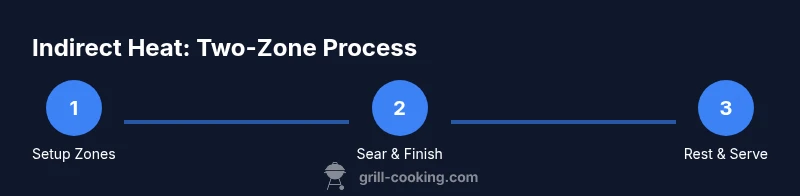
Indirect heat means cooking with the heat source on one side or away from the food, so the food cooks through convection rather than directly in flames. This approach surrounds the food with warmth, like an oven, which helps prevent scorching while promoting even doneness. According to Grill Cooking, indirect heat is a versatile technique that reduces flare-ups and moisture loss, delivering flavorful results for larger cuts and delicate proteins. The Grill Cooking team found that a well-planned two-zone setup—one hot zone for searing and a cooler zone for gentle roasting—offers the most reliable path to juicy, evenly cooked meals without constant babysitting.
When to use indirect heat and why it matters
Indirect heat shines when you’re cooking thick cuts, roasts, bone-in chicken, pork shoulder, ribs, or whole fish. It’s ideal for foods that need longer cooking times or higher internal temperatures than fast direct grilling can safely provide. By finishing the cook with TLC under a closed lid, you minimize surface charring while preserving moisture. Grill Cooking analysis shows that this approach also reduces flare-ups and helps you better control the final texture, especially with larger joints or meat that benefits from slow, steady heat.
Setting up your grill for indirect heat (charcoal and gas)
There are two common paths: charcoal grills with a two-zone fire and gas grills with an indirect zone. For charcoal, push the hot coals to one side and place a heat deflector or a raised grate on the other side to create an indirect area. For gas grills, leave the center or back burners on while the opposite side stays off, and optionally place a heat deflector to dampen direct heat. Always start with a clean grill, enough fuel for the cook, and a wide, stable heat zone. A drip pan under the meat stage catches juices and helps prevent flare-ups. Grill Cooking recommends using a thermometer and a flesh-safe glove set to manage temps safely.
Temperature targets and timing (without direct flame)
Think in terms of zones: a hot direct zone for a quick sear and a cooler indirect zone for longer cooking. Without direct flame, you’ll rely on ambient heat and lid management. There’s no need to chase perfect numbers; instead, monitor internal temperature with a reliable thermometer and adjust the vents or burners to keep the indirect zone steady. This approach is especially valuable for roasts and thick cuts that require gradual, even heat to reach the desired doneness.
Techniques for different foods (examples you can try this weekend)
- Thick steaks and roasts: sear briefly over direct heat to develop a crust, then move to indirect heat to finish to the target temperature. - Whole poultry: start with browning on direct heat, then shield with indirect heat to cook through evenly. - Fish and vegetables: rely on indirect heat to avoid scorching delicate proteins, finishing with a quick sear if desired. - Ribs and pork shoulders: keep the lid closed and let the meat gentle-roast to tender, juicy perfection. These methods align with the two-zone mindset and can be adapted to your grill size and fuel type.
Common mistakes and fixes (quick trouble-shooting)
- Over-relying on direct heat: fix by adding more time to indirect cooking and using a heat deflector. - Frequent lid opening: fix by planning ahead and using a meat thermometer to avoid guessing. - Inconsistent temperatures: fix by adjusting vents, burners, or the fuel source to stabilize the indirect zone. The goal is steady heat and minimal flare-ups while you monitor doneness.
Tools & Materials
- Two-zone grill setup (charcoal or gas)(Create a hot direct zone and a cooler indirect zone for even cooking)
- Heat-deflector or raised grate(Keeps direct heat away from food during the indirect phase)
- Drip pan(Catch juices and reduce flare-ups; place under the cooking area)
- Thermometer (meat thermometer)(Monitor internal temp rather than relying on guesswork)
- Long-handled tongs(For safe movement between zones without burning hands)
- Heat-resistant gloves(Protects hands during flipping and zone changes)
- Aluminum foil (optional)(Liners for the drip pan or to tent resting meat)
Steps
Estimated time: 40-60 minutes
- 1
Preheat and set up two zones
Prepare the grill and establish a hot direct zone plus a cooler indirect zone. If using charcoal, bank the coals to one side and place the deflector in the other. For gas, turn burners on one side and off on the opposite side, then add a deflector if you have one. This creates the two-zone environment you’ll use throughout the cook.
Tip: Keep vents or knobs adjusted to maintain a steady indirect-zone temperature without frequent adjustments. - 2
Prepare and pat dry the proteins
Pat dry meats to promote browning, then season with salt, pepper, and any dry rub. Dry surfaces crisp up nicely when seared and help the crust form quickly when you move to direct heat.
Tip: Patting dry prevents steaming and helps achieve a better crust during the sear. - 3
Sear briefly over direct heat (optional)
If you want a crust, place the food on the hot zone for a short sear (1-2 minutes per side for steaks, longer for roasts). This step is optional but adds flavor and color.
Tip: Watch closely; a quick sear can burn if left unattended. - 4
Move to indirect heat and finish cooking
Transfer the food to the indirect zone, lid closed, and let it cook slowly to the target internal temperature. Use the thermometer to guide progress and rotate as needed for even doneness.
Tip: Avoid lifting the lid too often; each peek drops the ambient heat and extends cook time. - 5
Check temperature and rest
Check the internal temp with a thermometer and remove from heat slightly before the target to account for carryover cooking. Tent loosely with foil and rest the meat for several minutes before slicing.
Tip: Resting is essential to redistribute juices and increase tenderness. - 6
Serve and clean up
Slice against the grain where applicable and serve with your preferred sides. After cooking, clean the grill and re-season grates for next time.
Tip: Clean while the grill is still warm to make residue easier to remove.
FAQ
What foods are best for indirect heat grilling?
Thick cuts like roasts, pork shoulders, bone-in chicken, ribs, whole fish, and large vegetables benefit most from indirect heat. They cook more evenly and stay juicier when finished with gentle heat.
Thick cuts and large roasts work best with indirect heat, finishing slowly to stay juicy.
Can I finish with direct heat after cooking indirecly?
Yes. A brief finish on direct heat can add a crust or char after the indirect cook is complete. Keep an eye on color to avoid burning.
You can briefly sear with direct heat after indirect cooking to finish the crust.
Do I need a water pan for indirect grilling?
A water pan is optional but can help stabilize temperature and keep meat moist during longer cooks. It also adds humidity to the cooking chamber.
A water pan can help with temp stability and moisture, especially on longer cooks.
How long does indirect-heat cooking take?
Times vary with food size and thickness. Plan for longer cooking than direct grilling and rely on a thermometer to decide when the target internal temperature is reached.
Times vary by size; use a thermometer to know when it’s done.
Is indirect heat safer for grilling?
Indirect heat reduces flare-ups by keeping food away from open flames. It’s generally safer for fatty cuts and helps control charring.
Yes, indirect heat reduces flare-ups and helps control charring.
Watch Video
Quick Summary
- Set up a reliable two-zone grill for consistent indirect-heat cooking
- Searing is optional but adds flavor; finish with slow roasting for even doneness
- Monitor internal temps rather than guessing; rest meat before serving
- Use a heat-deflector and drip pan to reduce flare-ups and improve moisture