Charcoal BBQ Grill Mastery: A Home Cook Guide for Beginners
Learn to light, control heat, and flavor with a charcoal bbq grill. This hand-on guide covers fuel choices, temperature zones, direct/indirect cooking, wood flavor, safety, and maintenance for consistent, delicious results.


Master the charcoal grill: light, regulate airflow for steady heat, and achieve smoky flavor with confidence. Learn fuel choices, heat zones, and safety to grill like a pro. See our full step-by-step guide for hands-on instructions.
Charcoal Fuel Basics: Lump vs Briquettes
According to Grill Cooking, lump charcoal lights quickly and burns hotter, while briquettes burn longer and more evenly, giving you more predictable temps for charcoal bbq grill sessions. Lump charcoal is made from hardwood, producing a brighter flame and uneven heat pockets that contribute to a lively sear. Briquettes are smaller, pressed pieces made to burn steadily with fewer temperature swings, which helps when you’re cooking for longer periods. Your choice affects flavor, heat retention, and how you manage airflow. For home cooks seeking balance, many choose a 50/50 blend to combine the best of both worlds.
Flavor and aroma play a big role: lump charcoal often gives a crisper, more direct smokiness, while briquettes create a steadier smoke profile that suits longer cooks. In terms of heat characteristics, briquettes tend to deliver even heat, but lump can spike hotter for searing. Price and availability vary by region; briquettes are typically cheaper and easier to source in consistent sizes, while lump charcoal can be pricier and varies by density. Handling and cleanup also differ: briquettes tend to produce more ash, while lump charcoal creates larger ash clumps that are easier to clean up when the fire is cold.
Choosing your fuel depends on your goals. If you want fast ignition and bold sear marks, lump charcoal is your go-to. If you’re cooking larger cuts over longer periods, briquettes offer a reliable, steady burn. Many grills respond well to a strategic blend—start with a bed of briquettes and add a measured amount of lump for hotter zones as needed.
Building Temperature: Heat Zones and Airflow
Efficient heat management on a charcoal bbq grill starts with airflow. The primary vents on the bottom and the vent on the lid control oxygen supply, which in turn drives temperature. A chimney starter is the easiest way to get a reliable bed of hot coals before you place them in the grill. For most cooks, a two-zone setup—hot direct heat on one side and cooler indirect heat on the other—gives you flexibility for searing, then finishing, without drying out your food.
To establish zones, arrange the lit coals on one half of the coal grate. If you’re using a kettle grill, bank the coals along the edge for a pronounced hot zone and leave the opposite side relatively clear for indirect cooking. Place the cooking grate back on, with a clean, oiled surface to prevent sticking. Before you start cooking, let the grate heat for 5–10 minutes and adjust the vents to target a steady 350–450°F (175–230°C) depending on your recipe. A well-calibrated thermometer helps, but you can also judge by feel and smoke. Regularly check both vents to avoid overheating; small adjustments can prevent flare-ups and preserve even cooking across foods of different sizes.
Direct vs Indirect Cooking: When to Use Each
Direct cooking places food directly over the hot coals, which is ideal for quick sears, caramelization, and finishing high-heat tasks like steaks or burgers. Indirect cooking uses the cooler side of the grill, letting food finish through gentle heat and smoke without scorching. A charcoal bbq grill shines when you combine both methods: sear on direct heat to develop crust, then move to indirect heat to reach desired internal temps without burning the exterior.
Plan your setup so you can quickly move between zones. For thick steaks or bone-in chops, start on direct heat for 2–4 minutes per side, then rotate to indirect heat to reach the recommended internal temperature. For larger cuts like brisket or pork shoulder, begin with indirect heat, then finish with a brief sear if desired. This approach delivers a crisp crust with juicy interior while keeping the center from drying out. Always monitor temperature with a reliable thermometer and adapt the flame by adjusting vents or relocating meat to the appropriate zone.
Smoke Management and Flavor: Wood Chips, Chunks, and Flavor Profiles
While charcoal provides the base flavor, wood can elevate the profile dramatically. Wood chips or chunks add smoke that complements the meat’s natural flavors. For most home cooks, using mild woods like oak or hickory yields balanced smoke, while stronger woods such as mesquite or pecan can overwhelm delicate proteins. Soak chips briefly (about 20 minutes) if you’re using a water-soaked wrapper or use dry chips for shorter sessions. Place a small foil packet with holes on the hot side or use a smoker box if your grill allows it.
Use wood sparingly at first; you can always add more during a longer cook. The smoke should compliment, not mask, the meat’s inherent taste. Keep a careful eye on flare-ups; wood can intensify heat, so be ready to move food to indirect heat if flames grow too aggressive. A well-balanced use of wood chips creates a harmonious, layered smoke that elevates beef, pork, poultry, or vegetables without overpowering them.
Lighting, Venting, and Safety Protocols
Lighting a charcoal bbq grill safely is essential. The chimney starter is recommended because it avoids lighter fluid, which can leave residue and off-flavors. Fill the starter with an appropriate amount of charcoal for your planned cook, place it on the grate, and ignite with a safe starter (paper from inside the starter or a natural fire starter). Allow the coals to burn until they're mostly covered with a light gray ash, typically 10–15 minutes, then pour them into the grill for your two-zone setup. Open the vents wide during startup and adjust as heat climbs.
Safety is paramount: never use water to extinguish a flare-up on a hot grill; instead, move food away and cover with the lid to cut off oxygen. Use heat-resistant gloves and long-handled tools to manage coals. When you’re finished cooking, close the vents to extinguish the fire. Allow the grill to cool completely before cleaning. Keep a spray bottle of water handy for minor flare-ups and logs or charcoal remains stored in a metal container away from combustibles.
Remember, a well-ventilated grill and properly managed airflow lead to better control and safer cooking. If you’re new to charcoal grilling, start with shorter sessions to build confidence and gradually tackle longer cooks as you refine your technique.
Cleaning and Maintenance for Longevity
A clean grill is a happy grill, and regular maintenance extends the life of your charcoal bbq grill. After cooling, remove ashes from the bottom and store them in a metal container away from any flammables. Scrub the cooking grate with a wire brush while it’s warm, then wipe the lid and interior walls to remove grease buildup. Clean grates prevent flavor transfer between cooks and reduce sticking in future sessions. Inspect vents for obstructions and clear them to maintain consistent airflow. If your grill has a removable ash catcher, empty it and clean it to reduce the risk of ash impeding airflow in future cooks.
Oil the grates lightly before the next session to prevent sticking and extend grate life. Replace damaged grates or worn brushes promptly. Store charcoal, lighter tools, and accessories in a dry place to prevent corrosion and ensure quick setup for the next cook. A routine cleaning schedule keeps your charcoal bbq grill performing at its best and helps you achieve repeatable, delicious results.
Quick Reference: Safety, Setup, and Flavor in Practice
- Safety first: Keep a metal bucket for ashes and a water spray bottle nearby.
- Fuel choice matters: Lump heats fast and sears; briquettes burn steady and long.
- Two-zone setup is the default for most cooks to balance searing and finishing.
- Wood flavor should enhance, not overpower the meat; start with mild woods and adjust.
- Clean after every cook; a clean grill improves flavor and longevity.
Tools & Materials
- Charcoal grill (lid vented)(Ensure vents function and lid fits snugly)
- Chimney starter(No lighter fluid; use paper or natural starter)
- Long-handled tongs(At least 18 inches)
- Heat-resistant gloves(FDA-grade or higher; protect hands)
- Instant-read thermometer(Probe tip in food; aim for target temps)
- Wire grill brush(Brass or steel; replace if worn)
- Wood chips or chunks (optional)(Select flavor profile; soak chips if desired)
- Oil for grates (grill-safe)(Light coating to prevent sticking)
Steps
Estimated time: 45-60 minutes
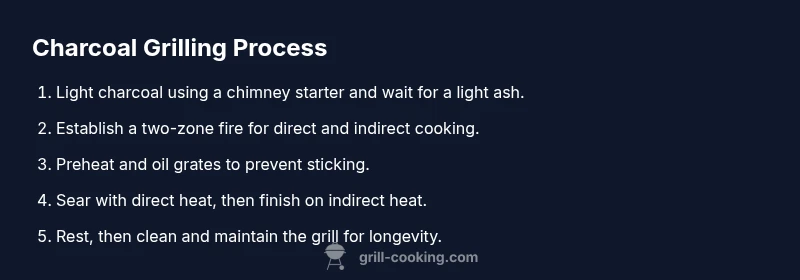
- 1
Choose your fuel type
Decide between lump charcoal and briquettes based on flavor, heat, and burn time. Lump lights quickly and sears well, while briquettes provide steady, long-lasting heat for longer cooks. If uncertain, start with briquettes for consistency and add a small amount of lump for a hotter finish when needed.
Tip: Pro tip: For two-zone cooking, plan your fuel layout so you have a dense hot area and a cooler edge for indirect cooking. - 2
Light the fuel using a chimney starter
Fill the chimney starter with the chosen charcoal and place it over a heat-safe surface. Light the starter and let the coals burn until the outside edge is ashy and the center glows — about 10–15 minutes. Transfer the hot coals to one side of the grill to form a two-zone setup.
Tip: Pro tip: Do not pile charcoal on top of food; maintain air flow to avoid smothering the fire. - 3
Establish a two-zone fire
Spread the hot coals to create a direct heat zone on one half and leave the other half cooler for indirect cooking. Place the cooking grate back on and ensure it’s clean and oiled to prevent sticking. This arrangement gives you flexibility for searing, then finishing with indirect heat.
Tip: Pro tip: Use tongs or a heat-safe tool to adjust coal placement as needed without opening the lid too often. - 4
Preheat the grate and oil it
Close the lid and allow the grate to preheat for 5–10 minutes. Lightly oil the grate to prevent sticking once you start cooking. A well-preheated, oiled surface yields better sear marks and reduces food tearing.
Tip: Pro tip: Add oil just before the food touches the grate to avoid excessive smoking. - 5
Cook with direct heat, then move to indirect to finish
Begin with direct heat to sear, about 2–4 minutes per side for thinner cuts. Move thicker pieces to indirect heat to finish cooking through without charring. Use a thermometer to monitor internal temp and avoid overcooking.
Tip: Pro tip: Leave lid on during indirect cooking to trap heat and smoke for deeper flavor. - 6
Rest and clean up
After cooking, rest meat 5–10 minutes to redistribute juices. Close vents to extinguish the fire and let the grill cool before cleaning. Scrub grates while warm, remove ash, and store tools in a dry place for next time.
Tip: Pro tip: Keep a metal pail for ashes and check grate condition before your next cook.
FAQ
What is the difference between lump charcoal and briquettes?
Lump charcoal is made from hardwood and lights quickly, producing hotter, variable heat. Briquettes are uniform in size, burn longer and more evenly, offering steadier temperatures for longer cooks. Your choice depends on flavor goals and cook duration.
Lump lights fast and sears well, briquettes burn longer and more evenly for long cooks.
How do I set up a two-zone fire on a kettle grill?
Light the fuel and push hot coals to one side to create a direct zone, leaving the opposite side cooler for indirect cooking. Place the grate back and preheat. This lets you sear quickly, then finish with indirect heat.
Create a hot zone and a cooler zone, then switch as needed during cooking.
Why is my charcoal not burning evenly?
Common causes are an uneven coal bed, incorrect vent adjustments, or not enough oxygen reaching the coals. Reposition the coals, clean vents, and ensure consistent airflow as you monitor the cook.
Uneven burn usually comes from airflow issues or uneven coal layout.
Is it safe to grill when it’s windy or rainy?
Grilling in wind is possible with careful vent control and secure setup, but rain can cause flare-ups and uneven heat. Use a sturdy lid, keep a safe perimeter, and avoid loose clothing. If conditions are extreme, postpone the cook.
Windy or rainy weather requires extra safety—adjust vents and keep a safe setup.
Can I reuse charcoal ashes?
Ashes can be disposed of safely once completely cooled. They can be used as a soil amendment in the right conditions, but generally, they’re best placed in metal trash after cooling. Do not leave hot ashes unattended.
Let ashes cool completely before disposal; reuse is possible only in specific contexts.
What wood flavors work best with beef and pork?
Hickory and oak are versatile for beef and pork, offering robust smoke without overwhelming the meat. For lighter proteins like chicken, use milder woods such as apple or cherry to complement rather than dominate.
Hickory or oak pairs well with beef and pork; apple or cherry suits chicken.
Watch Video
Quick Summary
- Master two-zone heating for flexibility
- Choose lump vs briquettes based on cook length
- Sear with direct heat; finish indirect for even doneness
- Use wood flavors sparingly to complement, not overwhelm
- Maintain ventilation for steady temps and safe operation