How to Grill Coal: Master Charcoal Grilling Techniques
Learn how to grill coal like a pro with step-by-step lighting, heat management, and safety tips. Covers charcoal types, direct/indirect heat, and mistakes.


By the end of this guide you will master grilling with charcoal from lighting to heat control and safe serving. You’ll understand charcoal types, ignition methods, vent management, direct and indirect grilling, and common troubleshooting. The Grill Cooking approach emphasizes practical steps, safety, and consistent results for home cooks and grill enthusiasts.
How to Grill Coal: Why It Matters\n\nCharcoal grilling delivers a flavor and crust that many home cooks chase. It also provides high heat and the flexibility to shift from rapid searing to gentle finish. In this guide on how to grill coal, you’ll learn how to light reliably, manage heat zones, and cook foods to tender, juicy doneness. Mastery begins with a clear plan for ignition, airflow, and timing, then builds into confident decision-making at the grill. The Grill Cooking team found that consistent results come from simple rules: start with clean equipment, set up a two-zone fire, and control heat with vents. With practice, you’ll translate technique into flavor that elevates weeknight meals into something special.
Charcoal Types and What They Mean\n\nTwo main options fuel most backyard cooks: lump charcoal and charcoal briquettes. Lump charcoal lights quickly, burns hotter, and can produce a lively flame, but it may burn unevenly if you don’t manage airflow. Briquettes burn longer and more consistently, creating steadier heat for longer cooks. A blend often offers a balance between fast ignition and reliable heat. For flavor, avoid treated, charcoal products with additives, and choose natural options when possible. Understanding these differences helps you plan heat output and timing for different foods.
Essential Tools and Setup for Charcoal Grilling\n\nBefore you start, ensure you have the right tools and a clean, ready grill. Key items include a chimney starter, long-handled tongs, a sturdy grill brush, heat-resistant gloves, and an instant-read thermometer. A fire-safe mat or stand keeps the grill stable, while a grate lifter helps reposition food without burns. A spray bottle of water can be handy to manage minor flare-ups, but use it sparingly to avoid smothering the flame. Proper setup keeps you efficient and safe throughout the cook.
Lighting the Charcoal Safely\n\nFill your chimney starter about halfway with charcoal (lump or briquettes, depending on your plan). Light newspaper or a commercial lighter cube in the bottom and let the flame catch. Allow the charcoal to glow with a light coating of gray ash, typically after 10–15 minutes, then dump into the grill fire bowl. Arrange the coals into a two-zone setup (hot side and cooler side) to give you flexible cooking space. Safety note: keep flammable materials away and never leave a lit grill unattended.
Building Two Heat Zones: Direct and Indirect Grilling\n\nTwo-zone cooking gives you flexibility: a hot zone for searing and a cooler zone for finishing without charring. Pile most of the lit coals on one side for direct heat, and leave the opposite side with fewer flames for indirect cooking. Place a grill rack over the cool zone to rest and move food as needed. This setup helps you manage flare-ups and cooks thick cuts evenly.
Temperature Control: Venting and Placement\n\nAirflow controls heat on a charcoal grill. Start with the vents fully open to ignite and gradually adjust as the grill heats. The intake vents regulate burning speed, while the exhaust vents set how quickly heat escapes. A well-balanced vent pattern helps you hold steady temperatures. Check the grate temperature with a quick probe test and adjust as you go.
Searing, Finishing, and Flavor Development\n\nFor a rich sear, start with direct high heat, then move to indirect heat for thicker cuts to finish cooking through. Keep the lid closed unless turning meat to trap heat and smoke. Rest meat after removing it from the grill to allow juices to redistribute. A light brush of oil or a touch of finishing salt can enhance crust and flavor right before serving.
Safety, Cleanup, and Maintenance\n\nWhen you’re finished, let the grill cool completely before cleaning. Scrape the grates clean while warm, brush away ash, and store equipment in a dry place. Regularly inspect vent openings for clogs and replace worn parts. A clean grill lasts longer and performs more predictably, making future cooks easier and safer.
Troubleshooting Common Charcoal Grilling Issues\n\nIf you encounter uneven lighting, recheck your fuel amount and airflow. Flare-ups respond to quick food movement and careful use of the vents. If heat drops unexpectedly, add more charcoal gradually and verify that vents are set correctly. For flavor concerns, adjust wood chips or chunks placement to introduce smoke without overpowering the main meat.
Flavor Boosters and Finishing Touches\n\nFinish with a light glaze, a sprinkle of finishing salt, or a few drops of citrus juice at the end to brighten flavors. A small amount of wood chips added to the fire can introduce subtle smoke notes without overpowering the primary protein. Resting before slicing remains essential to preserve juiciness and aroma.
Tools & Materials
- Charcoal (lump or briquettes)(Choose lump for quick heat; briquettes for steady, longer burn.)
- Chimney starter(Prefer dry charcoal and no lighter fluids.)
- Long-handled tongs(8-12 inches for safe flipping.)
- Grill brush(Clean grates after preheating.)
- Heat-resistant gloves(Protect hands when handling hot parts.)
- Instant-read thermometer(Useful for monitoring internal meat temps.)
- Spray bottle for flare-ups(Light mist can quell small flare-ups.)
- Fire extinguisher or baking soda(Keep at hand for emergencies.)
Steps
Estimated time: 45-60 minutes
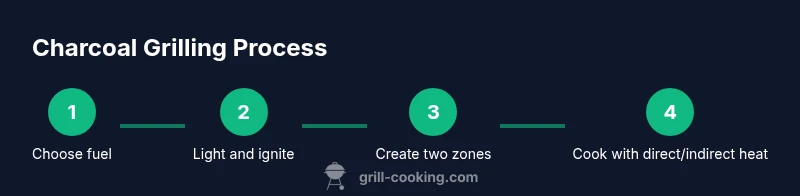
- 1
Choose fuel
Select between lump charcoal or briquettes based on your target heat and cook time. Lump lights quickly and adds flavor but can burn unevenly; briquettes burn steady and longer, easing control for longer cooks.
Tip: Consider a blend to balance heat and duration. - 2
Set up for two-zone cooking
Arrange the grill with a direct heat zone (hot side) and an indirect zone (cooler side). This gives you searing power plus a safe area to finish cooking.
Tip: Keep a diagonal partition of coals to create the two zones. - 3
Light the charcoal
Fill a chimney starter and light the bottom using newspaper or a cube. When the coals are glowing with gray ash, dump into the grill and spread for even coverage.
Tip: Avoid pouring while coals are still in heavy flame; let them settle. - 4
Preheat the grate
Place the grate and allow it to heat over the hot zone for 5–10 minutes. A hot, clean grate prevents sticking and gives a better crust.
Tip: Use a high-heat oil spray or brush before first use. - 5
Start cooking with direct heat
Sear food over the hot zone to develop crust and flavor. Keep lids closed when possible to trap heat and smoke while flipping pieces as needed.
Tip: Limit lid lifts to maintain consistent heat. - 6
Move to indirect heat to finish
Transfer thicker pieces to the indirect zone to finish cooking without burning the exterior. Monitor internal temp and remove when near target.
Tip: Use a thermometer to confirm doneness. - 7
Rest and serve
Let meat rest 5–10 minutes before slicing to redistribute juices. Resting makes cuts juicier and more flavorful.
Tip: Tent loosely with foil for warmth without steaming. - 8
Shut down and clean up
Close vents, allow coals to cool, then scrape grates and brush ash. Store tools dry to prevent rust.
Tip: Never leave a hot grill unattended.
FAQ
What is the best charcoal for grilling?
Lump charcoal lights quickly and provides high heat, while briquettes burn longer and more consistently. Choose based on your cooking time and flavor goals.
Lump charcoal heats fast and flavors well, while briquettes burn steadier for longer cooks.
Should I use lighter fluid?
Avoid gasoline-based lighter fluids; use a chimney starter or natural windproof lighter to safely ignite charcoal.
Skip lighter fluid and use a chimney starter for a clean, safe ignition.
How do I control heat on a charcoal grill?
Vent adjustments and two-zone setup help regulate flame and temperature. Open vents to heat up, close slightly to cool down.
Control heat by adjusting vents and keeping a two-zone setup.
Is it safe to grill around kids?
Keep children at a safe distance, use long-handled tools, and never leave the grill unattended during cooking.
Always supervise kids; keep them away from the hot grill and use safe tools.
What foods are best for charcoal?
Steaks, burgers, corn, peppers, and sturdy vegetables respond well to charcoal heat and smoky flavor.
Charcoal shines with steaks, burgers, and sturdy veggies; keep an eye on cook time.
How do I clean my charcoal grill?
Cool the grill, scrape grates, brush ash, and wipe down surfaces after each use for best longevity.
Let it cool, then clean grates and ash for next time.
Watch Video
Quick Summary
- Master two-zone grilling for flexibility
- Choose charcoal wisely for heat and flavor
- Control heat with vents and airflow
- Sear, then finish with indirect heat
- Practice safety and proper cleanup