Can You Grill in the Rain? Practical Rainy-Weather Tips
Learn practical, safety-first strategies for grilling in the rain: shelter, gear, heat control, and food handling to keep your rainy-day BBQ safe, tasty, and stress-free.


Yes—you can grill in the rain with the right shelter, gear, and safety mindset. The quick answer is practical: set up a rain-ready station, keep heat steady, and protect yourself from slips and splashes. In this guide, we show weather-smart steps, gear choices, and timing tips to keep food safe, juicy, and delicious, even when skies open up.
Can you grill in the rain? A practical start
Grilling in the rain is a challenge some home cooks embrace for flavor and resilience. The short answer: yes, you can grill in the rain with the right setup, gear, and safety mindset. When you ask 'can you grill in the rain', the answer becomes practical rather than mythical: shelter your station, protect your heat source, and maintain steady heat. According to Grill Cooking, preparation is the difference between a soggy misfire and a smoky success. In this guide, we’ll walk you through weather considerations, shelter options, gear suggestions, and cooking strategies that keep food safe, juicy, and delicious even in damp conditions.
As you’ll see, the key is to control temperature, manage moisture, and stay vigilant about wind and slick surfaces. With the right approach, you can enjoy perfectly grilled steaks, burgers, vegetables, and seafood without letting rain derail your grill session. This article uses practical, tested tips for home cooks who want to keep grilling year-round, rain or shine. We’ll also cover safety disclaimers, so you can decide when rain is simply too dangerous for outdoor cooking. By the end, you’ll know how to plan, execute, and finish a rain-ready grill session with confidence.
Safety first: weather hazards, electrical concerns, and personal safety
Rain introduces new hazards that affect both equipment and people. Wet surfaces increase slip risk; wind can flip lids or blow flames; electricity from accessories or nearby outlets creates shock danger if moisture enters cords. Never grill in a thunderstorm or when lightning is nearby. If you hear thunder, move to indoor shelter immediately. Keep a dry, stable stance; wear non-slip shoes and heat-resistant gloves. Have a fire extinguisher accessible and know how to use it. Store lighter fluid and ethanol away from the grill and never add lighter fluid to a hot grill in the rain. Also ensure your gas grill has a secure propane supply and a closed valve when not in use. By prioritizing safety, you reduce the odds of burns, slips, and accidental fires.
Weather-ready setup: shelters, windbreaks, and gear
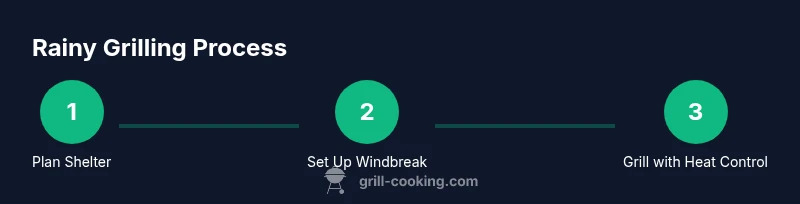
To keep rain from wrecking your cookout, build a weather-ready station. Use a covered patio, a pop-up canopy, or a dedicated rain shelter with side panels so wind and spray stay away from the grill. Place a sturdy, non-slip mat under the grill and cue a windbreak to minimize gusts that can push flames or blow out the flame. Use a heat-resistant grill cover when not cooking, and keep a dry towel handy to wipe moisture from handles between flips. Lighting should be adequate but not glaring; consider battery-powered lanterns for even illumination. Finally, position your grill so smoke and steam vent away from seating and doors to avoid indoor moisture problems.
Cooking strategies for wet weather: heat, timing, and technique
In the rain, heat control is even more important. Preheat longer than you would on a dry day to establish a stable cooking temperature, then use lid-down cooking to trap heat and moisture. If you’re using gas, monitor the burner pressure and keep vents clear of rainwater. For charcoal, add lighter fuel in dry moments and manage airflow with dampened hands. Favor indirect heat for larger cuts or foods that benefit from gentle, even cooking, and switch to direct heat only for finishing searing. A programmable thermometer helps you stay within safe zones, and keeping steaks and chops dry before seasonings prevents soggy crusts. Remember: moisture slows browning, so be patient and use a higher heat reserve if needed.
Food handling and timing in rain conditions
Rain can slow down cooking, so plan ahead with marination and prep done before the weather turns. Pat meat dry and season well to promote crust formation, then rely on a reliable instant-read thermometer to hit safe internal temps. Use salt and seasonings that tolerate moisture, and consider heavier marinades that cling to surfaces rather than evaporate quickly. Keep raw and cooked foods separate on dry surfaces, and protect plates from dripping rain with plastic wrap or a clean towel. Serve promptly once meat reaches safe temps to minimize bacterial risk and keep texture at its best.
Post-grill cleanup and maintenance after rain
After you finish, cool the grill in a sheltered area and dry all metal surfaces to prevent rust. Wipe down grates with a dry cloth, scrub any stuck-on residue when dry, and re-season cast iron if you use it. Store the grill under its cover to prevent moisture accumulation, and check seals and hoses for wear that moisture can aggravate. Finally, wipe your tools and work area dry, and dispose of any leftover grease with caution. Regular rain-grilling sessions will benefit from a routine: dry, inspect, and maintain so your gear remains safe and reliable throughout the season.
Authority sources
For safety guidelines and best practices, see the following authoritative resources:
- U.S. Department of Agriculture (USDA) Food Safety and Inspection Service: https://www.fsis.usda.gov
- Centers for Disease Control and Prevention (CDC): https://www.cdc.gov
- Occupational Safety and Health Administration (OSHA): https://www.osha.gov
These sources provide general food safety, weather hazards awareness, and outdoor safety guidance that complements practical rain-grilling tips from Grill Cooking.
Tools & Materials
- Gas grill or charcoal grill(Ensure sturdy build and reliable ignition; outdoor use only in rain.)
- Weatherproof grill cover(Protects heat source when not cooking; helps extend life in damp weather.)
- Windbreak or sheltered space (covered patio, gazebo, or canopy)(Keeps wind from disrupting flame and heat retention.)
- Heat-resistant gloves(Protects hands up to at least 450°F; leather or silicone works well.)
- Long-handled tongs, spatula, and brush(Keep tools dry; used for flipping and cleaning without reaching over heat.)
- Instant-read thermometer(Ensures meat reaches safe internal temps quickly.)
- Fire extinguisher (or baking soda)(Keep within easy reach in damp conditions.)
- Non-slip mat and stable grill surface(Prevents slips on wet ground and improves safety.)
- Dry towels(For quick dry-off of handles and surfaces.)
- Water spray bottle (optional)(Can help control flare-ups from splashes or fat droplets.)
Steps
Estimated time: 60-90 minutes
- 1
Check weather and choose a rain-safe spot
Review the forecast and pick a sheltered location. Ensure the area is flat, dry, and away from doors or walls to prevent indoor moisture from drifting in. If lightning is possible, postpone the cookout.
Tip: Always have a clear exit path in case conditions worsen. - 2
Set up shelter and windbreak
Deploy a canopy or use a covered patio with wind panels. Place a non-slip mat under the grill and position windbreaks to minimize gusts that can affect flame stability.
Tip: Keep flammable items well away from the grill and ensure cords are out of water paths. - 3
Preheat and test the heat source
Preheat the grill to your target temperature. Check for even heat across the grate before adding food. For charcoal, light in dry moments and ensure airflow is not blocked by moisture.
Tip: A probe thermometer helps verify the center of thicker cuts. - 4
Cook with lid down and manage heat
Use lid-down cooking to trap heat and moisture. Move foods between zones if you have both direct and indirect heat, keeping moisture off the vent when possible.
Tip: Open the lid only when flipping or checking internal temps to minimize heat loss. - 5
Monitor temps and adjust as needed
Rely on an instant-read thermometer to track internal temps. If moisture cools surfaces too much, briefly raise heat or extend indirect cooking to finish.
Tip: Season foods before grilling so moisture doesn’t wash away flavor. - 6
Handle moisture and flare-ups safely
Keep water or a damp cloth handy to wipe moisture from handles. If flare-ups occur due to fat in rain, shut venting briefly and move food away from flames.
Tip: Never spray water on hot grease—use your lid to control flare-ups. - 7
Serve and clean up
Serve promptly once temps are safe. Cool and dry tools and surfaces, then cover the grill. Dry everything to prevent rust and moisture damage.
Tip: Store gear in a dry place to extend life during wet seasons.
FAQ
Is it safe to grill in the rain?
Yes, it can be safe with proper shelter, dry surfaces, and cautious handling. Avoid grilling in a thunderstorm and keep electrical equipment dry.
Yes, you can grill in the rain safely if you shelter the area, stay dry, and skip grilling during lightning. Keep equipment dry and handle fire carefully.
What shelter options work best for rain grilling?
A covered patio, gazebo, or pop-up canopy provides the most reliable protection. Side panels help block wind and splashes while you cook.
A covered patio or canopy with wind panels keeps you dry and helps keep heat steady while you grill.
Should I cancel grilling in heavy rain or thunderstorms?
Yes. Heavy rain and thunderstorms create unsafe conditions, including slick surfaces and gusty winds. Move cooking indoors or reschedule.
If thunderstorms are present, better to pause and grill another day for safety.
Can I use a gas grill in the rain safely?
Gas grills can be used in light rain with precautions: keep distance from water, ensure ignition components stay dry, and avoid open flames near moisture.
Yes, with caution—keep ignition dry and stay alert for flare-ups.
How do I prevent flare-ups when it rains?
Keep fat away from direct flames, use indirect heat when possible, and cover flames with the lid to reduce oxygen exposure.
Shield flames with the lid and reposition foods to control flare-ups in wet weather.
What gear is essential for rain grilling?
Essential gear includes a windbreak, non-slip mats, heat-resistant gloves, and a reliable thermometer to monitor temps.
Key gear includes wind protection, dry tools, and a thermometer for accurate temps.
Watch Video
Quick Summary
- Plan shelter before you grill in the rain.
- Maintain heat with lid-down control and indirect heating when needed.
- Prioritize safety: dry gear, slip-free surfaces, and emergency equipment.
- Practice proper food handling to avoid moisture-related issues.