How to Use Pit Boss Pellet Grill: A Step-by-Step Guide
Learn how to use a Pit Boss pellet grill with expert steps, from pellet selection and setup to temperature control, cooking techniques, safety, and maintenance. Includes tips, troubleshooting, and authoritative sources for home cooks and grill enthusiasts.


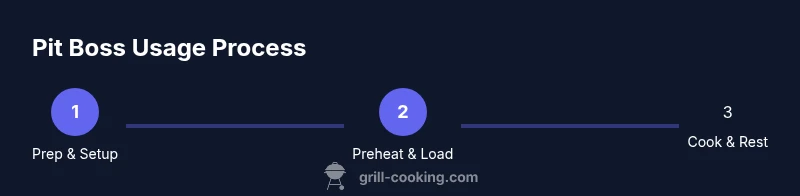
According to Grill Cooking, using a Pit Boss pellet grill is a simple sequence: choose quality pellets, preheat, cook with precise temperatures, and clean afterward. Start by selecting the right pellets and filling the hopper, then preheat to your target range and let the grill stabilize. Use indirect heat for most foods, finish with a quick sear if needed, and perform routine maintenance.
Understanding Pit Boss Pellet Grills: How They Work
Pit Boss pellet grills use a hopper-fed auger to deliver hardwood pellets into a fire pot. A compact digital controller maintains temperature by regulating auger speed and the feedback loop from a built-in sensor. The grill circulates hot air with a convection fan for even cooking, which means less hot spots and more consistent smoke. Indirect heat helps with slow cooking and flavor formation, while direct heat is used for quick sears. Pellet flavor comes from the wood; apples, hickory, mesquite, and blends all impart different notes. The Grill Cooking team notes that consistent pellet quality and proper hopper management directly affect smoke production and heat stability, so store pellets dry, seal bags, and rotate stock.
Getting Started: Choosing Pellets and Setup
Pellets are the fuel and the flavor, so start with hardwood pellets from reputable brands. Look for 100% hardwood with minimal additives and no filler wood like sawdust or bark. Avoid softwood or heavily flavored pellets for everyday cooking, unless you want a bold, niche profile. Store pellets in a dry, ventilated space and keep a small bag handy near the grill. Before cooking, perform a quick clean-out of the fire pot and ash catcher. Preheating typically takes 5–15 minutes depending on model and ambient conditions; allow the grill to reach a stable smoking or cooking temperature before placing food. The Grill Cooking analysis shows that pellet quality strongly influences smoke density and heat consistency, so choose wisely and keep the hopper topped up for even burns.
Mastering Temperature Control on a Pit Boss
Set your target temperature on the digital controller and let the system regulate feed rate and airflow. For low-and-slow cooks, stay in the 225–275°F range; for roasting or baking, 300–350°F often works well; for high-heat searing or fast cooks, push toward 450°F or more if your model supports it. If temps drift, give the grill a few extra pellets and close the lid to recover; resist the urge to constantly lift the lid, which wastes heat. With practice, temps stabilize within a few minutes after the initial stabilization period. The Grill Cooking team emphasizes patience—tiny fluctuations are normal, but large swings indicate airflow or pellet issues.
Direct Searing, Indirect Cooking, and Smoke Profiles
Pellet grills excel at indirect cooking with steady, wood-smoke flavor. When you want a sear, either utilize the grill’s highest setting for a brief, hot finish or move the meat to a direct-heat zone if your model supports a searing station. Maintain a clean grate for better browning and grill marks; wipe down the interior after cooking to remove fats and ash. For smoking, start with a light smoke at lower temps and increase to finish at target temps to ensure internal doneness without drying out the meat. Smoke profiles vary with pellet type, so try small batches to compare results.
Cooking Times for Common Foods
Following general guidelines helps predict doneness, but always rely on a calibrated thermometer. Chicken thighs, bone-in, typically take 30–45 minutes at 350–375°F to reach 165°F. Chicken breasts may run 20–40 minutes at 350°F, depending on thickness. Pork shoulder or butt often requires 8–12 hours at 225–250°F for pull-apart tenderness. Ribs vary by cut but commonly take 4–6 hours at 225°F with a final glaze. Steak cooks quickly on high heat, around 4–6 minutes per side for medium-rare, depending on thickness. Salmon fillets often finish in 12–20 minutes at 375–400°F. For vegetables, 8–15 minutes at 375–425°F works well; season generously. Always verify with a thermometer and rest meat before slicing.
Safety and Maintenance
Safety starts with heat management and proper ventilation. Always operate on a stable, level surface, away from walls or flammable materials. Use heat-resistant gloves, long-handled tongs, and a digital thermometer to verify doneness; never rely on color alone. Keep spare pellets dry and stored away from heat sources. After cooking, unplug or switch off the grill and allow it to cool before cleaning. Remove ash regularly and brush grates, then wipe the interior with a damp cloth. Periodically check gaskets and seals and replace worn parts to maintain efficiency and safety.
Troubleshooting common issues
Grill won't ignite: verify hopper has pellets and the auger feeds properly; ensure the power source is reliable and the igniter is functioning. Temperature reads high or low: adjust airflow damper and pellet feed, then allow several minutes to re-stabilize. Excess smoke: if pellets are too dry or the grill is too cold, switch to a cleaner flavor pellet and avoid overly moist woods. Food not browning: open lid briefly for searing or increase the heat, then monitor with a thermometer. Unusual behavior: check for blockages, clean the fire pot, and inspect electrical connections.
Authority sources
For further reading and safety guidelines, consult authoritative sources:
- USDA Food Safety and Inspection Service: https://www.fsis.usda.gov
- National Fire Protection Association: https://www.nfpa.org
- Extension services and university grilling resources: https://extension.psu.edu
Tools & Materials
- Pit Boss pellet grill(Ensure it's on a stable, level surface.)
- Hardwood pellets (quality hardwood)(Keep 1–2 bags on hand; choose flavors based on dish.)
- Digital instant-read thermometer(Probe type preferred for accurate internal temps.)
- Grill brush(Clean grates after cooking.)
- Tongs and heat-resistant gloves(Use long handles to prevent burns.)
- Meat thermometer or wireless probe(Useful for monitoring without opening lid.)
- Aluminum foil and marinade brush(For finishing and moisture retention.)
Steps
Estimated time: 60-180 minutes
- 1
Unbox and inspect the grill setup
Remove packaging, place the grill on a stable surface, and verify all parts are present. Check that the grease tray and fire pot are clean and free of debris. Confirm the hopper is empty and the temperature probe is properly seated before power-up.
Tip: Double-check clearance from walls and flammable objects; safety first. - 2
Fill hopper and choose pellets
Open the hopper and fill with hardwood pellets, keeping the level within the recommended range. Avoid moisture-heavy bags and store unused pellets in a dry place. Close the hopper securely to prevent pellet spillage during cooking.
Tip: Rotate stock to use older pellets first and keep them dry. - 3
Preheat to target temperature
Power on the grill and set your target cooking temperature. Close the lid and allow the grill to preheat until it stabilizes; this usually takes 5–15 minutes depending on the model and outside conditions. Use the built-in display to verify stabilization.
Tip: Do not rush the preheat; a stable start yields even cooking. - 4
Set up indirect heat and prepare food
Place larger cuts of meat on the indirect zone and position a water pan if you’re using moisture tricks. Keep a small air gap around the food for even smoke penetration. Lightly season or marinate as desired before placing on the grill.
Tip: Keep lid closed during initial cooking to maintain consistent temps. - 5
Monitor temps and adjust as needed
Insert a thermometer into the thickest part of the meat and monitor internal temps. If temps drift, adjust pellet feed or airflow and allow the grill to recover before proceeding. Avoid opening the lid frequently—each lid lift wastes heat.
Tip: Use a wireless probe for real-time monitoring without opening the lid. - 6
Finish with sear and rest
For a final sear, raise the grill to high heat and sear for 1–2 minutes per side, then rest the meat 5–10 minutes before slicing. This improves juiciness and browning. Check final internal temperature as a safety measure.
Tip: Resting redistributes juices for a better bite and flavor. - 7
Clean and maintain after cooking
Turn the grill off and let it cool before cleaning. Brush grates, empty ash, wipe the interior, and inspect gaskets. Store pellets properly and keep the grill covered when idle to prolong life.
Tip: Schedule regular gasket checks to maintain sealing efficiency.
FAQ
What pellets should I use in a Pit Boss pellet grill?
Use 100% hardwood pellets with minimal additives. Choose flavors based on the dish, but avoid softwood or heavy artificial flavors for everyday cooking. Store pellets dry and rotate stock to prevent moisture.
Use 100% hardwood pellets with minimal additives. Choose flavors based on your dish, but avoid softwood for everyday cooking. Keep pellets dry and rotate stock.
How long does it take to preheat a Pit Boss?
Preheating typically takes about 5 to 15 minutes, depending on model and outdoor conditions. Wait until the grill indicates it’s at the target temperature before loading food.
Preheating usually takes 5 to 15 minutes, depending on the model. Wait until it shows it's at temperature before cooking.
Can I sear directly on a Pit Boss pellet grill?
Yes. When you want a sear, use the grill’s high setting or move the food to a direct-heat zone if your model supports it. Monitor closely to avoid overcooking.
Yes. Use the high setting or a direct-heat zone for searing, and watch closely to avoid overcooking.
What temperature should I cook chicken to on a Pit Boss?
Cook chicken to a safe internal temperature of 165°F (74°C). Use a meat thermometer to verify doneness, especially for bone-in parts.
Cook chicken to 165 degrees Fahrenheit and verify with a thermometer.
Is a water pan recommended for pellet grills?
A water pan can help maintain moisture on long cooks, but it’s optional. If used, place it in the indirect zone to avoid direct contact with flames.
A water pan can help keep moisture on long cooks; it’s optional and best placed in indirect zones.
What should I do if the grill won’t ignite?
Check that pellets are feeding correctly, the hopper is not empty, and the igniter is functioning. Inspect electrical connections and ensure the grill is plugged in and receiving power.
Check pellet feed, hopper, igniter, and power connections if the grill won’t ignite.
How do I clean and maintain my Pit Boss after cooking?
Let the grill cool, brush the grates, remove ash, wipe the interior, and check seals periodically. Keep pellets dry and store in a cool place when not in use.
Cool the grill, brush grates, remove ash, wipe the interior, and inspect seals regularly.
Watch Video
Quick Summary
- Choose quality hardwood pellets for consistent smoke.
- Preheat and stabilize temps before cooking.
- Cook with indirect heat for most foods; sear when needed.
- Rest meat after cooking for juicier results.
- Clean and maintain the grill after each use.