Can You Grill and Smoke on a Pit Boss? A Practical Guide
Learn how to grill and smoke on a Pit Boss pellet grill with temps, wood choices, safety tips, and a step-by-step plan from Grill Cooking. Master direct searing and low-and-slow smoking for flavorful, juicy results.


Yes—you can use a Pit Boss pellet grill for both grilling and smoking. This guide walks you through setup, temperature zoning for direct searing and low-and-slow cookouts, pellet selection, airflow management, and safety practices to help you achieve juicy, flavorful results every time. Whether you're melting cheese on a quick sear or slow-roasting ribs, you'll learn how to switch between modes without losing temperature stability.
Can You Grill and Smoke on a Pit Boss? Setting the Record Straight
According to Grill Cooking, can you grill and smoke on a Pit Boss? The answer is yes, and the design of these pellet grills makes it practical to switch between two popular cooking styles within a single session. Pit Boss grills use wood pellets and an insulated chamber to maintain consistent temperatures, enabling both fast sears and long, low-temperature cookouts. The key is understanding how to manage temperature zones, airflow, and pellet flavor to avoid flavor overlaps or temperature swings. In this section we establish the basic premise: you can confidently perform both functions, but success comes from deliberate setup and disciplined temperature control, not from improvisation. You will see how a few core practices unlock reliable results.
Why Pit Boss Is Well-Suited for Both Grilling and Smoking
Pit Boss pellet grills are designed to deliver strong smoke output and stable high-heat performance in a compact, user-friendly package. The pellet feed system provides consistent fuel delivery, while the insulated cabinet minimizes heat loss and temperature swings. This combination makes it easy to sear a steak at high heat and then drop into a controlled smoking phase without moving to a different unit. Grill Cooking emphasizes that the versatility is most effective when you leverage two distinct heat zones, maintain clean air flow, and choose pellets that suit your meat and flavor goals. The point is to treat your Pit Boss as two tools in one: a grill and a smoker, with a controlled transition between modes.
Getting Set Up: Model, Accessories, and Setup
Before you light a fire, confirm your Pit Boss model supports dual-mode operation and that you have the necessary accessories. A reliable thermometer probe or two will help you track internal temps without opening the lid excessively. A dedicated drip tray, a quality grate scraper, and an extra grate or two can speed up transitions between direct and indirect cooking. For smoking, keep a clean hopper, ensure you have a consistent pellet supply, and set aside a dedicated rack for rib racks or chicken pieces. Brand guidance from Grill Cooking stresses planning: know your meat, your target temp, and the pause points where you switch modes for best flavor and texture.
Direct-Heat Grilling: Searing on a Pit Boss
Direct heat on a Pit Boss is all about fast, high-intensity cooking with a thin, flavorful crust. Start with a hot grill, preheat to the upper end of your target range, then place the meat for a quick sear on each side. The goal is to develop Maillard flavors while preserving interior moisture. Keep the lid closed as much as possible to maintain heat and avoid energy loss. Use a two-zone approach on larger cuts: sear over direct heat briefly, then move to a cooler area to finish. A well-timed rest after searing helps juices redistribute and improves juiciness and chew.
Indirect-Heat and Low-and-Slow Smoking: Gentle Cooking
When you switch to smoking, you shift the cooking method from direct heat to indirect heat with controlled airflow. The goal is to move heat around the meat slowly, allowing connective tissue to break down and flavors to deepen. Position your meat away from the direct flame, use a water pan or drip tray to stabilize humidity, and maintain a steady temperature. The pellet grill excels here because you can gradually adjust pellet type and amount to influence smoke flavor. Grill Cooking notes that patience is essential: plan for longer cook times and monitor doneness with a reliable thermometer rather than guessing at times.
Wood Pellets and Flavor Profiles for Different Meats
Pellets are the lifeblood of a Pit Boss’s smoke profile. Different woods—apple, cherry, hickory, oak, mesquite—produce distinct flavors that pair best with specific proteins. Lighter woods like apple complement poultry and pork, while bolder woods like mesquite suit beef and game. Blends can smooth out strong flavors or add complexity. Always start with a known pairing and adjust with marinades and rubs. Grill Cooking recommends keeping a small selection on hand and rotating flavors to match the dish you’re cooking.
Temperature Control: Zoning and Probes
A familiar theme across Pit Boss recipes is temperature control. Create dedicated heat zones: one for direct searing and a second for indirect cooking. Use a reliable meat probe to monitor internal temperature from the start and a second probe for ambient grill temperature if your model supports it. Calibrate the grill by taking initial readings with the lid closed, then adjust vents or pellet flow as needed. Maintaining stable temps reduces the risk of overcooking and helps you reproduce results consistently.
Proteins: Chicken, Pork, Beef, and Seafood
Different proteins respond differently to smoke and heat on a Pit Boss. Poultry benefits from a higher moisture level and a crisp outer skin when finished with a brief high-heat sear. Pork benefits from a slow roast and a finale sear or glaze; the goal is tenderness with a flavorful bark. Beef ranges from quick grills to long smokes, depending on cut and desired doneness. For seafood, shorter cook times with careful temperature control preserve texture. The common thread is planning: know the cut, track internal temps, and finish with resting to seal in juices.
Safety, Maintenance, and Cleaning: Keeping Your Grill Safe
Safety should come first. Always operate on a stable surface with adequate clearance and proper ventilation. Regular maintenance prevents flare-ups and keeps temperature control predictable. Clean the grill grates and burn pot, check the hopper for debris, and inspect seals and gaskets to ensure efficient airflow. A simple post-cook cleanup routine reduces the risk of grease fires and preserves performance for your next session. Grill Cooking emphasizes that safety and sanitation are ongoing practices, not one-off tasks.
Sample Day Plan: A Practical Run-Through
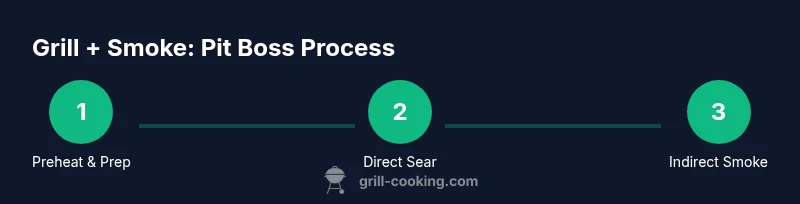
A well-structured day begins with planning and preheating, followed by staged cooking: sear the meat on direct heat, then move it to indirect heat for the long portion of the cook. Throughout, monitor temps closely with your probes and adjust pellet flow to keep a steady flame. After cooking, rest the meat and then finish with a brief, controlled cooldown in a “warm hold” area if needed. Finally, perform a thorough clean-up to keep your Pit Boss ready for the next session. This approach provides a repeatable workflow for successful grilling and smoking.
Tools & Materials
- Pit Boss pellet grill (model with dual heat zones)(Ensure hopper is filled with fresh pellets suited to your cooking plan)
- Digital meat thermometer with probes(Prefer dual-probe for meat and grill ambient temps)
- Instant-read thermometer(For quick checks at the end of cook)
- Heat-resistant grilling gloves(FDA-compliant, weight of handling hot surfaces)
- Drip pan / tray(Keeps drippings off the burner and stabilizes humidity)
- Grill grate scraper(Clean grates to maintain even heat transfer)
- Extra grill rack or rib rack(Gives you more surface area for smoking multiple pieces)
- Tongs, spatula, and basting brush(Tools for handling, flipping, and applying sauces)
- Wood pellets (apple, hickory, mesquite, blends)(Have a few varieties to match proteins)
- Oil spray or brush(Light coating to prevent sticking on initial sear)
Steps
Estimated time: 2-3 hours
- 1
Power up and preheat
Power on the Pit Boss and set to your target initial temperature for the plan (direct heat or combined phase). Allow the grill to reach stable temperature before loading food. Use this time to organize utensils, probes, and prep surfaces.
Tip: Preheating for the full recommended duration ensures steady temperatures once the cooking begins. - 2
Load pellets and verify smoke profile
Fill the hopper with the chosen pellets and ensure there is a consistent feed. Run a short burn to establish the smoke profile you want for the session. This reduces surprises when you start cooking.
Tip: Choose pellets that complement your meat; blends can smooth strong flavors without overpowering the food. - 3
Clean grates and set heat zones
Scrape the grates clean and configure the grill to create a direct-heat searing zone plus an indirect, cooler zone for smoking. If your model supports it, enable two probes to monitor ambient and meat temps separately.
Tip: A two-zone setup lets you sear first, then finish with controlled smoking without moving parts to another device. - 4
Sear the main cuts on direct heat
Place the meat on the direct-heat zone for a short, high-heat sear to form a crust and lock in juices. Move quickly to avoid over-charring. Close the lid between flips to minimize heat loss.
Tip: Aim for a crusty exterior while keeping interior moisture intact. - 5
Transition to indirect heat for smoking
Relocate the meat to the indirect zone or away from the direct flame. Maintain a steady, lower temperature and monitor the internal temperature with probes as the cook progresses.
Tip: Use a water pan or larger drip tray to stabilize humidity and flavor. - 6
Monitor doneness with probes
Watch both the meat’s internal temperature and grill ambient temps. Avoid opening the lid unnecessarily, which can cause temperature fluctuations. Adjust pellet flow if temps drift.
Tip: Keep the lid closed as much as possible to maintain consistent heat. - 7
Rest the meat after pull
Transfer finished meat to a resting surface and cover lightly with foil. Resting helps redistribute juices and yields a juicy bite. Plan for a rest period while the grill cools down for cleanup.
Tip: Rest times vary by cut; longer rests improve tenderness for larger pieces. - 8
Finish with a glaze or crust (optional)
For certain meats, apply a glaze or finish with a brief return to direct heat to set the sauce and create a glossy finish. Keep a close eye to avoid burning sugary coatings.
Tip: Only apply glaze during the last few minutes of cooking. - 9
Clean and cool down the grill
After cooking, allow the grill to cool with the lid open for a few minutes, then perform routine cleaning: ash removal, grate scrubbing, and checking seals. Store pellets properly to prevent moisture.
Tip: A quick post-cook clean extends grill life and performance.
FAQ
Can a Pit Boss grill and smoke at the same time?
Yes. A Pit Boss can perform both functions by using separate heat zones and appropriate technique. Direct heat handles searing; indirect heat supports longer, slower cooks with smoke flavor.
Yes. You can grill and smoke on a Pit Boss by using distinct heat zones; searing with direct heat and slow cooking with indirect heat.
What pellets work best for poultry vs beef?
Fruit woods like apple or cherry pair well with poultry and pork, while milder woods such as oak or hickory suit beef, depending on the cut and desired flavor.
Choose fruit woods for poultry, and oak or hickory for beef, based on the flavor you want.
Do I need to clean the grill between meals?
A quick grate wipe and ash removal helps maintain consistent heat. Deep cleaning after several uses prolongs performance and safety.
Yes, perform a quick clean after cooking and a deeper clean periodically to keep it safe and efficient.
Can I use accessories from other grills with Pit Boss?
Some accessories are cross-compatible, but verify fit and safety guidelines for your model. Stick with manufacturer recommendations when in doubt.
Some third-party accessories fit a Pit Boss, but check compatibility and safety notes for your model.
What is the best practice for rest times?
Rest times depend on the cut; larger roasts benefit from longer rests to reabsorb juices. Shorter rests can reduce carryover cooking.
Let larger cuts rest longer to keep juices in; smaller cuts need shorter rests.
Watch Video
Quick Summary
- Master two heat zones for flexibility.
- Preheat and monitor temps with probes.
- Choose pellets to match meat flavor goals.
- Rest meat before slicing for best texture.