How to Use a Pellet Grill: A Step-by-Step Guide
Master pellet grilling with expert techniques for setup, temperature control, smoking, searing, maintenance, and troubleshooting. Learn to grill with confidence and flavor using a pellet grill.


You will learn to set up a pellet grill, choose pellets, preheat, cook with indirect heat, monitor temperatures, and clean after cooking. This step-by-step guide covers safety practices, temperature strategies for common foods, maintenance tips, and troubleshooting so even first-time users can grill with confidence and flavor. It also shows how to plan cooks, manage smoke, and rest meat for best results.
Pellet grills explained: why home cooks love them
Pellet grills combine a hopper of hardwood pellets, an auger feed, a burn pot, and a digital controller to hold a steady temperature while feeding smoke. The system ignites with a short preheat, then fans and vents precisely regulate heat and airflow for consistent flavor. According to Grill Cooking, this automation helps beginners achieve reliable results when you understand temperature settings and pellet quality. The Grill Cooking team found that choosing the right wood flavor and keeping the grill clean are two of the biggest levers for flavor and consistency. In this guide, you’ll learn how to set up, preheat, select pellets, cook with indirect and direct heat, and finish with safe serving practices. You’ll also get practical maintenance tips to keep your pellet grill performing like new cook after cook. Whether you’re searing steaks or slow-smoking ribs, the core skills are the same: control temperature, manage smoke, and minimize lid opening.
What you need before you start: tools, pellets, and space
Before you light a pellet grill, gather a few essentials and prepare your space. Place the grill on a stable, nonflammable surface with at least 3 feet of clearance on all sides. Ensure you have an outlet nearby, an accurate thermometer, and a probe thermometer for real-time internal temps. Keep a fire extinguisher or baking soda handy for safety. Choose the right pellets for the flavor you want: hickory for robust barbecue, apple for lighter pork or poultry, or mesquite for bold beef. Store pellets in a dry location to prevent mold and moisture damage. This prep phase reduces waste, improves heat consistency, and sets the stage for a smooth cook. Remember to check manufacturer guidelines for fuel type and recommended maintenance.
Lighting up: preheating, ignition, and airflow basics
Preheating a pellet grill typically takes 10–15 minutes at a low burn then climbs to your target cooking temperature. During ignition, you should hear a gentle fan and see smoke starting to rise. Avoid opening the lid during preheat; premature lid opening cools the chamber and lengthens the time to temperature. Use the built-in controller to select your target temperature, verify your probe is placed in the thickest part of the meat, and confirm the hopper is full. Maintaining proper airflow is critical: dirty vents or a clogged burn pot can stall heat and smokiness. If your grill struggles to reach temperature, verify pellet quality, check for obstructions, and ensure the auger is feeding pellets correctly. This stage sets up your entire cook, so take a moment to confirm all systems are go.
Temperature control and smoke management: the core of pellet grilling
Pellet grills rely on a feedback loop: you set a target temperature, the controller modulates pellet feed and fan speed to hold that temp, and you see smoke production adjust accordingly. For a light smoke, run at 180–225°F (82–107°C); for medium smoke and cooking efficiency, 225–350°F (107–177°C) is common; for high-heat searing, you’ll push toward 450–500°F (232–260°C) if your model supports it. Managing smoke means choosing the right pellets, avoiding over-peeling logs, and resisting the urge to constantly open the lid. A clean grill and well-sealed gaps preserve smoke flavor. The Grill Cooking team notes that consistent airflow and stable temps produce the most even cook and best bark on grilled proteins. Practice maintaining a small temperature swing rather than chasing perfect numbers, and you’ll see steady results across meals.
Direct heat, indirect heat, and multi-zone cooking on pellet grills
Pellet grills are excellent for indirect cooking, but many models offer direct-sear capabilities or the option to run in two temperature zones. Use indirect heat (lower temps, longer times) for larger cuts like brisket or pork shoulder, and switch to higher temps to sear steaks or finish food with a crust. If your grill supports two zones, place the food further from the heat source on the indirect side while you blast the surface with high heat for a quick sear. Remember to monitor lid position; frequent opening disrupts heat consistency. For foods that finish with a crust, a final high-heat sear after an initial cook helps develop texture and flavor. The key is planning, not guessing; map your cook in advance and adapt as needed based on internal temperature targets.
Smoke, flavor, and timing: cooking strategies for common foods
Poultry benefits from an initial smoke period at lower temps, followed by finishing with a higher heat to ensure skin renders and meat reaches safe temperatures. Pork benefits from low-and-slow cooks; ribs respond well to 225–250°F (107–121°C) with a wrap mid-cook for tenderness. Beef roasts respond to controlled smoke and even heat; chicken thighs can be juicy when cooked to 175–180°F (79–82°C) with a responsive finish. Vegetables like asparagus and corn on the cob take shorter times and benefit from a light oil and seasoning. A probe thermometer helps you hit exact targets, while rest periods lock in juices. The approach remains consistent: start with a plan, monitor temps, let carryover heat finish the job, and rest before serving.
Pellets, maintenance, and long-term performance
Your pellet choice affects flavor, burn rate, and smoke production. Different woods bring different aromatics; heavier woods like oak and hickory perform well across many meats. Store pellets dry, and avoid moisture below 40%. Clean grates after each cook to prevent flavor carryover and residue buildup. Regularly inspect the burn pot, air vents, and sensor to keep temps steady. A clean grill lasts longer and performs more consistently. Use a quality grill cover when not in use to protect from weather, which also extends the life of components such as the auger and fans. Following a routine maintenance schedule reduces the risk of fires or temperature fluctuations and yields better tasting meals over time.
Cleaning, safety, and a quick troubleshooting guide
After cooking, turn off the grill and unplug if applicable, then perform cooling and basic cleaning: remove ash, wipe down grates, check grease management, and store the grill in a dry location. Safety considerations include keeping a fire extinguisher nearby, never operating indoors, and wearing heat-resistant gloves during handling. If you notice temperature spikes, check pellet quality, air flow, and hopper level; if smoke is too heavy, ensure you are using appropriate pellets and not burning dust or debris. For common issues like the grill failing to preheat, verify power, pellets, and auger movement. A systematic approach to troubleshooting helps identify whether you’re dealing with fuel, airflow, or electronics, and reduces downtime between cooks.
A practical, starter-friendly cook plan: sample timelines and tips
A simple, repeatable workflow helps you get great results quickly. Start with a 45–60 minute preheat, then move to a 45–75 minute cook for smaller proteins like chicken breasts or pork chops, using an internal target temperature. For larger cuts, plan for 2–4 hours at low temperatures, with a wrap or rest as needed. Use a probe thermometer and timer to avoid overcooking, and keep a small “flavor map” of wood types and spices on hand to tailor your meals. By following these patterns, you’ll build confidence and consistency, while enjoying the distinct wood-smoked flavors that pellet grills deliver.
Tools & Materials
- Pellet grill(Ensure model is clean and in good working order)
- Wood pellets(Choose flavor to match protein; store dry)
- Meat probe thermometer(Insert into thickest part without touching bone)
- Ambient thermometer or grill thermometer(Monitor ambient and grate temps)
- Grill brush(Clean grates after each cook)
- Tongs and spatula(Sturdy tools for turning and flipping)
- Aluminum drip pan or foil pan(For catches and indirect cooking)
- Oil spray or brush(Lightly oil grates to prevent sticking)
- Heat-resistant gloves(Handle hot grates safely)
- Grill cover(Protect from weather when not in use)
Steps
Estimated time: 60-120 minutes
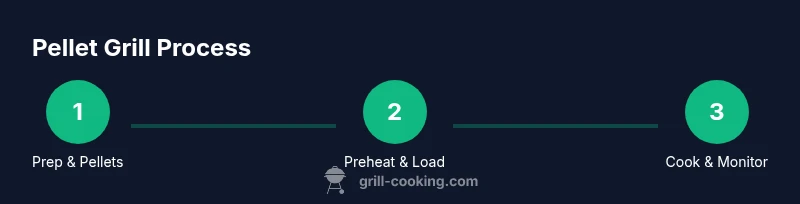
- 1
Prepare and select pellets
Choose pellets that complement your food, check moisture level, and fill the hopper. Inspect the auger for smooth movement and ensure the burn pot is clean. This step minimizes fire risk and ensures steady heat.
Tip: Keep a backup bag of pellets in a dry area to avoid moisture damage. - 2
Preheat and set up the grill
Power on the grill, select the target cooking temperature, and allow the grill to preheat with the lid closed. Confirm the thermometer reads the target range and the smoke fan engages properly.
Tip: Avoid opening the lid during preheating to maintain cycle stability. - 3
Prepare the food
Season or marinate as desired and pat foods dry to promote better browning. Place thicker cuts on the cooler side of the grill when possible to avoid scorching the exterior.
Tip: Use a probe to check internal temp for precise doneness. - 4
Cook with monitoring
Place food on grill and monitor temperature using the probe. Adjust the grill settings if temps drift more than 25°F (14°C) from target. Keep the lid closed as much as possible to retain heat and smoke.
Tip: Plan for carryover cooking after removal. - 5
Finish and rest
Bring internal temp to safe level, remove from grill, and let rest before slicing. Rest periods let juices redistribute for juicier results.
Tip: Tent with foil during rest to retain heat without steaming meat. - 6
Clean up and store
Cool the grill, remove ash, wipe grates, and store pellets in a dry place. Cover the grill to protect components and extend its life.
Tip: Document what worked for future cooks and adjust your pellet choice accordingly.
FAQ
What is a pellet grill and how does it work?
A pellet grill uses hardwood pellets as fuel, fed by an auger into a burn pot with a controlled flame and fan for temperature and smoke management. The digital controller maintains a steady cooking environment for versatile grilling, smoking, and baking.
A pellet grill uses wood pellets and a smart controller to keep a steady heat and smoke for grilling, smoking, and baking.
Do I need to preheat a pellet grill?
Yes. Preheating ensures the grill reaches the target temperature quickly and stabilizes airflow for even cooking. Avoid opening the lid during preheat to prevent heat loss.
Yes, preheat your pellet grill to the desired temperature before cooking to ensure even heat and better results.
Can I sear on a pellet grill?
Many pellet grills can reach high temps suitable for searing, typically around 450–500°F (232–260°C). If your model supports it, use a direct heat zone or finish with a high-heat sear after an indirect cook.
Yes, many pellet grills can sear at high temps; use a direct-heat zone if available or sear at the end.
How much maintenance does a pellet grill require?
Regular cleaning after cooks, checking the burn pot and vents, and inspecting the auger are key. Store pellets dry and cover the grill when not in use to extend its life.
Do regular cleanups, check vents and burn pot, and store pellets dry to keep it reliable.
What foods work best on a pellet grill?
Pellet grills excel at poultry, pork, beef roasts, ribs, fish, and vegetables. Flavor depends on pellet type, cooking temperature, and timing; start with simple recipes before trying complex meals.
Poultry, pork, beef roasts, ribs, fish, and vegetables work well; flavor varies with pellets and temps.
Is a pellet grill safer than a charcoal grill?
Pellet grills are generally safe when used as directed, but they still require outdoor use, proper ventilation, and routine maintenance to avoid fires and smoke buildup.
Pellet grills are safe when used outside with proper maintenance and ventilation.
Watch Video
Quick Summary
- Master temperature control for consistent smoke and heat.
- Choose pellets by flavor and food type for best results.
- Preheat, monitor with a probe, and minimize lid openings.
- Maintain the grill and pellets for long-term performance.