How to Use a Traeger Grill: A Complete Guide
Master how to use a Traeger grill with this comprehensive guide. From setup and seasoning to precise temp control and cleanup, learn best practices for consistent flavor and safe grilling.


Learn how to use a traeger grill from setup to dinner. This quick guide covers lighting, temperature control, pellet selection, indirect vs direct heat, and cleanup. You’ll need a pellet grill, fresh pellets, heat-resistant gloves, a thermometer, and the Traeger app or controller to monitor temps.
Understanding pellet grills and why Traeger leads heat control
If you’re asking how to use a traeger grill, the pellet-fired heat system is what makes this grill different. Traeger-style grills use a hopper-loaded auger to feed small wood pellets into a burn pot, where a PID controller modulates temperature and smoke. According to Grill Cooking, pellet grills deliver consistent heat and intuitive operation, making it easier for home cooks to manage flavor without babysitting flames. The Traeger platform also lets you fine-tune smoke profiles, enabling you to go from low-and-slow grilling to quick sears with little hands-on effort. Understanding these basics will help you optimize recipes and reduce flare-ups. The more you know about hopper capacity, auger timing, and venting, the more reliable your cooks become. This is especially true for first-timers who want predictable outcomes without guesswork. Grill Cooking Analysis, 2026 notes that pellet grills offer precise temperature control and hands-off operation, which is why many backyard cooks prefer them for weeknight meals.
In practical terms, a Traeger uses indirect heat with wood-fired flavor, helping you hit a wide range of targets from gentle smoking to fast searing. This versatility is why many home cooks choose pellet grills for weeknight meals and weekend cooks alike. As you gain experience, you’ll learn how to leverage smoke profiles for particular foods—eggs, vegetables, pork, and beef—without juggling multiple cooking devices.
noteColorMoodOverride?: null
Tools & Materials
- Pellet grill (Traeger or equivalent)(Make sure it is level and clean before starting)
- hardwood pellets(Choose flavor profile to match meat (e.g., hickory for beef, apple for pork))
- Digital meat thermometer(Probe plus ambient thermometer for accurate temps)
- Heat-resistant gloves(At least 350°F protection)
- Grill brush(Stainless steel with scraper for stubborn residue)
- Oil spray or brush (high-smoke oil)(Lightly oil grates to prevent sticking)
- Aluminum foil or grill mats(Helpful for delicate items and clean-up)
Steps
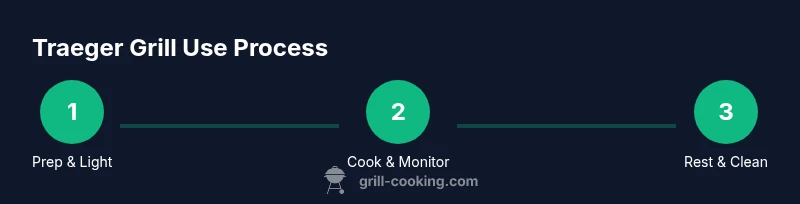
Estimated time: Estimated total time: 45-75 minutes
- 1
Unbox and inspect the grill
Carefully remove the grill and all components from the shipping carton. Check for damage, missing hardware, and ensure the hopper and burn pot are clean. If anything is damaged, contact support before proceeding.
Tip: Take photos of any shipping damage to simplify claims. - 2
Place on a level, ventilated surface
Position the grill outdoors on a stable, heat-safe surface with at least 2 feet of clearance on all sides. Clear any flammable materials nearby and ensure the area is dry before starting.
Tip: Avoid indoor use even if the unit is vented; ensure good airflow to prevent smoke buildup indoors. - 3
Load pellets and prime the hopper
Fill the hopper with hardwood pellets and ensure the auger has pellets to feed. This primes the system so ignition is smooth and prevents early pellet starvation during startup.
Tip: Keep the hopper lid closed to prevent moisture from entering pellets. - 4
Preheat to target temperature
Turn on the grill and set to your initial target temperature. Allow 10–15 minutes for the grill to reach temperature before placing food on the grate. Monitor via the control panel or app.
Tip: If you’re searing, preheat to a high temp (around 450–500°F) and then adjust after sear. - 5
Season grates and oil as needed
Wipe down grates and apply a light coat of high-smoke oil to prevent sticking. This step improves nonstick performance for the first cook and can help with later maintenance.
Tip: Use a clean cloth to spread a thin, even film—too much oil can cause flare-ups. - 6
Cook with indirect heat when appropriate
Place food away from the direct flame by using indirect heat zones. For larger cuts, start low and slow to an internal temp, then finish with a brief high-heat sear if desired.
Tip: Use a cast-iron skillet or grill grate for items that benefit from consistent heat. - 7
Monitor, finish, and rest your meat
Use the thermometer to track internal temps and remove meat at target values. Let meat rest for 5–15 minutes to reabsorb juices for maximum tenderness.
Tip: Keep the lid closed as much as possible to maintain consistent temps. - 8
Shut down and clean post-cook
After cooking, let the grill cool slightly, then brush grates and empty ash while it’s warm. Perform a deeper clean periodically to keep performance high.
Tip: Do a quick clean after each cook to extend the grill’s lifespan.
FAQ
How do I light a Traeger grill safely?
Follow the manufacturer’s start-up procedure: plug in, select a high-temp mode, and allow the auger to feed pellets for a few minutes before ignition. Do not overload the hopper.
To light your Traeger safely, plug in, start the ignition, and let the auger feed pellets for a few minutes before ignition.
Should I season a new Traeger before first use?
Yes. Wipe down, apply a thin coat of oven-safe oil, and run a burn-in cycle per the manual to burn off manufacturing oils and condition the grates.
Yes—season your new grill with oil and run a burn-in cycle before cooking.
What temperature is best for smoking vs. grilling?
Low-and-slow smoking typically runs 180-225°F, while direct grilling and searing are done around 450-500°F. Use indirect heat for larger cuts to avoid flare-ups.
Smoking is usually low, around 180-225, while searing is high heat near 450-500.
Which pellets should I choose?
Choose hardwood pellets with minimal additives. Hickory, apple, or mesquite lend distinct flavors, while fruitwood blends are milder for poultry and seafood.
Go with hardwood pellets without fillers; choose flavors based on meat.
How often should I clean my Traeger?
Clean grates after use, empty the ash from the burn pot as needed, and perform a deeper clean every season or after heavy cooking.
Clean after each cook and do a deeper clean periodically.
Can I sear on a Traeger?
Yes. Preheat to high temperature and use cast iron or a hot grate to achieve a good sear, then move back to lower temps for finish.
You can sear on a Traeger by preheating high and using a sturdy grate.
Watch Video
Quick Summary
- Preheat to stabilize temps before cooking
- Choose pellets that enhance flavor without overpowering
- Season and oil grates to prevent sticking
- Use indirect heat for larger cuts to avoid flare-ups
- Clean after each cook for longevity