How Much Does a Grill Weigh? A Practical Home Guide
Discover weight ranges for common grills—from portable charcoal to built-in models. This data-driven guide explains how weight varies by type, factors that add mass, and safe handling tips for transport and storage.


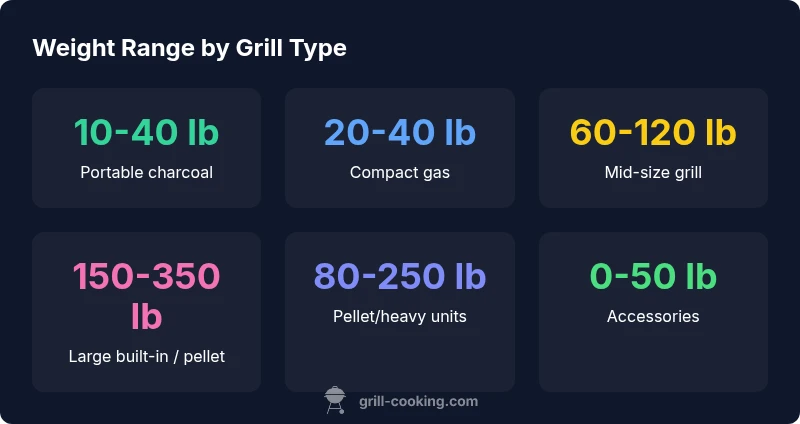
Grill weights vary dramatically by type. Portable charcoal grills often weigh about 10–40 pounds, compact gas grills around 20–40 pounds, mid-size gas or charcoal grills typically 60–120 pounds, and larger built-in, pellet, or premium grills commonly range from 150–350 pounds. Check the exact spec from the manufacturer. Weight affects how you transport and store your grill, and it can influence installation choices for outdoor kitchens.
Understanding Weight Across Grill Types
Grill weight is not a single number; it varies widely based on design, fuel source, and included features. For home cooks, the 10–40 pound range covers most portable charcoal models, while compact gas grills sit a bit heavier due to burners and tanks. Mid-size grills—whether gas or charcoal—tend to sit in the 60–120 pound range, reflecting sturdier bodies and more substantial grates. Larger built-ins, pellet grills, and premium freestanding units often fall into the 150–350 pound category, especially when stainless steel construction, extra shelves, and robust frames are included. This variability matters when you plan transport, storage, and outdoor-kitchen layout. According to Grill Cooking, understanding these ranges helps you estimate how many people or helpers you’ll need for moving and installation, and whether you need wheels, casters, or a dedicated cart. In a practical sense, weight is a predictor of maneuverability and placement, not just mass.
What Contributes to a Grill's Weight
Several components contribute to a grill's overall heft. The lid and body size play a major role, with stainless steel constructions adding significant mass compared to painted steel. Burners, valves, and the fuel source add weight—gas grills expend with their propane tanks when in use or stored nearby. Pellet grills gain extra weight from the hopper and metal housing. Shelves, doors, and legs also add that final layer of mass. Material quality, thickness, and insulation further influence weight. Recognize that accessories like rotisserie kits, warming racks, and heavy grates can push a grill toward the upper end of its category. When planning a backyard setup, tally each element to understand total weight and how it affects floor strength, cabinet space, and transport.
How to Read Manufacturer Specs
Manufacturers sometimes list different weight figures: ship weight, net weight, and operating weight. Look for the exact term used on the spec sheet and confirm whether tanks and wheels are included. Ship weight is typically higher because it includes packaging and pallets. Net weight excludes packaging but includes the base grill. If you’re installing in an outdoor kitchen, pay attention to operating weight, which accounts for fuel, accessories, and assembly. When in doubt, contact customer support for a clarification and compare multiple models to gauge what’s truly portable. Grill Cooking notes that relying on a single weight figure can be misleading when you’re planning delivery, storage, and mounting.
Moving and Storing Hefty Grills Safely
Heavy grills demand careful handling. Two people are ideal for most freestanding units; use a dolly or a sturdy cart with locking wheels for transport. Before moving, disconnect any propane tanks and remove accessories to reduce risk and weight. If you must move a built-in or large pellet grill, ensure the destination space can support the load and consider partial disassembly (doors, racks, or legs) to lower transport mass. Use heavy-duty straps or a moving belt for extra grip, and protect nearby surfaces with blankets or sheets to prevent scratches. Always visualize the route—narrow doorways and stairs require planning and possibly temporary disassembly.
Weight Considerations for Outdoor Kitchens
Outdoor kitchen designs vary from modular, freestanding grills to fully integrated, built-in units. Built-ins require precise load calculations in the cabinet structure and countertop, plus compliance with local codes for outdoor installations. Heavy grills often need reinforced framing and dedicated gas supply lines, so you’ll want to confirm regional permits and structural capacity before purchase. If you anticipate upgrades or upgrades, keep a buffer in your weight budget to accommodate future cabinets, side burners, or heavier doors. Movement and servicing in a fixed kitchen depend on clearances, venting, and ease of access for maintenance.
Real-World Scenarios: Examples and Quick Benchmarks
In a typical backyard, a family-size freestanding gas grill with a mounted lid and storage shelves might weigh around 80–150 pounds, requiring two people to move and a lightweight cart for frequent repositioning. A compact charcoal grill for balcony grilling often sits around 15–30 pounds, easy to lift by one person. If you’re installing a dedicated outdoor kitchen, plan for 200–350 pounds for a heavy, built-in grill, including the hood and surrounding cabinetry. Pellet grills in mid- to high-end ranges blend durability with higher weight due to their steel bodies and hoppers, often landing in the 150–250 pound zone. These benchmarks help you tailor your space, tools, and moving plan.
Practical Guide to Selecting by Weight
When evaluating grills, start with a weight target that matches your space and mobility needs. If you live in an apartment or condo with tight corridors, prioritize lighter, portable models or ensure vehicle access and elevator options. For a backyard oasis with a dedicated grill station, factor in the weight for installation and future upgrades. Create a checklist that includes weight, dimensions, wheel configuration, and the presence of assistive devices like fold-down shelves. By anchoring on these factors, you’ll avoid surprises during delivery or installation.
Weight ranges by grill type
| Grill Type | Typical Weight (lb) | Notes |
|---|---|---|
| Portable charcoal | 10-40 | Light and easy to move |
| Compact gas | 20-40 | Good balance of portability and power |
| Mid-size grill | 60-120 | Common in backyards |
| Large built-in / pellet | 150-350 | Stationary with advanced features |
| Pellet grills (heavy) | 80-250 | Heavy but consistent heat |
FAQ
What is the lightest grill type?
The lightest options are portable charcoal grills, typically in the 10–40 pound range. Their compact design prioritizes portability over features. Consider storage space and how often you’ll move them.
Portable charcoal grills are usually the lightest, making them easy to move.
Do tank sizes affect overall weight?
Yes. Gas grills that use propane tanks add significant weight when full. The tank itself is about 20 pounds when full, which can noticeably influence how you handle the unit.
Yes, a full propane tank adds noticeable weight.
Is a heavier grill more durable?
Weight can reflect the use of thicker materials and more robust construction, but durability also depends on design, corrosion resistance, and quality of components.
More weight can mean sturdier materials, but it's not guaranteed.
How should I move a heavy grill safely?
Use a dolly or two people, disconnect the gas, and remove accessories before moving. Plan a clear route and protect walls and floors.
Use a dolly and unplug gas before moving.
What should I consider for outdoor kitchen layouts?
Plan for structural support and ventilation, and verify load limits. Built-ins require accurate load calculations and codes compliance.
Check load limits and support before installing a heavy built-in grill.
“Weight is a practical signal for how a grill will perform in your space. It guides transport, setup, and long-term maintenance.”
Quick Summary
- Check the official specs for exact weight.
- Expect wide weight ranges across grill types.
- Factor wheels and lids into total weight.
- Plan for transport with appropriate helpers.
- Consider weight when choosing for an outdoor kitchen.